Florida VIN Verification: How to Complete Form HSMV 82042 | 2026
You bought a used car in Georgia, drove it home to Jacksonville, and showed up at the tax collector's office with the signed title in hand. Twenty minutes later you walk out with nothing — because you're missing a form you'd never heard of.
That form is HSMV 82042, and Florida requires it on almost every used vehicle coming into the state. It's short, it's free in most cases, and it takes about ten minutes. But it has to be signed by the right person, and the VIN has to be physically inspected on the car itself.
Here's exactly who needs it, who can sign it, and how to avoid the rejection that sends most people back home for a second trip.
What Florida VIN Verification Is (and Who Needs It)
What the state is actually checking
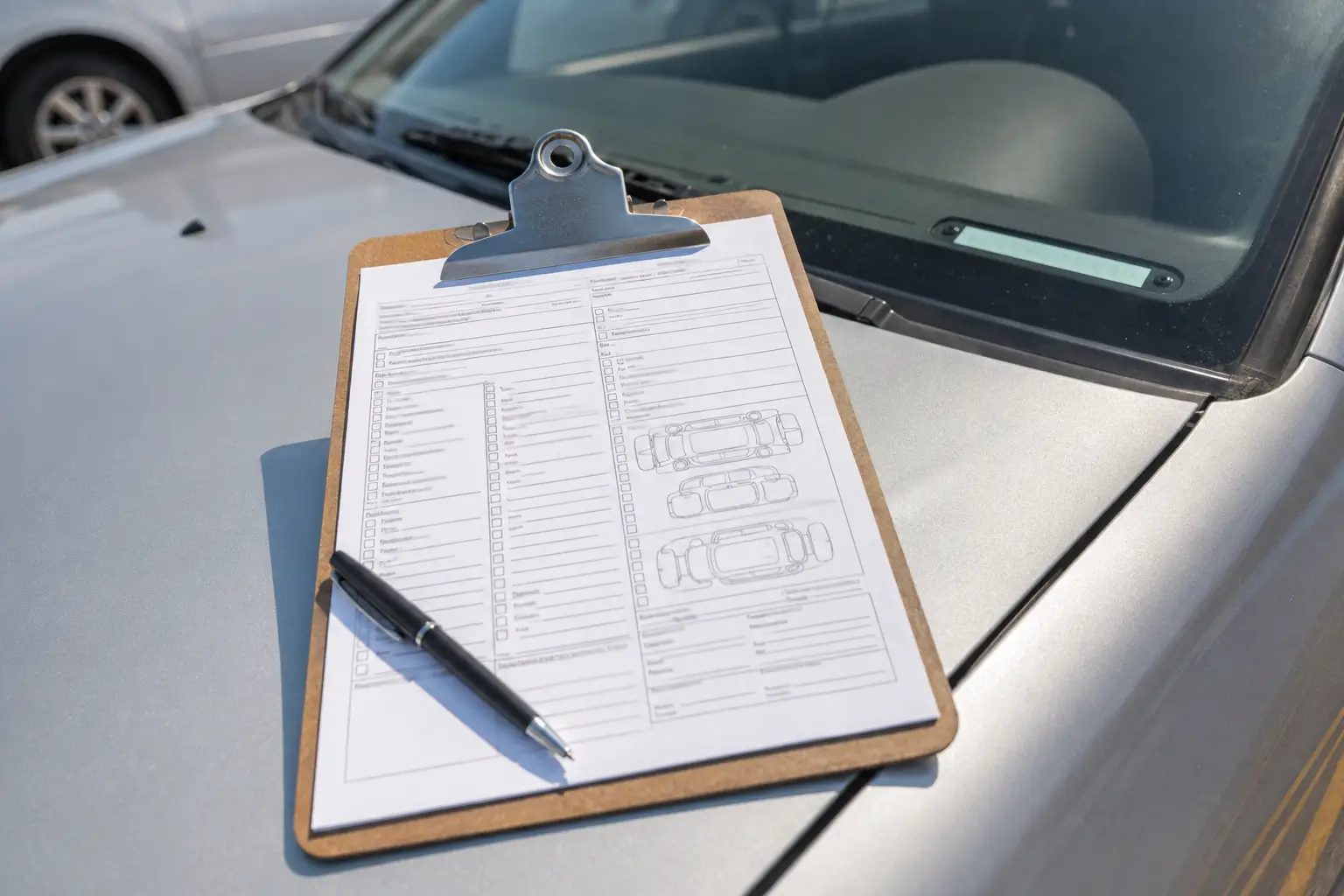
Florida VIN verification is a physical inspection of your vehicle's identification number, certified in writing on Form HSMV 82042. The state uses it to confirm two things: that the VIN stamped on the car matches the VIN on the paperwork you're submitting, and what the odometer read at the moment of transfer.
That second part is easy to overlook. The form is officially the Vehicle Identification Number and Odometer Verification, and the mileage entry carries the same legal weight as the VIN entry.
Who needs to file it
The requirement applies to used motor vehicles that are not currently titled in Florida, including trailers with a net weight of 2,000 pounds or more.
If you're bringing a car in from out of state, that's you. If you're moving down from New York with a car you've owned for a decade, that's still you — length of ownership doesn't matter, only where the title currently lives.
Who's exempt
The requirement does not apply in several situations, and this is where people waste trips:
Situation | Form 82042 required? |
|---|---|
Used vehicle titled in another state | Yes |
Used vehicle already titled in Florida | No |
Brand-new vehicle, bought in Florida or out of state | No |
Mobile home | No |
Trailer or semitrailer under 2,000 lbs net weight | No |
Travel trailer or camp trailer | No |
The logic is consistent: Florida only inspects vehicles whose identity the state hasn't verified before. A new car arrives with a manufacturer's certificate of origin, so there's nothing to cross-check.
Who Can Legally Verify Your VIN in Florida
The authorized verifiers
This is where most rejected applications come from. Part B of the form must be completed by someone Florida has authorized to perform the physical inspection:
Authorized verifier | Where to find them | Typical cost & turnaround |
|---|---|---|
Florida notary public | Banks, shipping stores, mobile notary services | $10 per notarial act by statute; mobile notaries add a travel fee. Same day |
Law enforcement officer | Local police or sheriff's department | Usually free; call ahead, many run set hours. Same day to a few days |
Licensed Florida dealer | Any franchised or independent dealership | Often free if you bought there; otherwise varies. Same day |
DMV compliance examiner or inspector | Division of Motorist Services / county tax collector office | Free while you're there filing. Same visit |
Military police officer | On-base, for active-duty members | Free. Same day |
If you bought from an out-of-state dealer
An out-of-state motor vehicle dealer can verify the VIN, but the verification has to arrive on their own letterhead stationery rather than in Part B of the Florida form.
Get it before the car ships. Chasing a dealership three states away after delivery is a slow way to spend a week, and they have no particular incentive to hurry once your money has cleared.
Who cannot verify your VIN
You can't verify your own vehicle, and neither can the person selling it to you. A notary commissioned in another state doesn't qualify either — the commission has to be Florida's.
That last one catches people who buy near the state line and assume a notary is a notary.
Form 82042 vs Form 82040: Which One You Actually Need
Two different forms handle VIN verification in Florida, and confusing them is the second most common reason applications get bounced.
What each form does
HSMV 82042 is the standalone VIN and odometer verification. It does one job: certify that the number on the car is real and record the mileage. It does not transfer title, register anything, or apply for a plate.
HSMV 82040 is the Application for Certificate of Title With/Without Registration — the main title application. It contains its own VIN verification section built into the form.
Do you need both?
In practice, usually yes. You file the 82040 to actually get the Florida title, and the 82042 travels with it as a supporting document whenever the verification was performed separately — by a notary at your kitchen table on Saturday, say, rather than by the examiner standing at the counter.
When you can skip the 82042 entirely
If you're going to the tax collector's office anyway and the car is physically with you, the examiner can verify the VIN on the spot as part of the 82040. In that case you may never need a separate 82042 at all.
If the car isn't with you, or you're mailing the application, you need the 82042 completed in advance. When in doubt, bring the car.
Step-by-Step: Completing the Verification
Find the VIN in both required locations
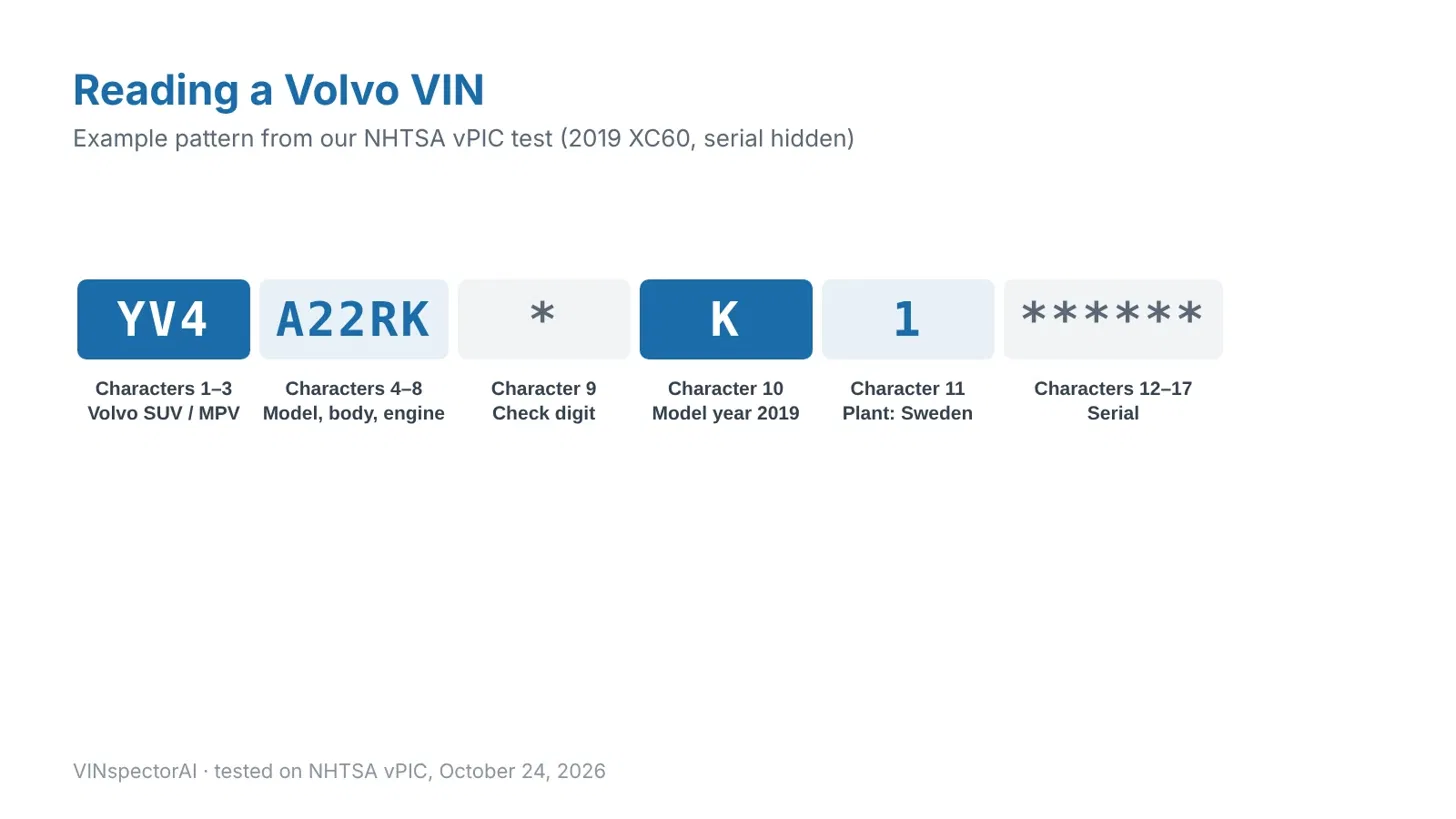
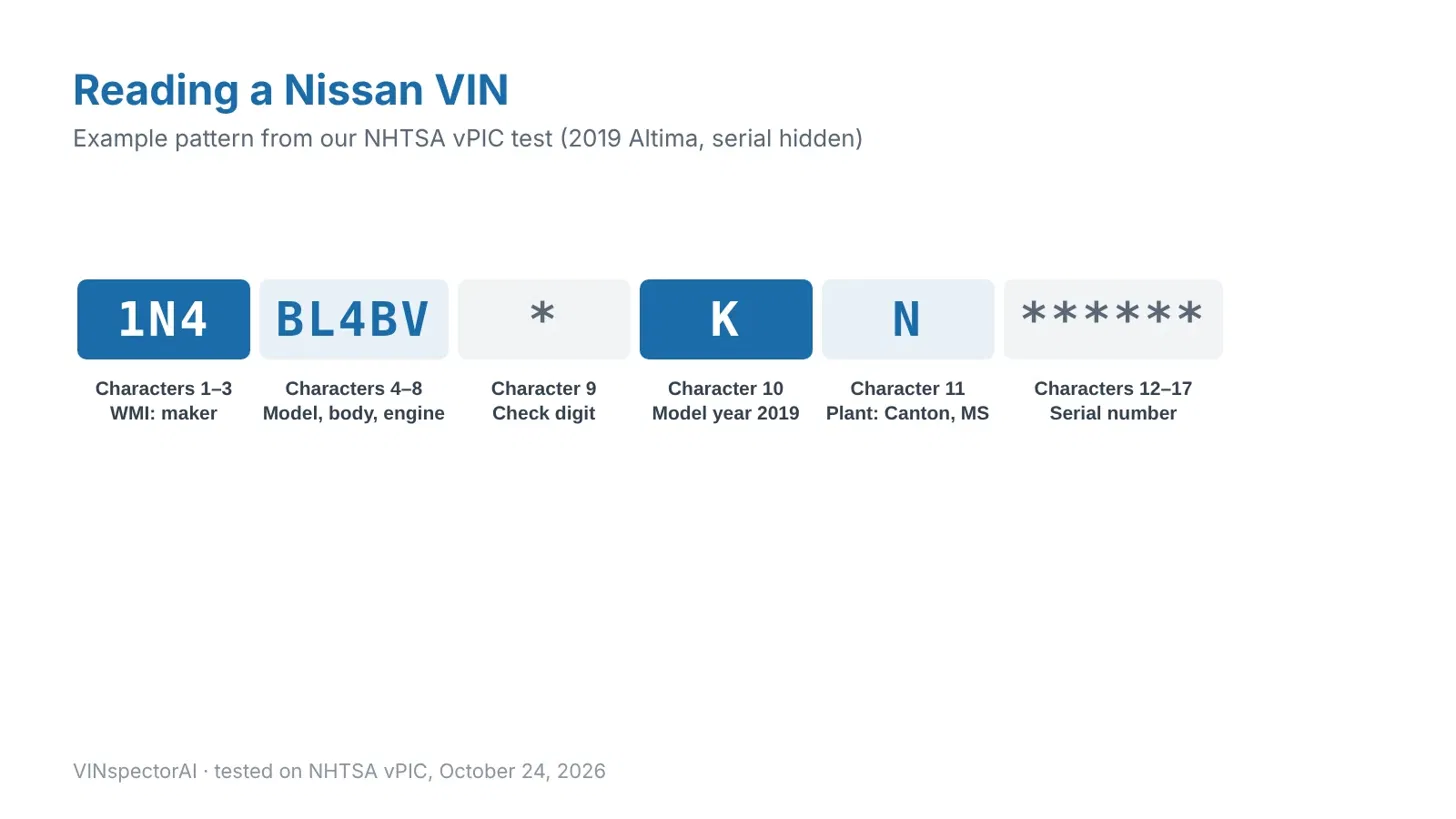
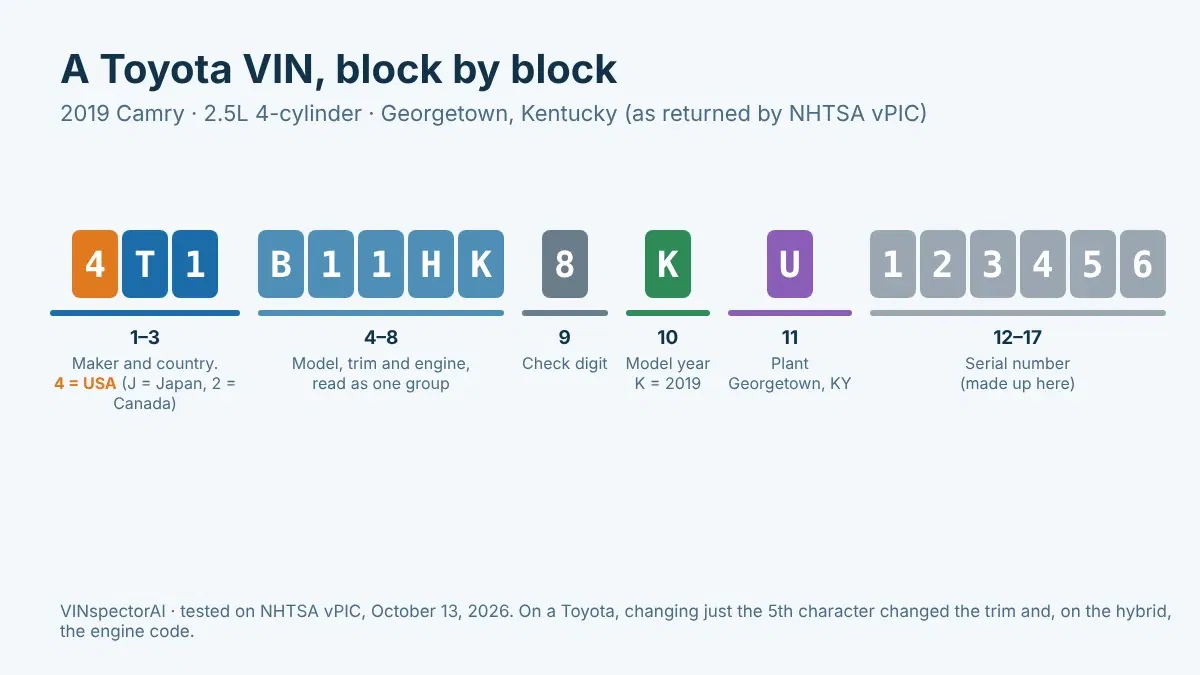
The inspection isn't a glance at one sticker. The verifier is required to physically check the VIN under the windshield and in the driver's door jamb. Both need to be present and both need to match. If you're not sure where to look, our guide on how to look up a car VIN number covers every location manufacturers use.
For vehicles manufactured before 1955, the motor number is verified instead — relevant if you're titling a classic.
Clean both spots before the appointment
Grease and sun-faded door jamb labels are a real cause of failed verifications on older cars. A verifier who can't read the number won't sign for it, and you'll be rescheduling.
Thirty seconds with a rag beforehand saves a second appointment.
Complete Part A — the owner's affidavit
You fill this out yourself. It covers the vehicle year, make, color, body type, the state where it was previously titled, and your certification of the current odometer reading.
Take the mileage reading the same day the verifier inspects the car. Federal and state law both attach penalties to a false odometer statement, and a number that doesn't match the dash is the kind of discrepancy that turns a routine filing into a paperwork investigation.
One practical warning: don't sign Part A in advance if a notary is involved. They need to witness the signature.
Have the verifier complete Part B
The authorized verifier signs off on the physical inspection. They record the VIN as they observed it, note the odometer reading, and sign. If a notary is doing it, the form gets notarized at the same time.
File it with your county tax collector
The 82042 is a supporting document, so it's submitted together with your title application, not separately. File the whole package with your county tax collector's office.
Watch the 30-day deadline
Florida gives you 30 days from the date of sale to apply for title. Miss that window and the state adds a late penalty on top of the normal fees.
Fee schedules do shift, so confirm the current amount with your county office before you assume — but the deadline itself is the part worth putting in your calendar the day you sign.
What Happens If the VIN Doesn't Match
Sometimes the inspection turns up a problem. The door jamb label is missing. The windshield plate has been replaced. Two numbers on the same car disagree by a character.
Missing or unreadable VIN
This isn't automatically fraud — door jamb stickers peel, and body shops replace panels during legitimate repairs. But Florida won't title a vehicle it can't identify, so the process stops until the identity is established.
That usually means a DMV inspection rather than a notary, since a compliance examiner can check secondary VIN locations that most verifiers won't.
Altered or restamped VIN
This is a different matter entirely. A restamped VIN is a common signature of a cloned vehicle, where a legitimate VIN from a similar car is transplanted onto one with a history the seller would rather you didn't see — usually a branded title the car can't outrun any other way.
If a private seller is unusually relaxed about a VIN that doesn't quite match the title, treat that as the warning it is and walk away. You are not obligated to finish a transaction because you drove an hour to see the car.
When a bonded title becomes the path
In cases where the original number is genuinely unrecoverable and no clean chain of ownership exists, the route back to a valid title runs through a bonded title application — a surety bond that protects the state and any future claimant while you take ownership on record.
It's a longer process than a standard transfer, and it's worth knowing before you buy a car with paperwork problems rather than after.
Check the History Before the Paperwork
What verification doesn't cover
Here's the limitation nobody explains at the counter: VIN verification confirms that the number on the car matches the number on the document. That's all it does.
It won't tell you the car was totaled in a crash or a flood two states away. It won't surface a salvage or rebuilt brand from a state that reported it late — the paperwork can say clean title while the VIN record says otherwise. It won't show you an odometer that rolled back 40,000 miles between owners, or four open safety recalls that were never performed. For that you need an accident and history check on the VIN, which is a completely separate lookup.
Why this matters more in Florida
Florida is one of the highest-volume used car markets in the country, and cars flow into it constantly from hurricane and flood regions — which is exactly the kind of history that gets laundered through a title transfer if nobody checks.
Running a Florida VIN check before you hand over money costs a fraction of what a branded title takes off your resale value.
If you're buying across the state line, the same applies at origin — a car bought in Georgia carries its Georgia record with it whether or not the seller mentions it,
Frequently Asked Questions
Get answers to common questions about Florida VIN Verification: How to Complete Form HSMV 82042 | 2026
Uncover Complete Vehicle History Reports
Discover critical vehicle information before you buy. Our VIN decoder reveals accident records, title status, recalls, and service history to help you make informed decisions.