What Is a Branded Title Vehicle? Everything Used Car Buyers Must Know
You found a used car priced $4,000 below market value. The listing looks clean, the photos look great — but the fine print says "branded title." Should you walk away or is it still a good deal?
The answer depends entirely on what type of brand is on that title. Some branded vehicles are perfectly safe purchases. Others are financial traps. Here's everything you need to know before you hand over your money.
What Does "Branded Title" Actually Mean?
A branded title is an official designation placed on a vehicle's title by a state motor vehicle agency. It signals that something significant happened to the car — serious damage, a legal dispute, or a major mechanical failure — that was officially recorded.
Every vehicle in the US starts with a clean title. Once a brand is applied, it's permanent. There's no legal way to remove it, no matter how well the car is repaired.
That permanent record is the whole point. It protects buyers from unknowingly purchasing a car with a hidden past.
Types of Branded Titles and What They Mean
Not all branded titles are equal. A lemon title is a very different situation from a salvage title. Here's what each one actually means.
Salvage Title
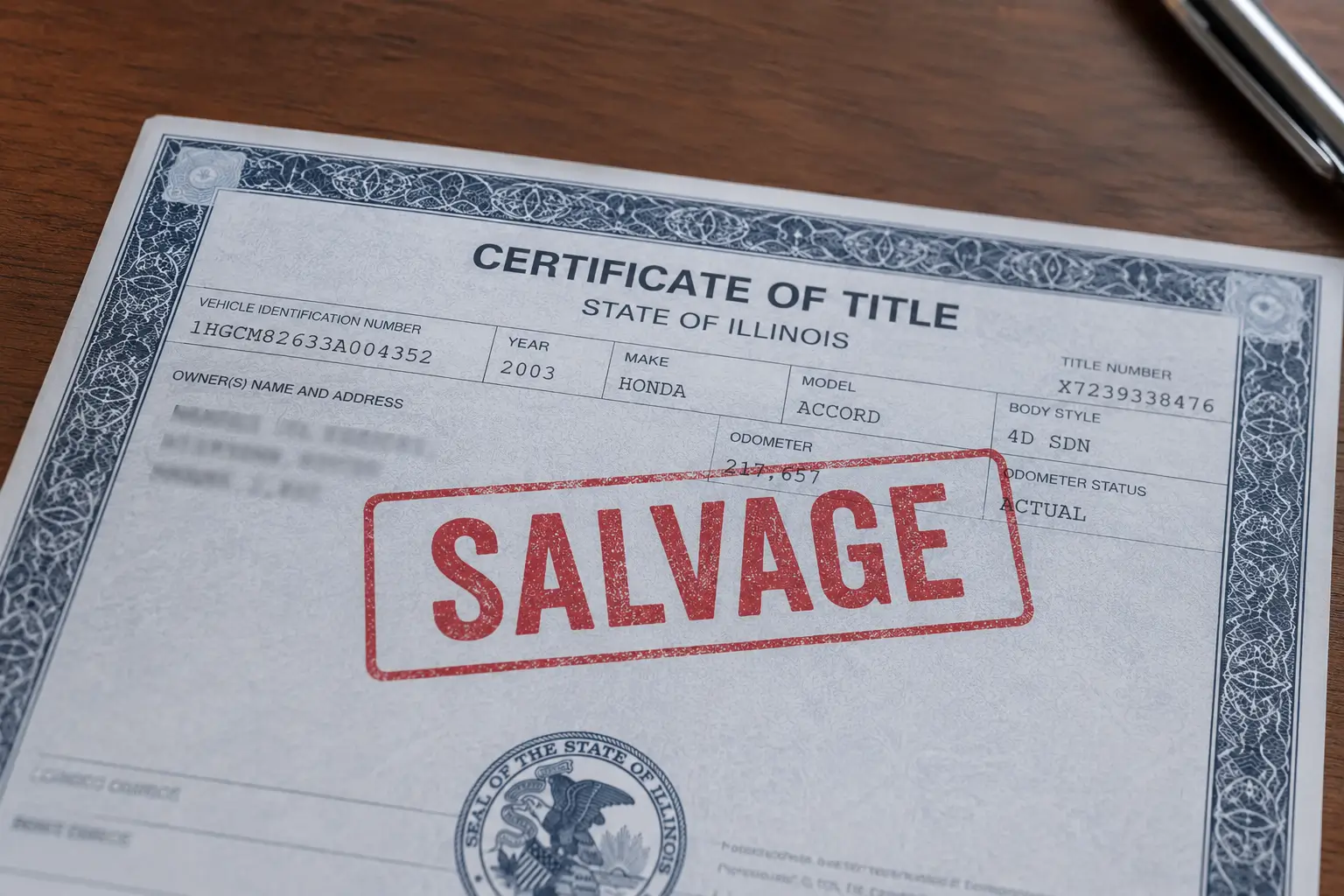
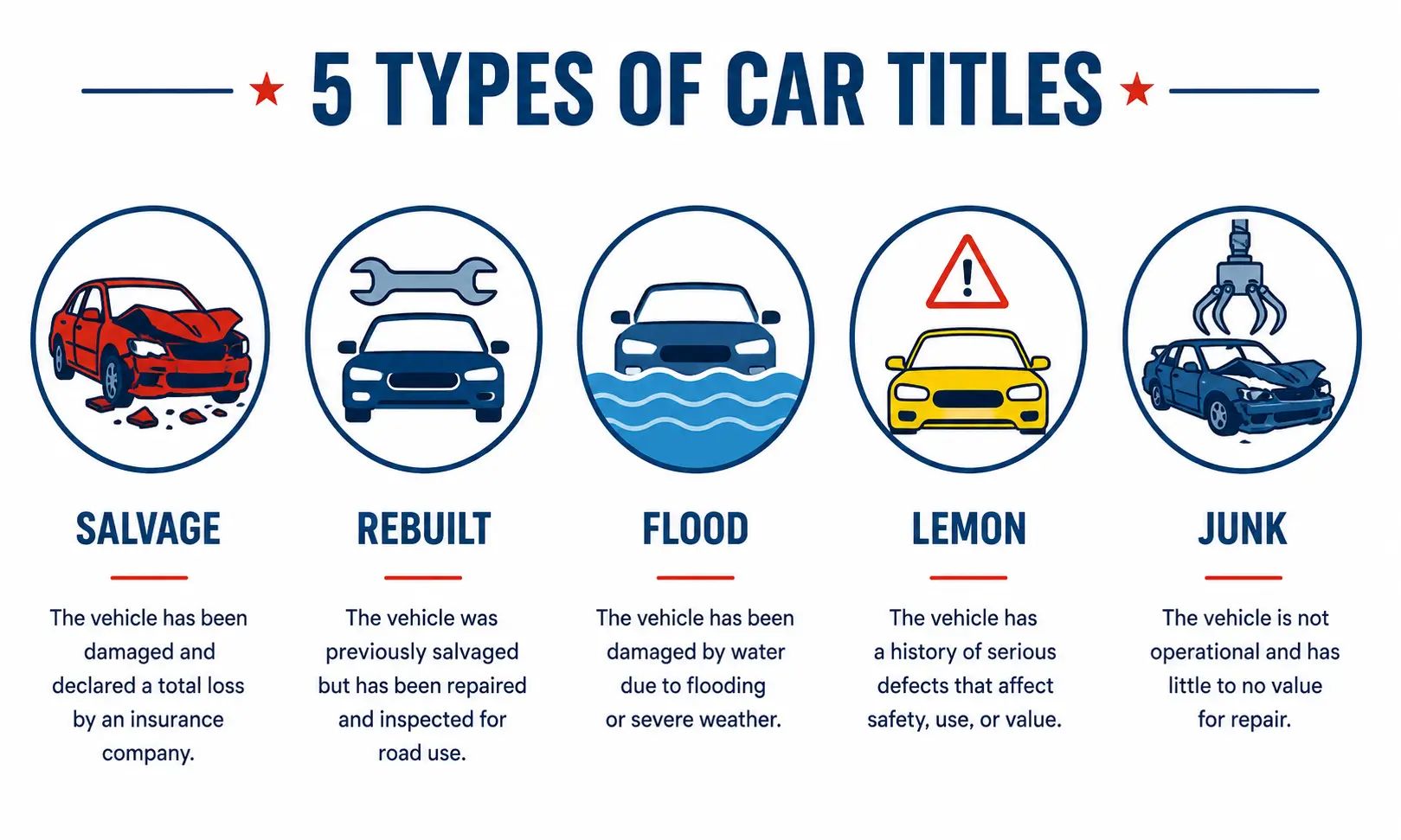
A salvage title is issued when an insurance company declares a vehicle a total loss — meaning the cost to repair it exceeded its market value (typically 75–80% of the car's worth). This usually happens after:
A serious accident
Flood or fire damage
Hail damage
Theft recovery where the vehicle was significantly stripped
A salvage title vehicle cannot legally be driven on public roads until it's repaired and passes a state inspection. Once it passes, it gets reclassified as a rebuilt title.
Rebuilt / Reconstructed Title
A rebuilt title means the car previously had a salvage title, was repaired, and passed a state safety inspection. It's now road-legal — but the history doesn't disappear.
The quality of the repair work varies enormously. Some rebuilt cars are professionally restored and perfectly safe. Others are patched together with cheap parts and minimal oversight. You can't tell from the title alone.
Flood Title
A flood-damaged title is one of the riskiest brands you'll encounter. Water intrusion causes damage that isn't always visible — corroded wiring, compromised electronics, mold in the interior, and long-term structural weakening.
The problem with flood cars is that they often look fine initially. Problems can appear months or years after purchase, making them expensive and frustrating to own. If you're buying in states like Florida or Texas — which regularly experience hurricanes and flooding — this is a particularly important brand to watch for.
Lemon Title / Manufacturer Buyback
A lemon title (also called a manufacturer buyback) is issued when a manufacturer repurchases a vehicle under lemon law — meaning the car had repeated defects that couldn't be fixed within a reasonable number of attempts.
These vehicles are often resold after repairs, but the title carries a permanent notation. Unlike salvage or flood titles, a lemon buyback vehicle may actually be in decent mechanical condition — the manufacturer had strong legal incentive to fix it properly. That said, the underlying defect history is worth investigating carefully.
Junk / Scrapped Title
A junk or scrap title means the vehicle was declared fit only for parts. In most states, a junked vehicle cannot be re-titled for road use. If you see a junked title on a car being sold as drivable, that's a serious red flag.
How a Car Gets a Branded Title
The process starts when an insurance company, state agency, or court makes a formal determination about the vehicle's condition. Here's the typical path for the most common brand:
Vehicle is in a serious accident or suffers major damage
Insurance adjuster determines repair cost exceeds the threshold (usually 75–80% of market value)
Insurance company pays out the claim and takes ownership of the vehicle
State DMV is notified and issues a salvage title
Vehicle is sold at auction — often to repair shops or dealers
If repaired and inspected, title is reclassified as rebuilt
The key thing to understand: the brand travels with the VIN forever. Even if the car is sold across state lines, the history follows it.
Branded Title vs Clean Title: What's the Real Difference?
A clean title means the vehicle has no recorded major damage, theft, or legal issues on its history. It doesn't guarantee a perfect car — a vehicle can have undisclosed mechanical problems and still carry a clean title — but it means no insurer or state agency has formally flagged a serious event.
A branded title, by contrast, means something significant was officially recorded. The practical differences matter:
Insurance: Many insurers won't offer full comprehensive coverage on salvage or rebuilt vehicles. Those that do often charge higher premiums.
Financing: Most banks and credit unions won't finance a salvage or rebuilt title vehicle. You'll likely need to pay cash.
Resale value: Branded title vehicles typically sell for 20–40% less than comparable clean title cars — even after full repairs.
Inspection requirements: Many states require additional inspections before a rebuilt vehicle can be registered.
Should You Buy a Car with a Branded Title?
It depends on the type of brand and how thoroughly you can verify the repair history.
Cases where it can make sense:
Lemon buyback vehicles that were repaired under manufacturer warranty
Hail-damage titles where the damage was purely cosmetic
Rebuilt titles where you have full documentation of professional repairs
Cases where you should be very cautious:
Flood titles — long-term electrical and structural issues are hard to predict
Salvage titles without clear repair documentation
Any branded vehicle where the seller can't provide repair records
The lower price can be attractive, but factor in higher insurance costs, limited financing options, and reduced resale value. The gap often narrows faster than buyers expect.
How to Check If a Car Has a Branded Title Before You Buy
Never rely on what a seller tells you about a car's title. Here's how to verify it yourself:
1. Run a VIN check. A vehicle history report from VINspectorAI pulls title records directly from state DMVs and NMVTIS (National Motor Vehicle Title Information System). You'll see the current title status and any historical brands — even if the car has been re-titled in a different state.
2. Check the physical title document. The brand should be printed directly on the title. Look for words like "Salvage," "Rebuilt," "Flood," or "Manufacturer Buyback."
3. Get an independent inspection. For any branded title vehicle you're seriously considering, pay for a pre-purchase inspection from a mechanic who has no connection to the seller.
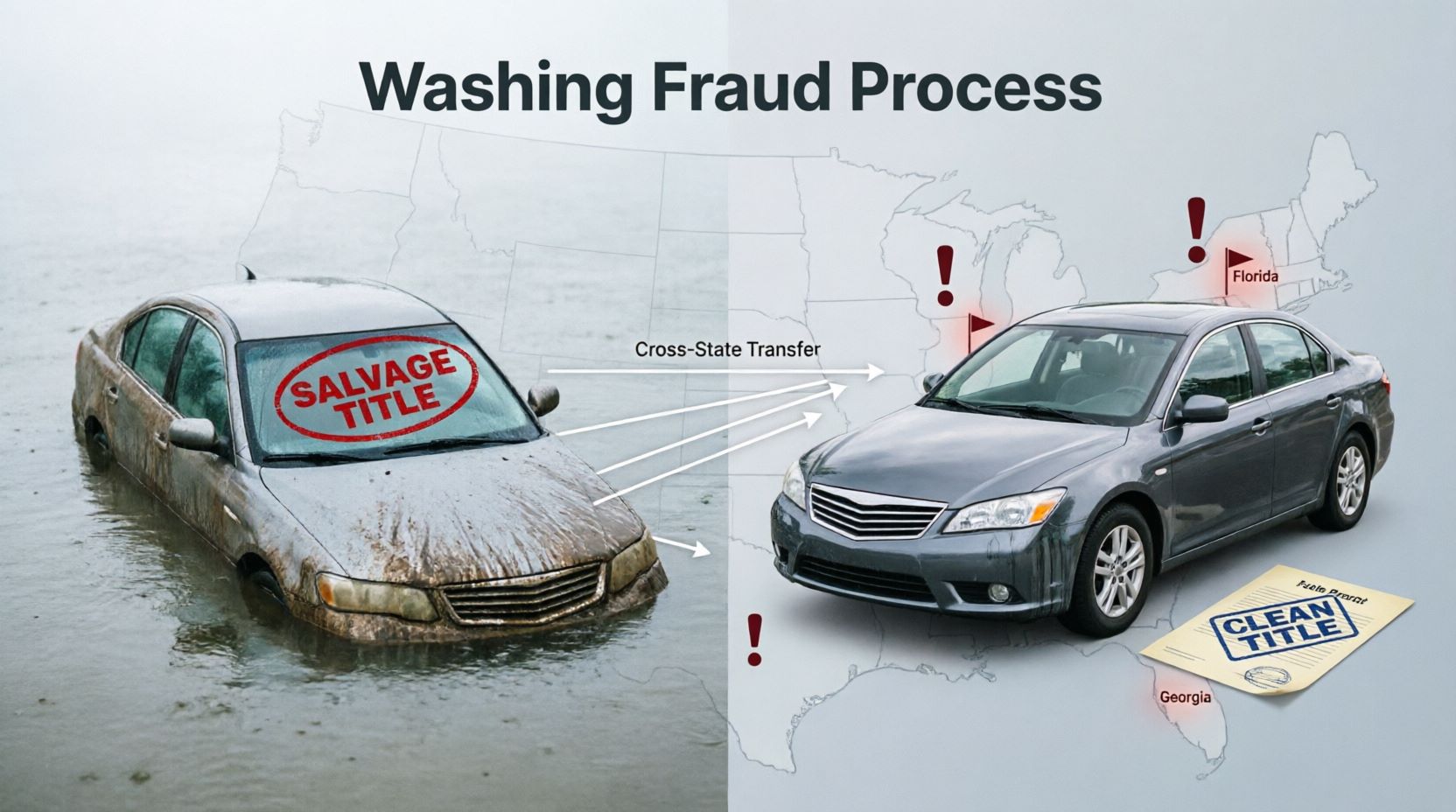
4. Check for title washing. This is when a seller re-registers a vehicle in a state with different branding laws to obscure its history. A VIN check that pulls NMVTIS data will reveal the title history across all states — not just the current registration state.
If you're buying in Ohio or Pennsylvania, check your state's specific title branding thresholds — they vary, and a car branded in one state might have a clean title in another.
What Should You Do Before You Sign?
A branded title isn't an automatic dealbreaker — but it demands more due diligence than a clean title purchase.
Run the VIN, get the repair records, have an independent mechanic inspect the vehicle, and make sure you understand what insurance and financing will actually cost you. The discount on a branded title car needs to be large enough to justify those real costs.
Start with a VIN check at VINspectorAI.com — it takes 60 seconds and tells you exactly what's on that title before you invest any more time or money into the purchase.
Frequently Asked Questions
Get answers to common questions about What Is a Branded Title Vehicle? Everything Used Car Buyers Must Know
Uncover Complete Vehicle History Reports
Discover critical vehicle information before you buy. Our VIN decoder reveals accident records, title status, recalls, and service history to help you make informed decisions.