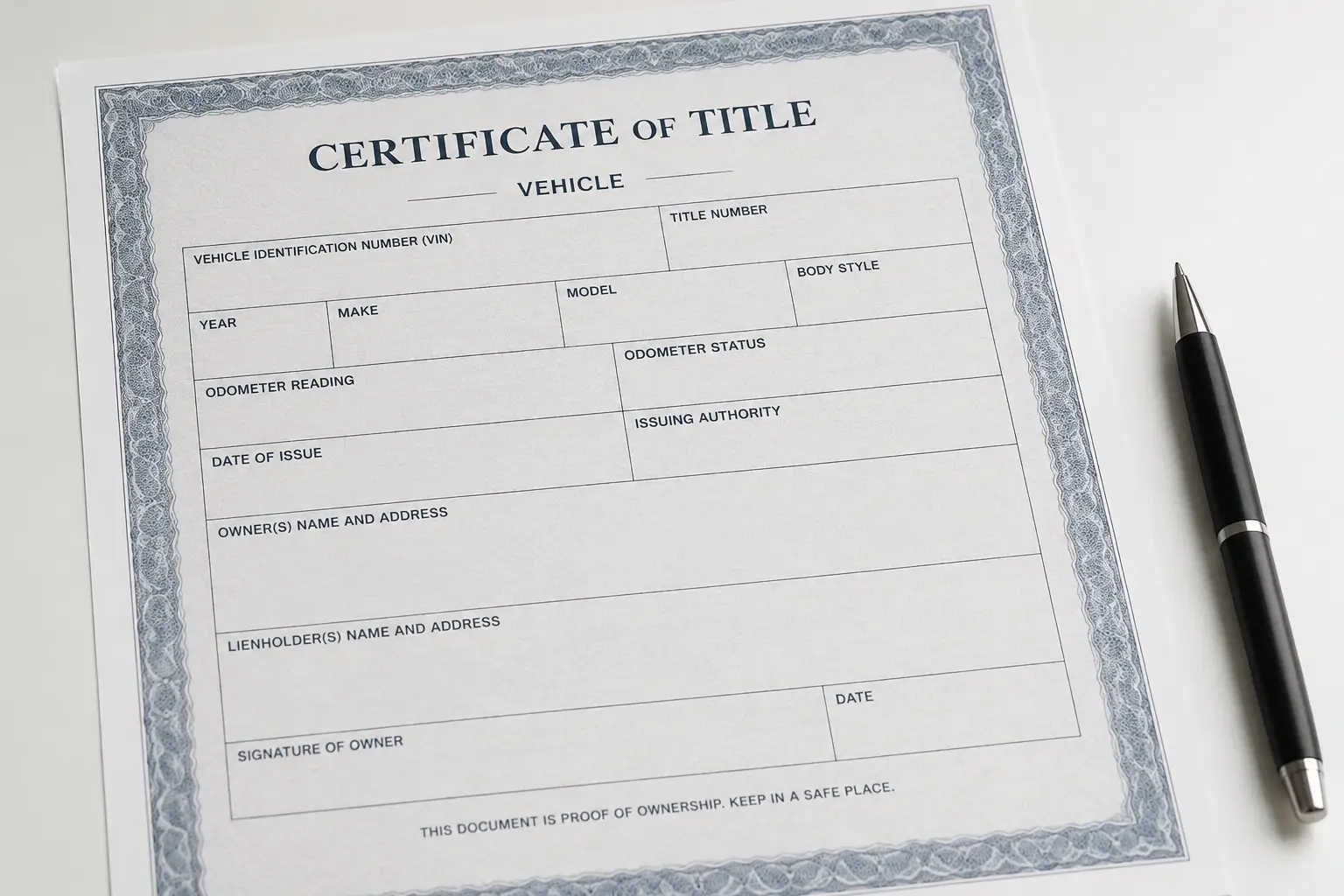
What Is a Clean Title on a Car? What Every Used Car Buyer Must Know
Every used car listing eventually comes down to one question: what does the title say?
"Clean title" is the phrase sellers use to signal a car is safe to buy. But most buyers don't actually know what it means — or more importantly, what it doesn't mean. Before you hand over any money, here's what a clean title really tells you, and what it doesn't.
What Does a Clean Title Mean?
A clean title means an insurance company has never declared the vehicle a total loss. That's it. Nothing more, nothing less.
All new cars start with a clean title by default. A title stays clean as long as no insurer writes the car off — regardless of accidents, repairs, or ownership changes. The moment an insurance company declares total loss, the state's DMV brands the title, and it can never go back to clean.
Think of a clean title as the absence of a red flag — not a guarantee of a perfect history.
Want more detail? Read our full guide on what clean title means.
Clean Title vs. Clear Title — They're Not the Same Thing
This is one of the most common points of confusion in used car buying, and it matters.
Clean title refers to the vehicle's damage history. It means the car has never been declared a total loss.
Clear title refers to ownership status. It means there are no liens, loans, or legal claims on the vehicle. The seller owns it outright and can transfer it without complications.
A car can have a clean title but not a clear title — for example, if the owner still owes money on a car loan. In that case, the lender is technically the legal owner until the loan is paid off, and selling the car becomes complicated.
When buying a used car, you want both: a clean title and a clear title. Always confirm there are no outstanding liens before completing any purchase.
Clean Title vs. Branded Title — What's the Difference?
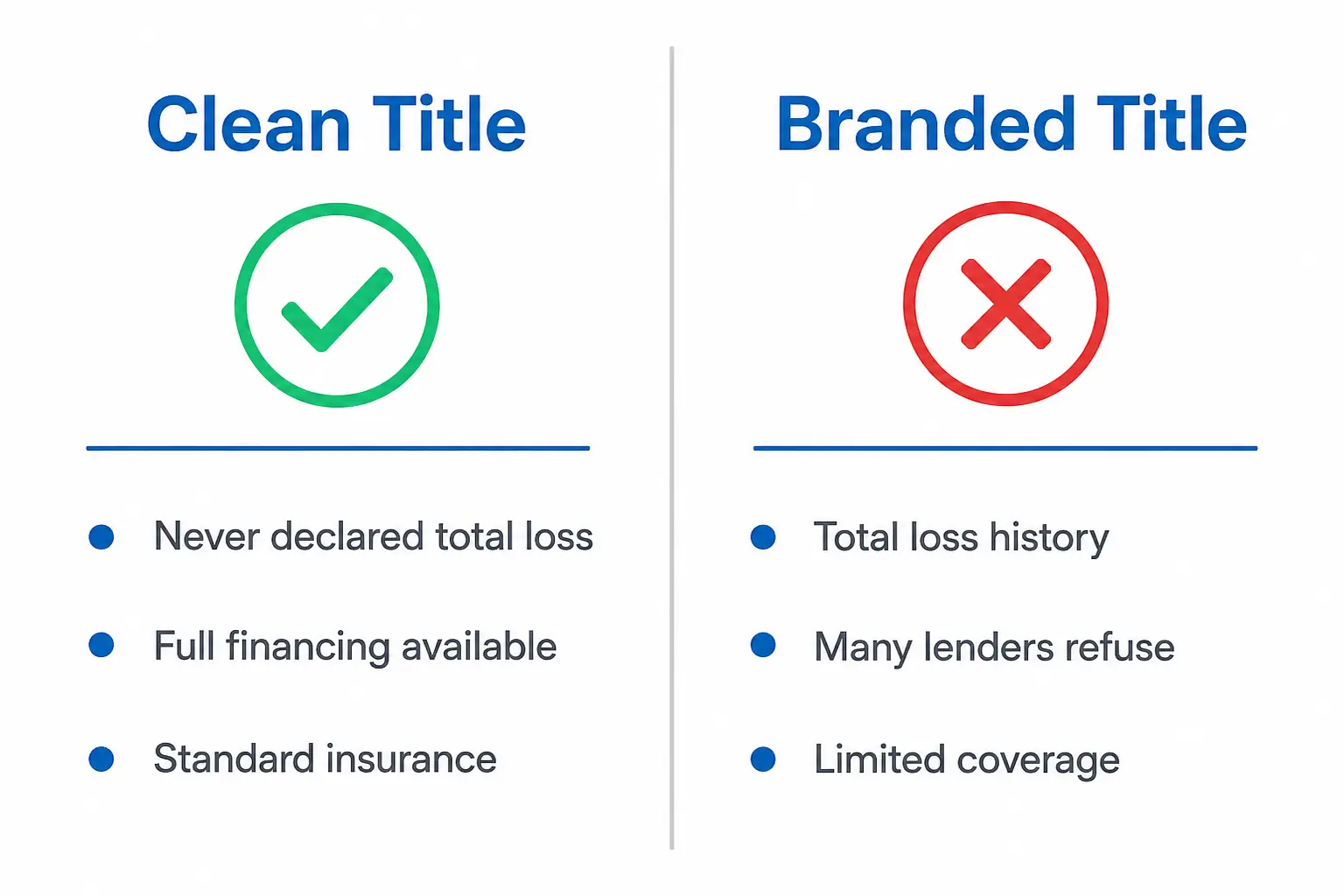
Branded title is the umbrella term for any title that isn't clean. Once a car receives a brand — salvage, rebuilt, flood, lemon, odometer rollback, or hail damage — that designation is permanent and follows the VIN forever.
Clean Title | Branded Title | |
|---|---|---|
Total loss history | Never declared total loss | Was declared total loss or had major event |
Value | Full market value | 20–60% below market |
Financing | Standard rates, most lenders | Many lenders refuse; higher rates if available |
Insurance | Full coverage standard | Some insurers limit or decline coverage |
Resale | Straightforward | Harder — brand is visible to every future buyer |
Starting point | All new cars | After accident, flood, fraud, or manufacturer buyback |
For a full breakdown of what each type of branded title means, see our guide on what a branded title means.
Does a Clean Title Mean the Car Has No Problems?
No — and this is the most important thing to understand.
What a Clean Title Doesn't Cover
A clean title only means no insurer declared the vehicle a total loss. It says nothing about:
Accidents where the owner paid for repairs out of pocket and never filed an insurance claim
Mechanical issues, deferred maintenance, or wear and tear
Minor flood damage that didn't meet the threshold for a branded title
Odometer discrepancies that were never officially reported
Frame damage from a collision that was repaired but never flagged
A clean title also won't protect you from lemon law issues — a car with repeated unfixable defects can have a clean title if the owner never filed an insurance claim. Learn more about [what makes a car a lemon].
In fact, a significant number of used cars with clean titles have undisclosed accident histories. Sellers can repair damage privately, skip the insurance claim entirely, and sell the car with a perfectly clean title — and no legal obligation to disclose what happened.
This is exactly why a clean title is a starting point for due diligence, not the finish line.
Benefits of Buying a Car With a Clean Title
That said, a clean title genuinely does matter. Here's what it gives you that a branded title can't:
Financing
Banks and credit unions will finance clean title vehicles without hesitation. With a branded title — especially salvage or rebuilt — many lenders simply won't approve a loan. Those that do charge higher interest rates.
Insurance
Clean title cars are insured normally. Full comprehensive and collision coverage is available without restrictions. With branded titles, some insurers decline coverage entirely or limit payouts based on the branded vehicle's lower market value.
Resale Value
When you eventually sell the car, a clean title makes the transaction straightforward. Buyers don't negotiate you down 20–40% the moment they see the title. Every future buyer who runs a VIN check will see what you see now.
Peace of Mind
You know the car was never written off as a total loss. That's a meaningful baseline, even if it's not a guarantee of perfection.
How to Verify a Car Has a Clean Title Before You Buy
Sellers aren't always required to disclose a branded title — especially in private sales. And title washing, where a car is re-registered in a different state to obscure a brand, is more common than most buyers realize.
Check the Physical Title
Ask to see the document yourself before any money changes hands. Look for stamps, brands, or notations. Keep in mind that a washed title may look clean on paper even if the car's history tells a different story.
The opposite of a clean title is a branded title — here's what each type means.
Run a VIN Check
This is non-negotiable. A VIN check pulls data from NMVTIS and state DMV records across all 50 states, showing every title event the car has had — including brands that may have been obscured through re-titling in another state.
If you're buying in Florida, where water-damaged and hurricane-affected cars are common, a Florida VIN check will surface any title events the seller may not mention. In Ohio, where title fraud cases have been well-documented, an Ohio VIN check gives you the full picture. And in New York, one of the largest used car markets in the country, a New York VIN check confirms what you're actually buying.
A clean title on the paperwork in front of you is a good sign. A clean title confirmed through a VIN check is the only one you can trust.
What Should You Do Before You Sign?
A clean title is the baseline you want — but baseline isn't everything. Always verify through the VIN, not just the seller's word or the document they hand you.
Run a VIN check on VINspectorAI before any used car purchase. You'll see the full title history, accident records, odometer data, and open recalls in under a minute.
Frequently Asked Questions
Get answers to common questions about What Is a Clean Title on a Car? What Every Used Car Buyer Must Know
Uncover Complete Vehicle History Reports
Discover critical vehicle information before you buy. Our VIN decoder reveals accident records, title status, recalls, and service history to help you make informed decisions.