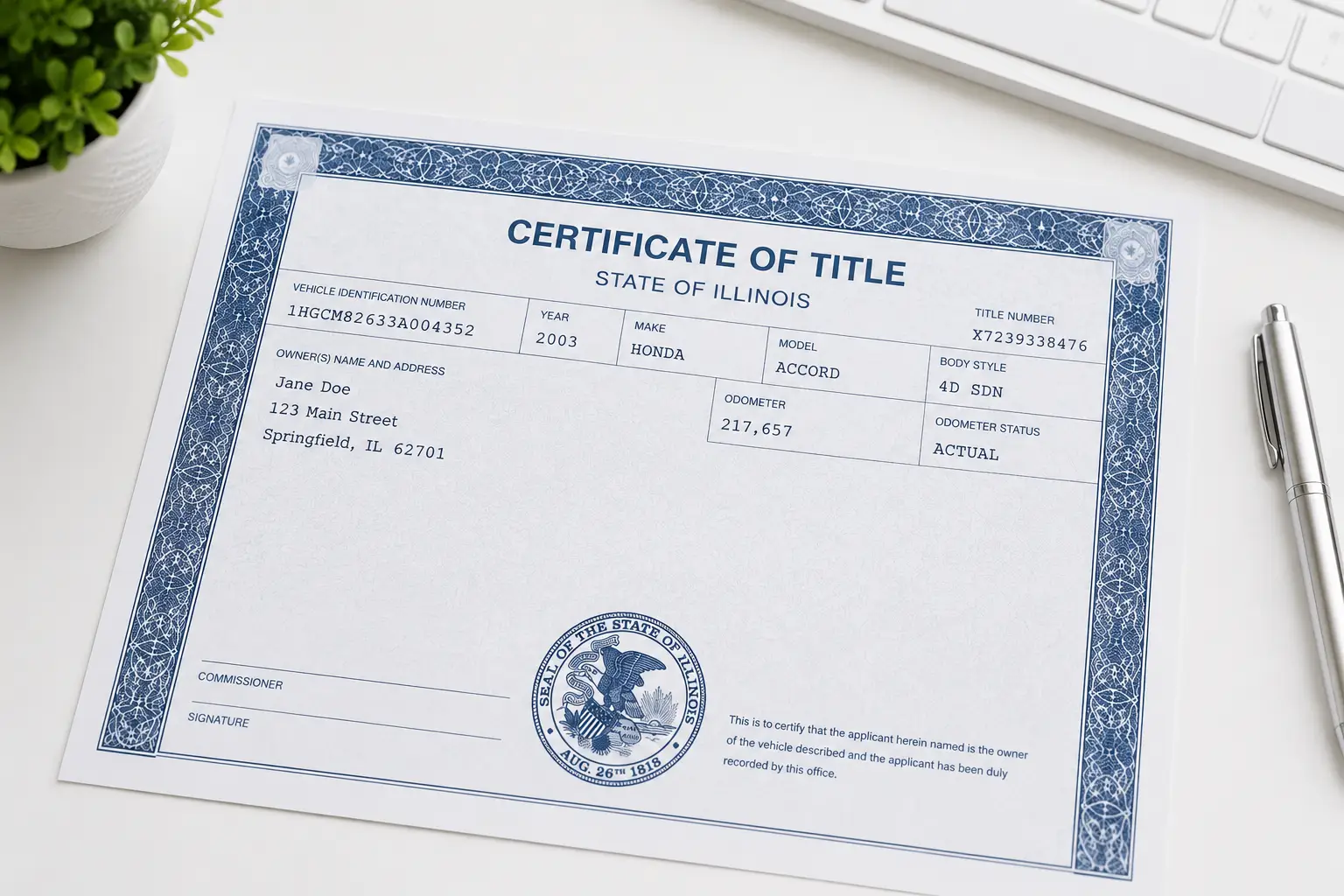
What Does Clean Title Mean? A Used Car Buyer's Complete Guide
A seller tells you the car has a "clean title." You nod like you know what that means — but do you really know what it guarantees? And more importantly, what it doesn't?
This term is one of the most misunderstood in used car buying. It doesn't mean the car was never in an accident. It doesn't mean it's problem-free. Here's what it actually means and why it matters before you sign anything.
What "Clean Title" Actually Means
A clean title is issued by a state DMV to a vehicle that has no official record of being declared a total loss, salvaged, flooded, stolen, or otherwise flagged by an insurer or government agency.
In simple terms: no major event was officially recorded against the car's document of ownership.
That's it. This is a legal status — not a mechanical certification. A vehicle can have been in multiple accidents and still carry this designation, as long as the damage was never severe enough for an insurance company to declare it a total loss.
This is the part most buyers miss.
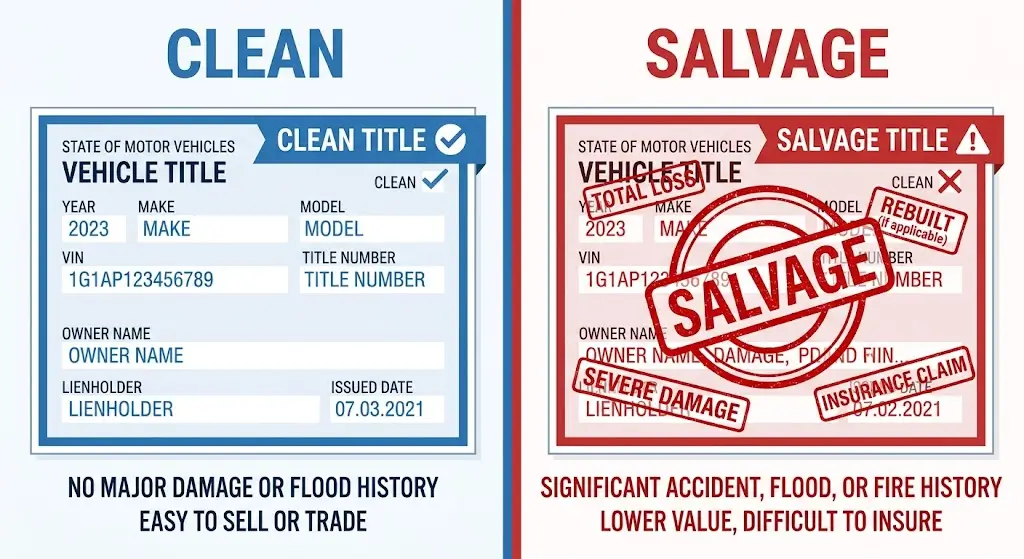
Why the Distinction Matters
When an insurer declares a vehicle a total loss, the state DMV is notified and issues a branded title — permanently marking the car's record. If that never happened, the original document remains clean.
The threshold for total loss varies by state, but it typically kicks in when repair costs exceed 75–80% of the car's market value. Below that threshold, the title stays clean regardless of the damage.
Clean Title vs Branded Title: What's the Difference?
The two categories every buyer needs to understand:
Clean title — no recorded total loss, no state-issued damage designation
Branded title — officially flagged for salvage, flood, rebuild, lemon buyback, or similar events
Once a title is branded, it stays that way forever. There's no legal way to convert it back — though some sellers attempt "title washing" by re-registering in states with looser branding laws.
Common Types of Branded Titles
If a vehicle doesn't have a clean designation, it likely carries one of these brands:
Salvage — declared a total loss after an accident, flood, or theft. Cannot legally be driven until repaired and inspected.
Rebuilt/Reconstructed — previously salvaged, repaired, and passed a state inspection. Road-legal, but history is permanently recorded.
Flood — water damage was officially reported. One of the riskiest categories due to long-term electrical and structural issues.
Lemon/Manufacturer Buyback — repurchased by the manufacturer under lemon law after repeated unfixable defects.
For a full breakdown, see our guide to branded title vehicles.
Does Clean Title Mean No Accidents?
No — and this is the most important thing to understand.
A vehicle can have been in several accidents and still carry a clean designation, as long as the insurance company never declared it a total loss. If the owner paid for repairs out of pocket, or if damage fell below the insurer's threshold, the record stays clean.
This means the title tells you about legal status — not physical condition. Two cars with identical clean titles can have very different histories underneath.
What This Means for Buyers
This is exactly why running a full vehicle history check matters even when the title looks fine. A VIN check on VINspectorAI pulls accident reports, ownership history, odometer records, and service data — going far beyond what the title document alone shows.
What a Clean Title Does Guarantee
While this designation isn't a guarantee of condition, it does confirm several important things:
No insurance company has ever declared the vehicle a total loss
No state DMV has officially recorded flood, fire, salvage, or junk status
The vehicle hasn't been subject to a lemon law buyback
No odometer rollback has been officially recorded against the ownership document
These are meaningful assurances. A car with this status is easier to insure, easier to finance, and easier to resell. It also holds its value better over time than a branded alternative.
Hidden Problems a Clean Title Won't Reveal
Yes, problems can hide behind a clean designation — and it's more common than buyers expect.
Undisclosed Accidents
Minor to moderate collisions repaired without insurance involvement leave no record on the title. A car can look perfect on paper and have significant frame or structural damage underneath.
Odometer Fraud
Rolling back mileage doesn't automatically trigger a brand in every case. Always cross-reference listed mileage against service records and history reports.
Unreported Flood Damage
Cars flooded in states with minimal reporting requirements, or damage handled without an insurance claim, can avoid a flood brand entirely. Buyers in Florida and Texas — both hurricane-prone states — should be especially alert to this risk.
Title Washing
A vehicle with a salvage or rebuilt designation in one state can sometimes be re-registered in another and receive a clean document. This is illegal but it happens. A national VIN check that pulls NMVTIS data will catch it.
How to Verify the Title Is Legitimate
Don't rely on what a seller tells you. Here's how to confirm independently:
Step 1 — Run a VIN Check
Use VINspectorAI to pull the vehicle's full history — title records, accident reports, odometer readings, and ownership chain. The designation on the physical document should match the national database.
Step 2 — Inspect the Physical Document
Look for any stamps, notations, or markings. A legitimate clean document has no brand designations printed on it. Any unusual markings are a red flag.
Step 3 — Verify the VIN
The VIN on the title must match the number on the dashboard (visible through the windshield) and the door jamb sticker. A mismatch suggests possible fraud or a switched title.
Step 4 — Get an Independent Inspection
Even with a verified clean status, have a mechanic with no connection to the seller inspect the car before buying. Structural damage and hidden repairs won't appear on any title document.
If you're buying in California or New York, you can also request a title history search directly through your state DMV.
How Clean Title Affects Vehicle Value
This designation is a baseline requirement for full market value. Branded vehicles — even fully repaired rebuilt title cars — sell for 20–40% less than comparable clean title cars.
When selling, it's worth highlighting the status in your listing. Buyers actively filter for it, and it justifies a higher asking price. When buying, treat it as the starting point — not the finish line.
What to Check Before Buying Any Used Car
A clean title is a good sign — but due diligence doesn't stop there:
Run a VIN history report to verify title status nationally and check for accidents, odometer issues, and ownership gaps
Compare listed mileage against service records
Have an independent mechanic inspect the vehicle
Verify the VIN matches across all three locations — title, dashboard, door jamb
Check if the car was ever registered in a state known for title washing
Run the VIN now at VINspectorAI.com — it takes under a minute and gives you the full picture before you commit to anything.
Frequently Asked Questions
Get answers to common questions about What Does Clean Title Mean? A Used Car Buyer's Complete Guide
Uncover Complete Vehicle History Reports
Discover critical vehicle information before you buy. Our VIN decoder reveals accident records, title status, recalls, and service history to help you make informed decisions.