What Does a Branded Title Mean? A Plain-English Guide for Used Car
You're browsing used car listings and find exactly what you've been looking for — right price, right mileage, right color. Then you notice two words in the listing: branded title. Suddenly the deal doesn't look as clean.
Before you walk away — or worse, before you sign without understanding what you're buying — here's everything you need to know about branded titles, what each type means, and how to protect yourself.
What Is a Branded Title on a Car?
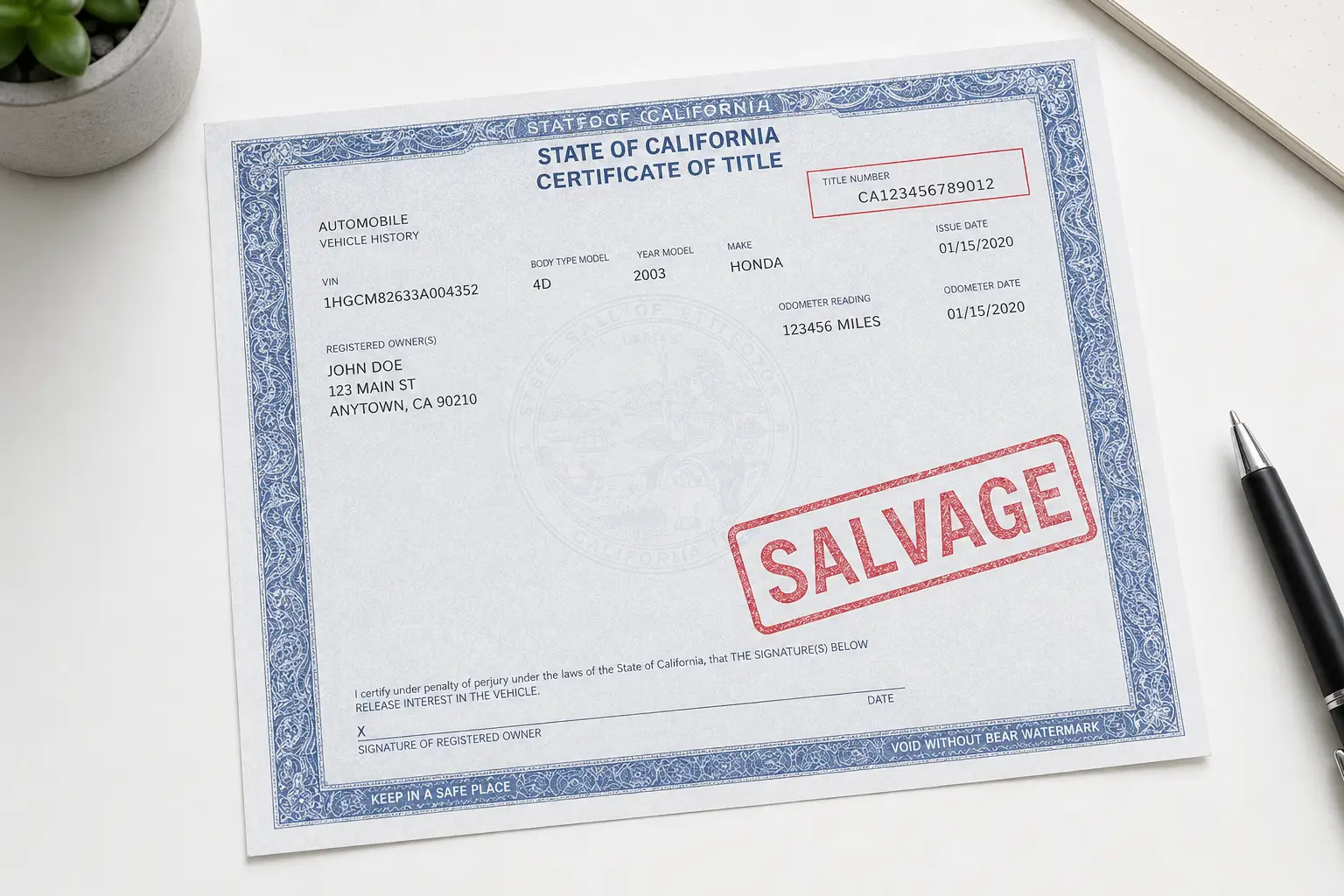
A branded title is an official designation placed on a vehicle's title by a state motor vehicle agency to indicate the car has a significant history event — an accident, flood, manufacturer defect, or fraud. It's a permanent mark. Even after repairs, the brand stays on the title forever and travels with the VIN.
Think of it as a car's permanent record. Clean title means no major issues on file. Branded title means something happened that the state decided buyers deserve to know about.
Roughly 5% of used cars on the market carry some form of title brand — that's one in every twenty vehicles you look at.
Types of Branded Titles — And What Each One Means
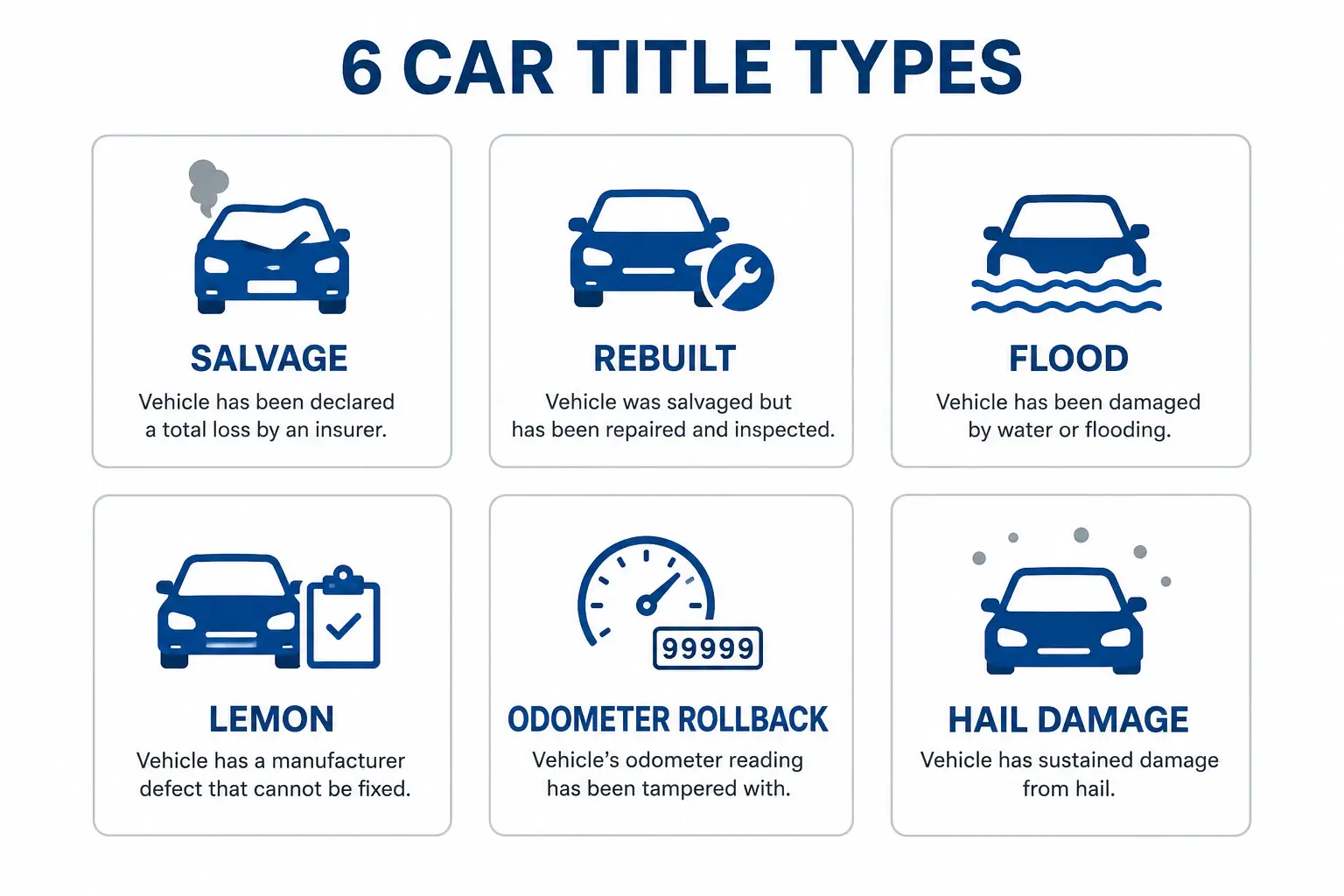
Not all branded titles are created equal. A hail damage title is very different from a salvage title. Here's what each type actually means.
Salvage Title
A salvage title is issued when an insurance company declares a vehicle a total loss — meaning repair costs exceed the car's market value. This typically happens after a serious accident, flood, or theft recovery.
A salvage car cannot legally be driven on public roads until it's repaired and re-inspected by the state. Until then, it's parts-only.
If the airbags deployed in the accident that caused the salvage brand, see our guide on [whether a car is totaled when airbags deploy]
What to watch for: Structural damage, airbag non-deployment, hidden frame issues that no body shop can fully fix.
Rebuilt Title
A rebuilt title comes after a salvage vehicle has been repaired and passed a state safety inspection. It can be driven legally again — but the salvage history never disappears.
Rebuilt title cars can be a reasonable buy if the repairs were done professionally and you have full documentation. Banks often won't finance them, and some insurers won't offer full coverage.
What to watch for: Ask for every repair invoice. Get an independent pre-purchase inspection. Never skip the VIN check.
Flood / Water Damage Title
Flood-damaged vehicles are among the most dangerous used car purchases. Water destroys electronics, corrodes wiring, and creates mold — and the damage often doesn't show up for months.
After major hurricanes, flood cars show up across the country, sometimes thousands of miles from where the storm hit. A flood title brand is supposed to follow the car. Sometimes it doesn't, which is exactly why checking the VIN history matters.
What to watch for: Musty smell, rust under seats, malfunctioning dashboard electronics, water stains on seatbelts or carpet edges.
Lemon Title (Manufacturer Buyback)
When a new car has persistent defects that can't be repaired after multiple attempts, lemon laws require the manufacturer to buy it back. Once bought back, the car is branded with a lemon or manufacturer buyback title and resold — usually at auction.
Lemon laws vary by state. A car that qualified as a lemon in one state may not have met the threshold in another, but the brand follows the VIN regardless of where the car is re-registered.
What to watch for: What was the original defect? Has it been repaired? Get the full service history.
Odometer Rollback
If a seller tampers with the mileage to make a car appear less used, and it's discovered, the title gets an odometer rollback brand. This matters because mileage directly affects how much wear the engine, transmission, and suspension have sustained.
Odometer fraud costs American buyers over $1 billion annually. It's illegal — and it's one of the most common used car scams.
What to watch for: Service records that don't match the odometer reading. Wear on pedals, steering wheel, or seats inconsistent with displayed mileage.
Hail Damage Title
Hail titles are typically the least severe brand. The damage is usually cosmetic — dents and paint chips — rather than mechanical or structural. Not all states even require branding for hail damage.
What to watch for: Make sure the damage is truly surface-level. Extensive hail can crack windshields and damage rooflines in ways that affect water sealing.
For a deeper look at the different types, see our guide to branded title vehicles.
Branded Title vs Clean Title — What's the Difference?
Clean Title | Branded Title | |
|---|---|---|
History | No major events on record | Significant event: accident, flood, fraud |
Value | Full market value | 20–60% below comparable clean title cars |
Financing | Banks finance normally | Many lenders refuse or charge higher rates |
Insurance | Full coverage standard | Some insurers limit or decline coverage |
Resale | Straightforward | Harder — brand is permanent and visible |
Safety | No known structural concerns | Depends on type and quality of repair |
How Does a Branded Title Affect Value, Insurance, and Financing?
Value: Expect a branded title car to be priced 20–60% below a comparable clean title vehicle. The deeper the brand (salvage vs hail), the steeper the discount — and the steeper the resale penalty down the road.
Insurance: Many major insurers won't offer comprehensive or collision coverage on salvage or rebuilt title vehicles. If they do, premiums are higher and payouts in future accidents are based on the branded title value — not clean title value.
Financing: Most banks and credit unions won't issue auto loans on salvage title vehicles. Rebuilt titles are a gray area — some lenders accept them with conditions. Expect higher interest rates even when financing is available.
Registration: Most states allow rebuilt title cars to be registered and driven legally. Salvage title cars generally cannot be registered until repaired and re-inspected. Requirements vary significantly by state.
Should You Buy a Car With a Branded Title?
It depends on the type of brand, the quality of repairs, and what you plan to do with the car.
It can make sense if:
The brand is hail damage or minor cosmetic issues
You have full repair documentation and a mechanic you trust has inspected it
You're paying cash and don't need financing
You plan to keep the car long-term and aren't worried about resale value
The price discount makes financial sense even accounting for potential future repairs
Walk away if:
It's a flood title and you can't verify what was repaired
Repair documentation is missing or incomplete
The seller is vague about the original damage
You need bank financing and the lender won't touch it
You plan to resell within a few years
The biggest mistake buyers make is assuming a branded title car was "fixed" and now equivalent to a clean title vehicle. The repairs may be excellent — but the history is permanent, and future buyers will see it too.
How to Check if a Car Has a Branded Title Before You Buy
A seller isn't always required to disclose a branded title upfront — especially in a private sale. And in some cases, sellers deliberately try to hide it through title washing: re-registering the car in a state with weaker disclosure laws to get a "cleaner-looking" title.
The only reliable way to know a car's true title history is to run a VIN check before you buy.
A VIN check pulls data directly from NMVTIS (the National Motor Vehicle Title Information System) and other federal and state databases, showing every title event the car has had across all 50 states — including brands that may have been obscured through re-titling.
If you're buying in Florida, where flood and hurricane-damaged cars are especially common, running a Florida VIN check before any purchase is non-negotiable. The same applies in Texas, where hail damage is widespread — a Texas VIN check can surface title brands that a private seller won't mention. In California, where the used car market is enormous and fraud cases are well-documented, a California VIN check gives you the full picture before you hand over any money.
Don't rely on what a seller tells you, or even what a title document looks like. The VIN doesn't lie.
What Should You Do Before You Sign?
A branded title isn't automatically a dealbreaker — but it's always a signal to dig deeper. Know what type of brand it is, understand what was repaired and how, and verify the history independently through the VIN.
Run the VIN check on VINspectorAI before any used car purchase. It takes under a minute and shows you the full title history, accident records, odometer data, and any open recalls — so you know exactly what you're buying.
Frequently Asked Questions
Get answers to common questions about What Does a Branded Title Mean? A Plain-English Guide for Used Car
Uncover Complete Vehicle History Reports
Discover critical vehicle information before you buy. Our VIN decoder reveals accident records, title status, recalls, and service history to help you make informed decisions.