Are Rebuilt Titles Bad? What They Actually Cost You
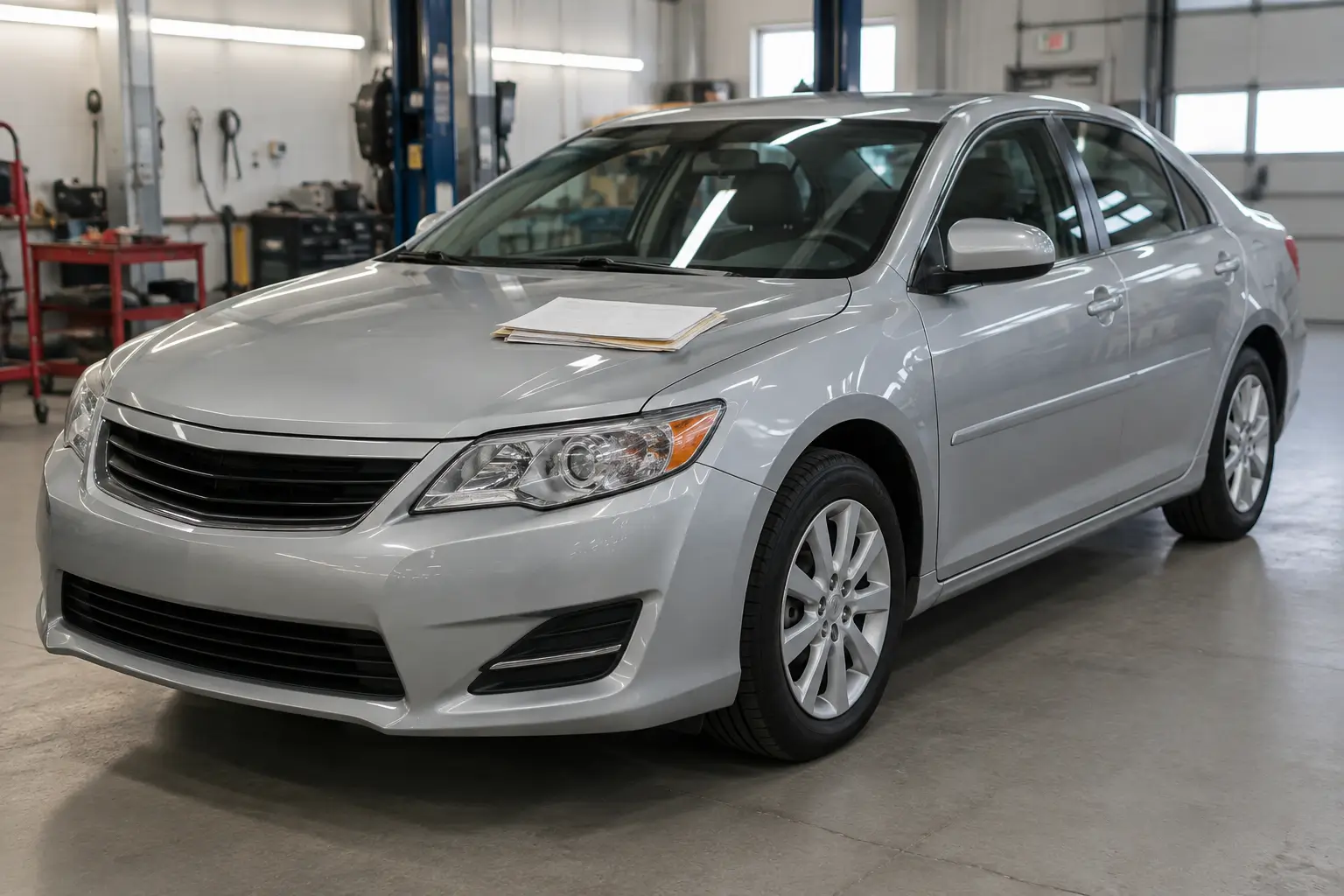
The listing looks too good. Same year, same trim, same mileage as everything else you've been watching — and eight thousand dollars cheaper. Then you read the fine print: rebuilt title.
So is it a bargain or a trap?
Neither, usually. A rebuilt title isn't a verdict on the car. It's a permanent discount that comes with four specific costs, and whether it's worth taking depends entirely on facts you can verify before you buy.
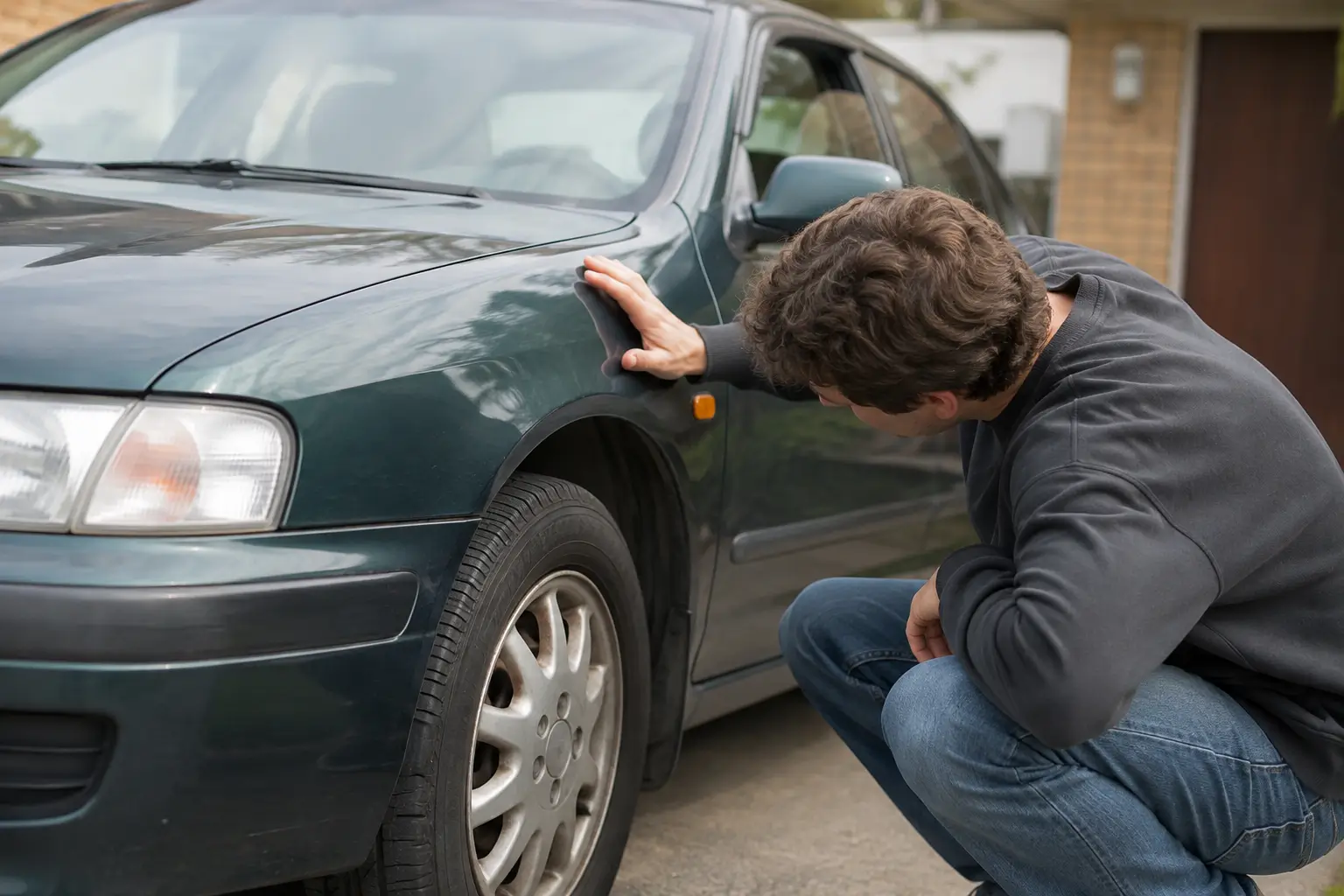
What a Rebuilt Title Means
How a car gets one
A rebuilt title is the second half of a two-step story.
First, an insurer declares the vehicle a total loss and the state issues a salvage title. Then someone repairs it, submits it for the state's inspection, and — if it passes — receives a rebuilt title. The car is legal to drive again.
Salvage vs. rebuilt
These are not interchangeable, and the difference is the whole point.
A salvage title means the car is a total loss and cannot legally be driven on public roads. A rebuilt title means it was repaired, inspected, and returned to legal road use.
Anyone selling you a "salvage title car ready to drive" is either confused or lying.
What the brand does not tell you
The brand records that an insurer wrote the car off. It doesn't record why.
A hail-damaged sedan with cosmetic dents and a flood-drowned car with a corroded wiring harness can carry identical titles. So can a lightly-hit late-model car in a state with a low total-loss threshold — a car totaled at 60% of its value in one state might have been repaired without a brand three states over.
The title is a flag, not a diagnosis. Your job is finding out which story you're looking at.
Why "bad" is the wrong question
A properly repaired rebuilt car with documented work can be a genuinely good buy. A poorly repaired one is dangerous at any price.
The brand doesn't distinguish between them. That's why the useful question is what it costs you, not whether it's bad.
Cost 1: Resale Value
The industry rule of thumb
A rebuilt title typically drops a vehicle's value by 20% to 40% compared with the same car carrying a clean title. Some analyses push the upper end toward 50% on desirable models where clean-title supply is plentiful.
Title status | Typical value on a $25,000 clean-title equivalent | Notes |
|---|---|---|
Clean | $25,000 | Baseline |
Repaired accident, clean title | $21,000–$23,000 | Damage disclosed, no brand applied |
Rebuilt | $15,000–$20,000 | 20–40% discount, permanent |
Salvage | $5,000–$12,000 | Not road legal until rebuilt and inspected |
Why it's permanent
The brand follows the VIN, not the paper. It crosses state lines, survives every subsequent sale, and never reverts to clean no matter how good the repair was or how many years pass.
This is the single biggest difference between a rebuilt title and a bonded title, which clears after its bond period ends. One is temporary. The other is forever.
The discount cuts both ways
Here's what people miss when they focus only on the loss: you also buy at that discount.
If you pay 35% below clean-title money and sell 35% below clean-title money years later, the brand cost you nothing on that transaction. What it costs is flexibility — a smaller buyer pool, longer time on market, and a weak trade-in position.
What narrows the discount
Documentation. Complete repair receipts, before-and-after photos, parts invoices, and the state inspection certificate can move a car from the 40% end of the range toward the 20% end.
Private sales also recover more than dealer trade-ins, consistently. A dealer prices in the brand and their own resale difficulty; a private buyer who understands the repair may not.
Cost 2: Insurance
What actually happens
Coverage exists. The idea that rebuilt-title cars are uninsurable is a myth — but the process is harder than a clean-title policy.
Premiums commonly run somewhat higher than the equivalent clean-title vehicle, and some carriers restrict what they'll write. Liability is generally straightforward. Comprehensive and collision are where carriers get selective, and a few decline branded titles entirely.
The online quote problem
You often can't get a rebuilt-title quote through a website. The form won't accept the VIN or it returns a rate that gets revoked at underwriting.
Call carriers directly, with the VIN, before you buy. This takes an afternoon and it is not optional.
The payout math
If you do get full coverage, remember the payout is based on actual cash value — which already includes the rebuilt discount.
On a lower-value branded car, full coverage can cost more over a few years than the settlement would ever pay out. Running that arithmetic honestly sometimes points to liability-only.
Cost 3: Financing
Why lenders resist
A loan is secured by the collateral. Branded collateral is worth less, harder to value, and slower to sell if repossessed — so many banks and credit unions simply decline.
What's usually available
Specialized lenders, credit unions with case-by-case underwriting, buy-here-pay-here dealers, and unsecured personal loans. Expect higher rates, larger down payments, and shorter terms.
Line it up first
If you need financing, get approval on the specific VIN before you commit to the purchase. Discovering that no lender will touch the car after you've put down a deposit is a bad afternoon.
The practical consequence: rebuilt-title buying favors people paying cash.
Cost 4: Risk You Can't See
The repairs that matter
Cosmetic work is verifiable. Structural work is not, at least not by eye.
Frame straightening, unibody repair, airbag system restoration, and flood-related electrical damage are where a bad repair hides. A car can look immaculate and have compromised crash structure.
Flood damage is its own category
Water damage is the branded history most worth avoiding. Corrosion spreads through wiring harnesses and connectors for years, producing electrical faults that no one can trace and no one can fix permanently.
A flood car that presents well today is a different car in eighteen months.
What a proper inspection covers
Pay an independent mechanic — not the seller's — for a pre-purchase inspection specifically aimed at collision repair. Panel gaps, paint thickness, weld quality, overspray, mismatched fasteners, airbag module status, and a scan for stored fault codes.
Budget a couple hundred dollars. On a car with a documented total-loss history, skipping it is indefensible.
Verify the story against the record
Ask what happened, then check whether the answer matches. A free accident and title check on the VIN shows the reported loss, when the brand was applied, and which state applied it.
If the seller says hail and the record says flood, you have your answer without ever opening the hood.
When a Rebuilt Title Is Worth It
The profile that works
Paying cash. Keeping the car five or more years. Independent inspection completed. Full repair documentation in hand. Comfortable with liability-only if needed. Damage was cosmetic or clearly localized.
Under those conditions, the discount is real money and the risk is managed.
The profile that doesn't
Financing the purchase. Planning to resell within two years. No documentation of the repair. Flood or structural damage. No inspection. Needing full coverage.
Any two of those together and the discount stops compensating you for the trouble.
Pricing it correctly
Price a branded car against other branded cars, not against clean-title listings. Comparing to clean-title money is how people talk themselves into overpaying for a discount.
The same principle applies to valuation generally — wholesale market data prices branded inventory ruthlessly, and that's the market the dealer is working from.
Watch for title washing
The brand should be visible. Sometimes it isn't — a vehicle is moved through a state that doesn't carry the brand forward, and it re-emerges with a clean-looking paper title.
That's title washing, and it's why the VIN record matters more than the document in the seller's hand. A car registered in Georgia or California today can carry a brand applied years ago in a state it has long since left.
If the paper says clean and the VIN says otherwise, believe the VIN.
Title status | Typical value on a $25,000 clean-title equivalent | Notes |
|---|---|---|
Clean | $25,000 | Baseline |
Repaired accident, clean title | $21,000–$23,000 | Damage disclosed, no brand applied |
Rebuilt | $15,000–$20,000 | 20–40% discount, permanent |
Salvage | $5,000–$12,000 | Not road legal until rebuilt and inspected |
Frequently Asked Questions
Get answers to common questions about Are Rebuilt Titles Bad? What They Actually Cost You
Uncover Complete Vehicle History Reports
Discover critical vehicle information before you buy. Our VIN decoder reveals accident records, title status, recalls, and service history to help you make informed decisions.