Michigan VIN Check: Get Your Vehicle History Report in 60 Seconds
AI-powered vehicle history reports in 60 seconds. Access Michigan Secretary of State records, Great Lakes flood verification, Detroit theft data, I-94 accident history, and comprehensive damage reports before you buy.

- Title & odometer historyBrands, salvage, washing flags
- Accidents & damageReported collisions and severity
- MI DMV-sourced dataState registration & title records
- Instant digital reportResults in seconds, no waiting
Michigan Vehicle History & VIN Verification Services
While a basic VIN lookup can give you general vehicle specs, our service goes deeper. Pull official Michigan Secretary of State records, Great Lakes flood damage history, Detroit and Grand Rapids vehicle data, plus nationwide insurance claims—all in one comprehensive report, helping you get a complete picture before you buy.
VIN-based history reports
Search using the 17-digit Vehicle Identification Number found on your dashboard or door frame. Reports include:
- Accident history from insurance databases and police reports
- Michigan title status—clean, salvage, rebuilt, flood-branded, or scrap
- Great Lakes flood damage from 2014 Detroit floods and high water events
- Complete ownership timeline showing every transfer
- Odometer readings with rollback detection
- Open recalls and manufacturer service bulletins
- Current market value based on Michigan conditions
Tip: use our vehicle inspection checklist when examining a vehicle in person.
Michigan-specific considerations
Great Lakes Flooding Hits Hard: Michigan's 3,200 miles of Great Lakes shoreline means flood risk is real. The 2014 Detroit floods caused $1.8 billion in damage. Record-high water levels in 2019-2020 swamped coastal areas from Muskegon to Bay City. Flood damage hides—corroding wiring and rusting frames months after the water's gone. Our reports flag flood title brands and insurance claims from these events.
Detroit's Auto Theft Problem: Detroit ranks among the top U.S. cities for vehicle theft, with 11,000+ cars stolen annually. Wayne County accounts for 60% of Michigan's auto thefts. Popular targets: Dodge Chargers, Jeep Grand Cherokees, Ford F-150s. Recovered vehicles often have ignition damage or stripped parts. We check NICB databases to reveal theft history that sellers might 'forget' to mention.
Road Salt Eats Everything: Michigan dumps 400,000+ tons of road salt yearly. That salt corrodes frames, brake lines, and body panels—especially on vehicles from the Upper Peninsula or northern counties. The 2019 polar vortex and 2014 ice storms caused widespread freeze damage. Our checks help spot salt corrosion history and winter-related mechanical issues before you buy.
Salvage Title Rules You Should Know: Michigan issues salvage titles when damage hits 75% of vehicle value. Rebuilt titles mean the car passed inspection after salvage repairs, but that history never disappears. Some rebuilt vehicles are fine; others have ongoing problems. Our reports show current title status plus any previous salvage or scrap designations—crucial info since rebuilt cars lose 20-40% of their value.
Popular Michigan VIN Checks
Michigan Vehicle Safety Snapshot
Michigan has 9,432,000 registered vehicles (FHWA), 1,152 traffic fatalities (NHTSA FARS), and 21,500 reported vehicle thefts (NICB) according to the latest available government data. Running a VIN check before any Michigan private-party purchase helps verify title status, open recalls, and prior accident history for any of these vehicles.
Sources: FHWA Table MV-1, NHTSA FARS, NICB
9,432,000
Registered vehicles
FHWA
1,152
Traffic fatalities
NHTSA FARS
21,500
Vehicle thefts
NICB
1981–present
VIN coverage
All makes & models
Michigan regional risk: Winter / road-salt corrosion risk. When buying a used vehicle in Michigan, check for weather-related damage that may not appear in standard reports.
NHTSA Recall Count — Most Popular Michigan Vehicles
Active NHTSA recall campaigns for vehicles most commonly registered in Michigan. Always verify recall status before buying.
| Vehicle | Model Year | Active Recalls | Check Your VIN |
|---|---|---|---|
| Ford F-150 | 2024 | 0 | View safety data |
| Chevrolet SILVERADO 1500 | 2024 | 0 | View safety data |
| Toyota RAV4 | 2024 | 0 | View safety data |
| Subaru OUTBACK | 2024 | 0 | View safety data |
| Toyota CAMRY | 2024 | 1 | View safety data |
Recall data sourced from NHTSA. Counts reflect campaigns for the most recent available model year. Run a VIN check below to see recall status for a specific vehicle.
Check any Michigan vehicle in 30 seconds
Accidents · Title fraud · Odometer rollback · Open recalls · AI verdict
How to check a VIN in Michigan — step by step
Quick 3-step process — free, and no signup required:
Enter Your VIN or Plate
Type in the 17-digit VIN number or Michigan license plate. Works for cars, trucks, motorcycles, and RVs.
We Search 15+ Databases
Our AI scans Michigan Secretary of State records, Great Lakes flood databases, insurance claims, auction histories, theft records, and manufacturer recalls in real-time.
Download Your Report
Get instant access to your complete vehicle history. View online or download the PDF. Access it anytime for 30 days.
Direct access to Michigan Secretary of State records, Great Lakes flood databases, NMVTIS, insurance claims, auto auctions, NHTSA recalls, and nationwide vehicle history sources.
How it works
From VIN to verdict in three steps
Your free VIN check gives you the basics instantly — recall count, accident count, MSRP, and core specs, no forms or phone number required. Step up to a Premium Report and the AI breaks down every category below: full accident and title history, odometer verification, ownership timeline, and real market value, explained like a mechanic friend would. Browse real sections from a real Premium Report below, or switch to the AI analysis view.
Explore a live demo report & car comparison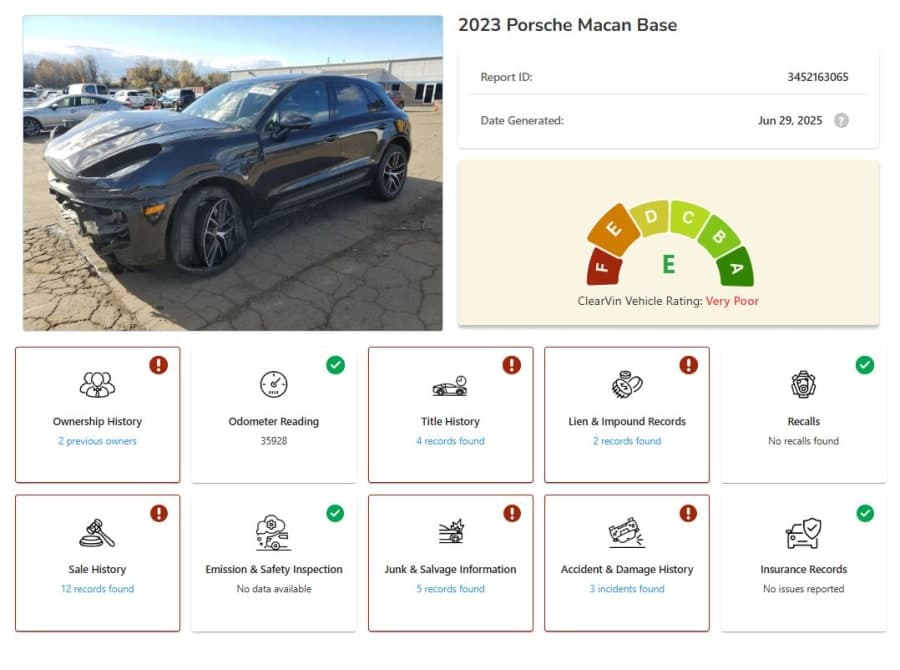
What does a complete VinSpectorAI report actually look like?
Vehicle details, a ClearVIN score, photos, and every category below — all in one scrollable free VIN check report, no PDF download required.
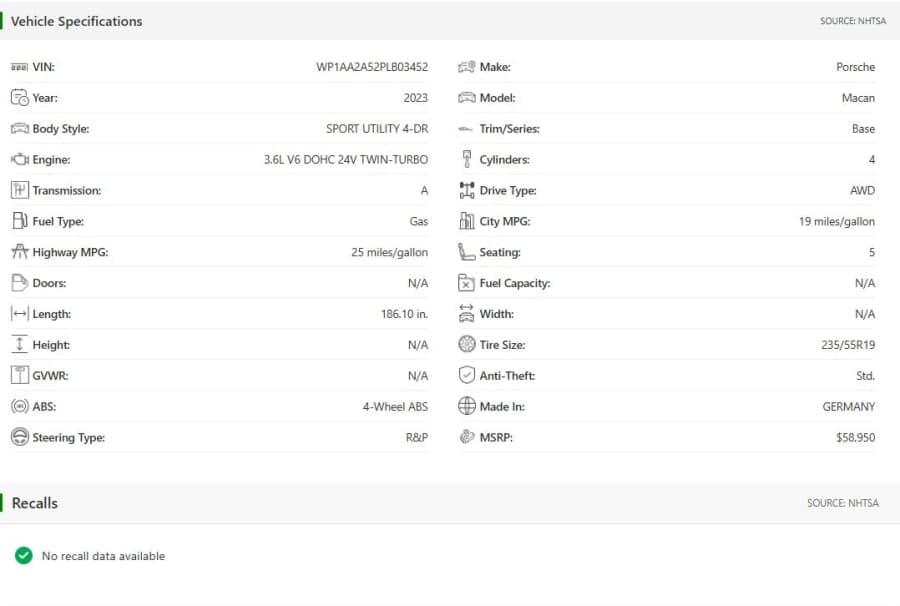
Is this exact VIN under an open safety recall right now?
We pull every open NHTSA recall for this VIN, plus full factory specs — engine, trim, drivetrain, and more.
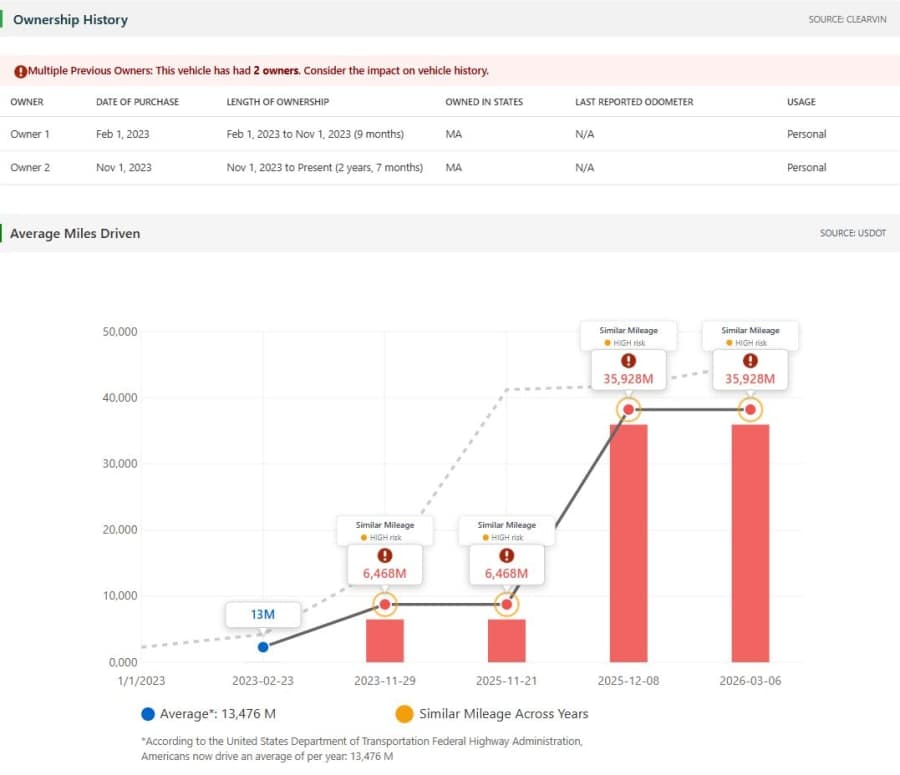
How many people have owned this car, and for how long each?
See exactly how many owners, where they were located, and how many miles each one put on the car per year.
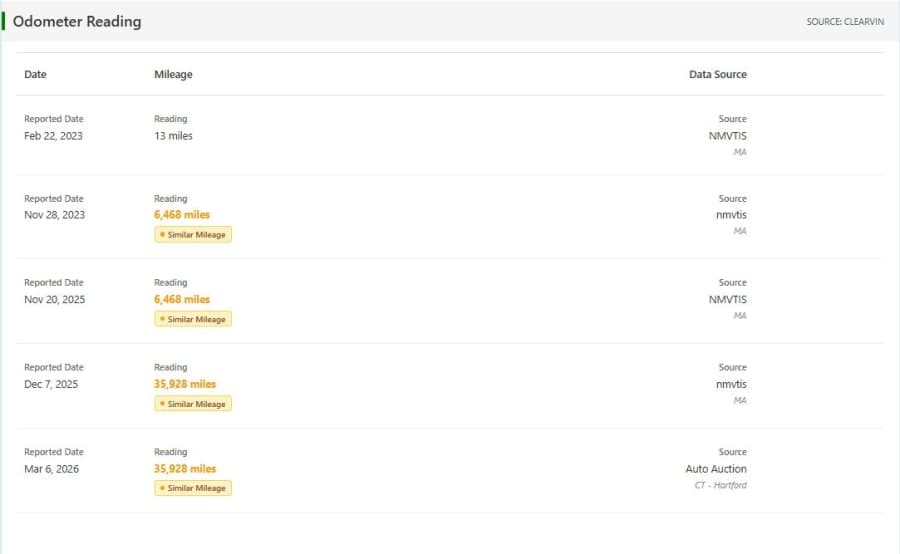
Does the mileage on the odometer match every reading on record?
We line up every recorded odometer reading and flag any reading that's lower than a previous one — a classic rollback red flag.
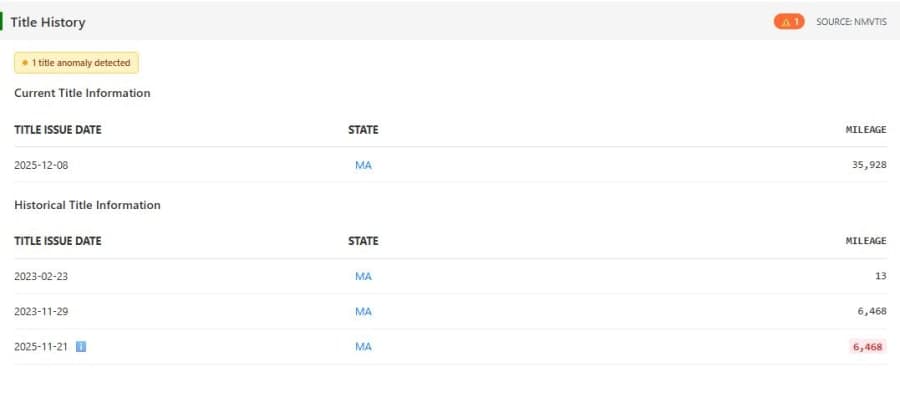
Has this title ever been transferred, retitled, or re-issued?
Every title issue, transfer, and state change is laid out in order, so you can spot a title that's been hopping state lines.

Did this car pass its last emissions and safety inspection?
State inspection results show whether the car has consistently passed safety and emissions checks — or been patched up to pass.

Has an insurance company ever filed a claim against this VIN?
Insurance claim records reveal accidents and damage that might never show up in a basic VIN check.
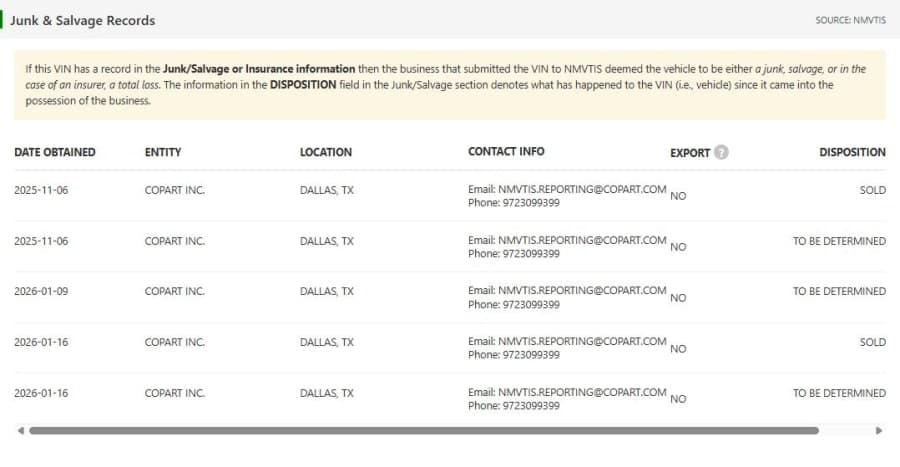
Was this car ever declared a total loss or sold for parts?
If a junk or salvage title was ever issued, it shows up here — along with the date and the state that issued it.
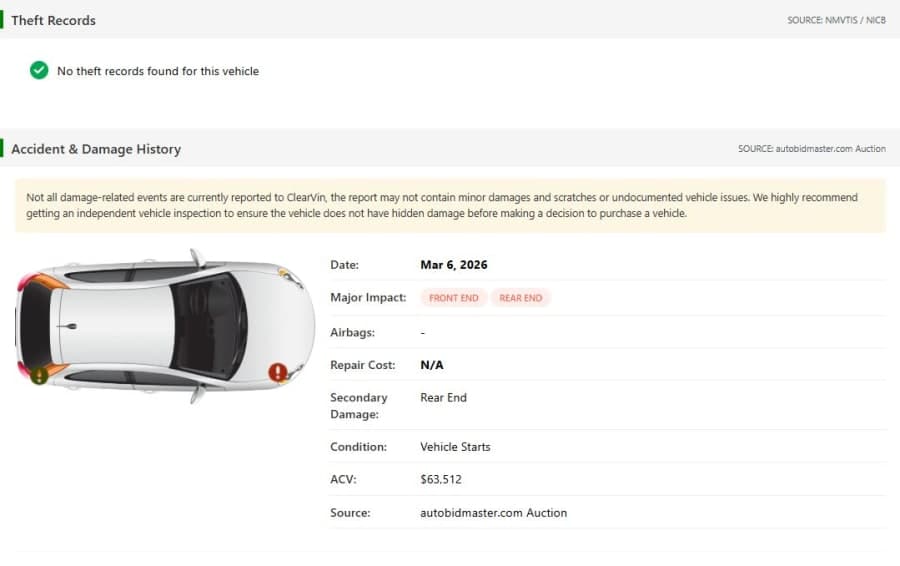
What does the accident and damage history actually say happened?
Severity, point of impact, and airbag deployment for every recorded accident — not just a yes/no flag.
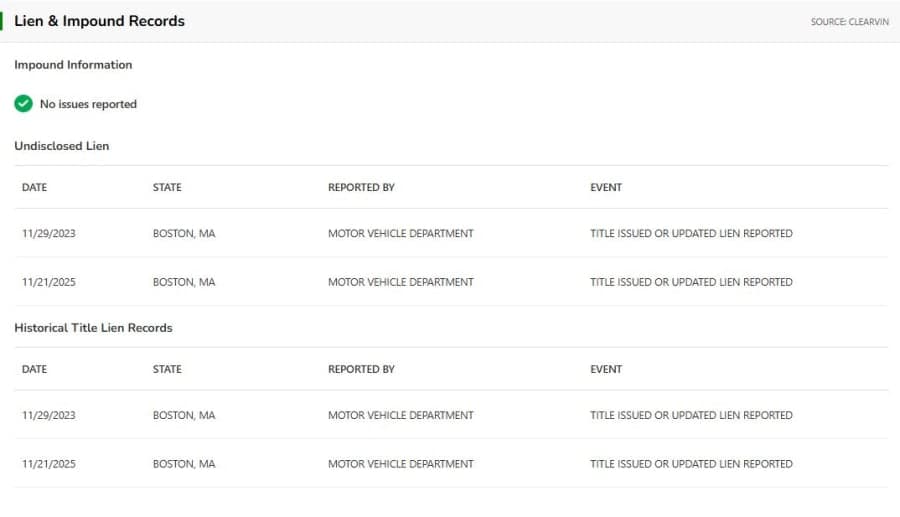
Is there a lien on this title, or has it ever been impounded?
An active lien can mean the car isn't actually free to sell — we surface lien and impound records clearly.
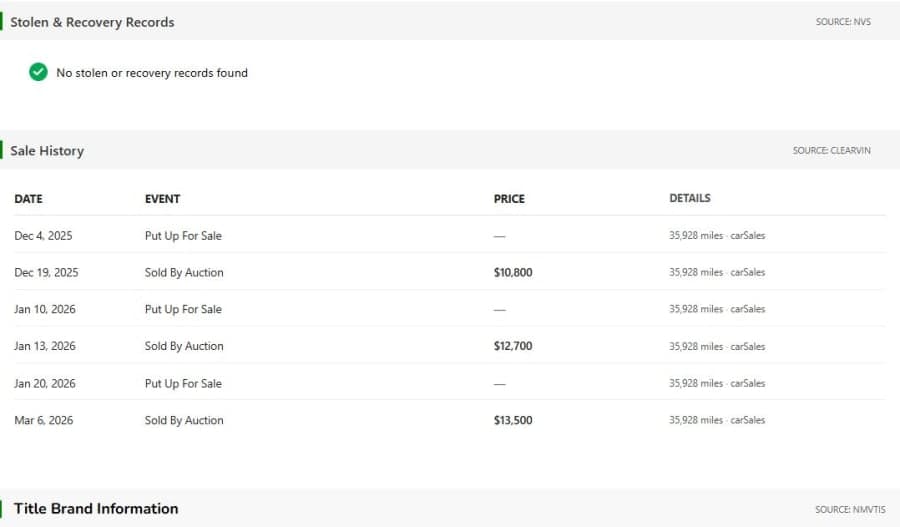
Has this VIN ever been reported stolen — and was it recovered?
Theft and recovery records show if this VIN was ever reported stolen, and what happened after it was found.
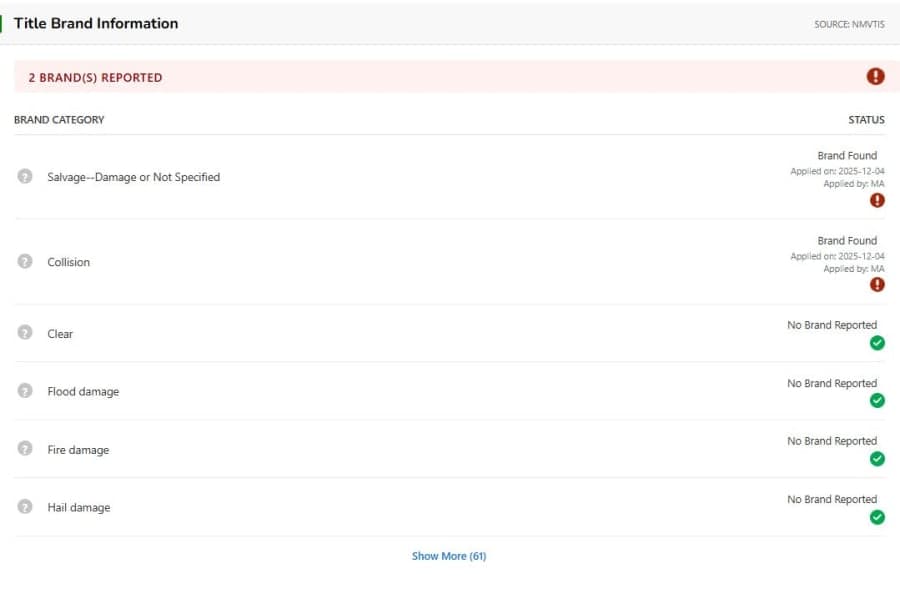
Does this title carry a brand like rebuilt, flood, or lemon?
Rebuilt, flood, lemon, or salvage — we decode every title brand and explain what it means for financing and resale.
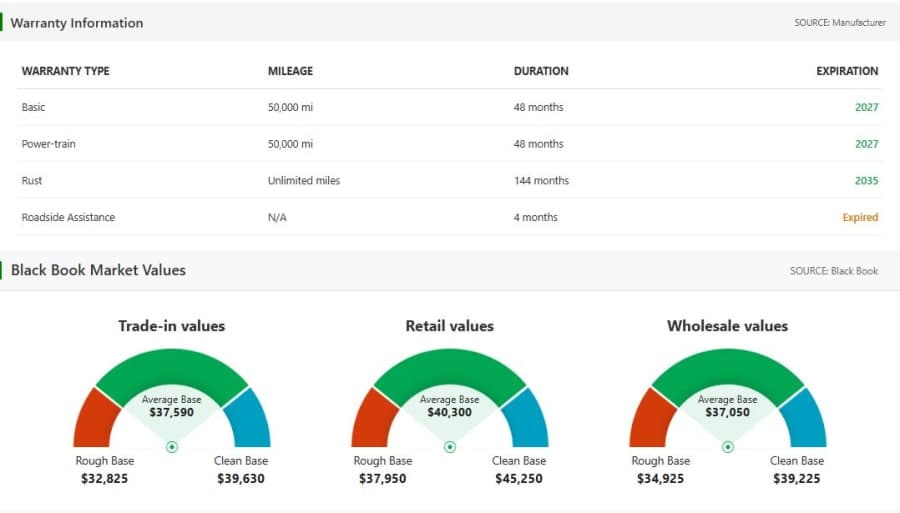
What's this car actually worth, based on real sale data?
BlackBook retail value, depreciation curve, and remaining warranty status, compared against what this car is listed for.

Has this car been listed — and relisted — on eBay before?
Past eBay listings show if this car has been shopped around before — and whether it sold or kept getting relisted.
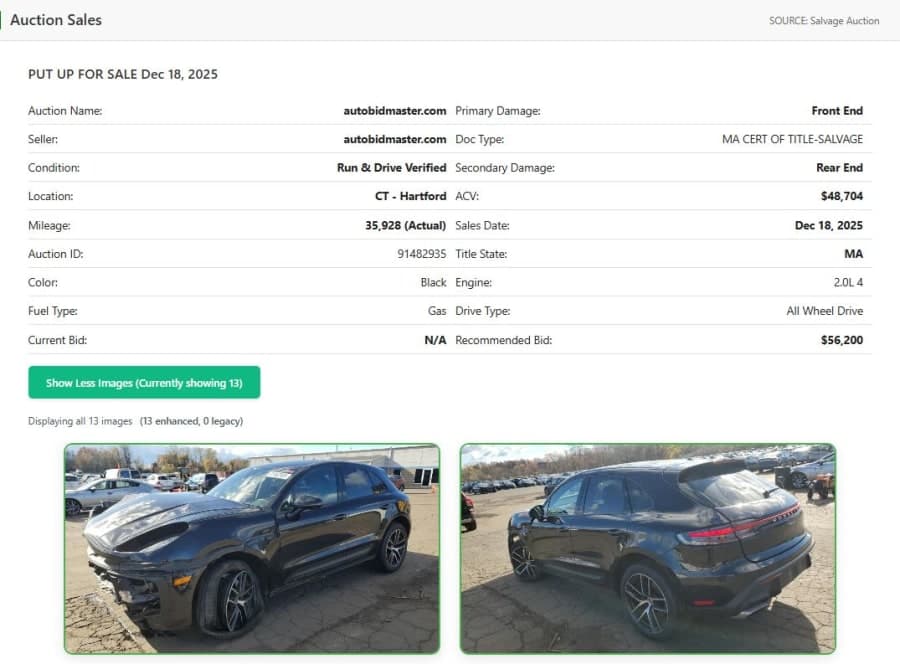
What did this car sell for at past dealer auctions?
Dealer auction sale prices give you a real-world floor for what this car is actually worth before markup.
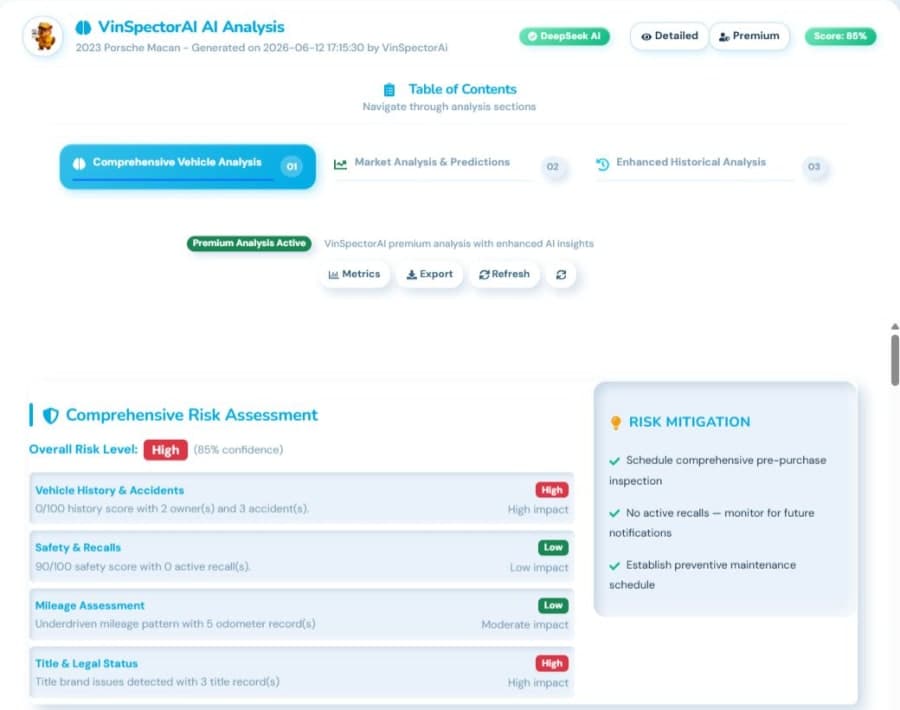
What's the AI's bottom-line read on this car, in plain English?
Our AI reads every section of the report and gives you a plain-English summary — the big picture before you dig into the details.
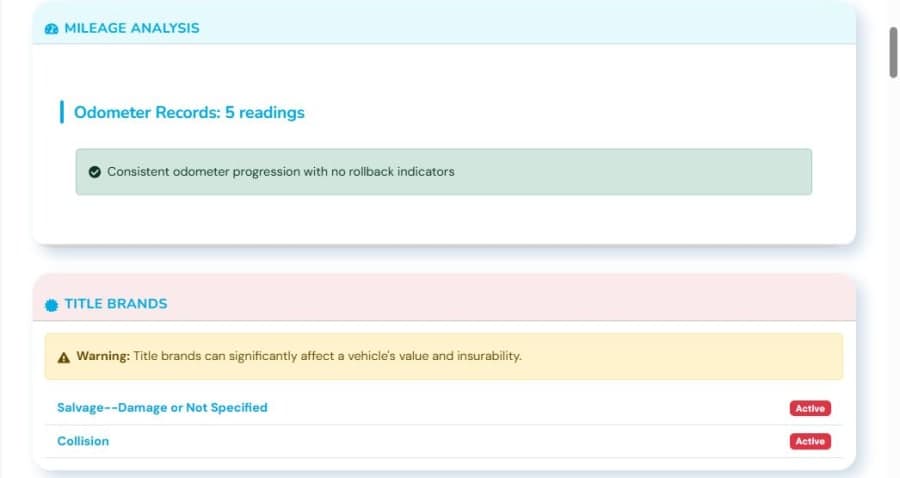
Do the mileage records and title brands actually line up?
The AI cross-checks every odometer reading against the title brand history and flags any mismatch that could signal a rollback or hidden rebuild.
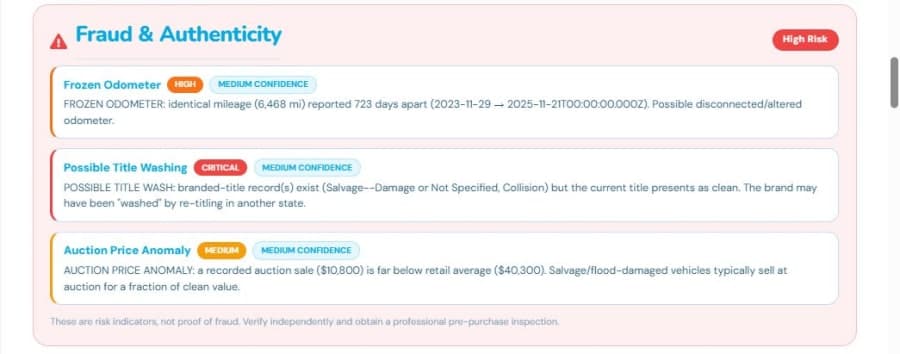
Are there any signs this VIN has been cloned or tampered with?
AI-powered checks compare this VIN against known cloning patterns and flag inconsistencies between records that point to fraud.
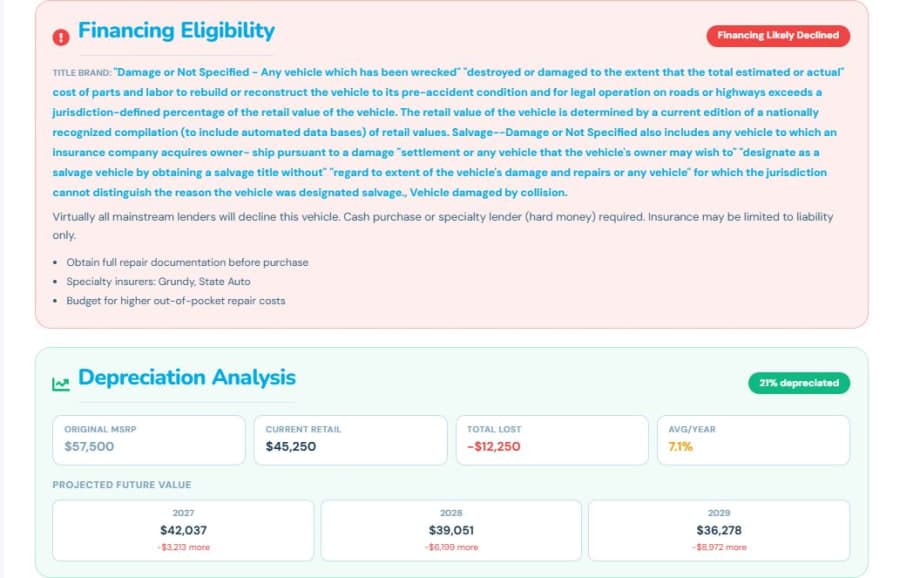
Will lenders finance this car, or could the title hold things up?
The AI flags title brands, liens, and history issues that commonly cause lenders to deny financing — before you waste time at the bank.
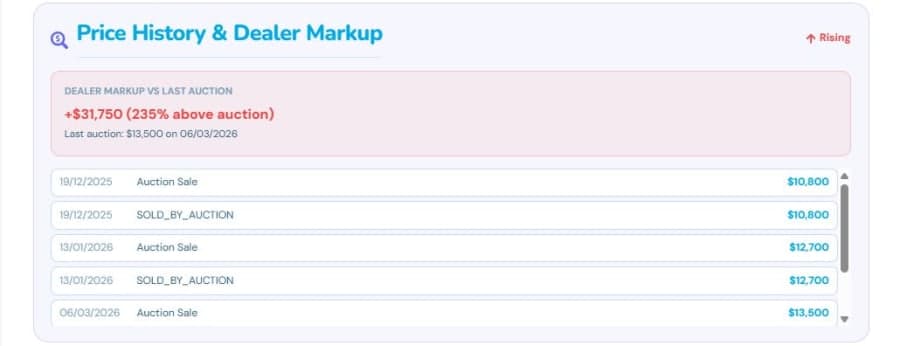
Is the asking price fair, or is the dealer adding a hidden markup?
We compare the listing price against this VIN's price history and similar sales to show you exactly how much markup you're being asked to pay.
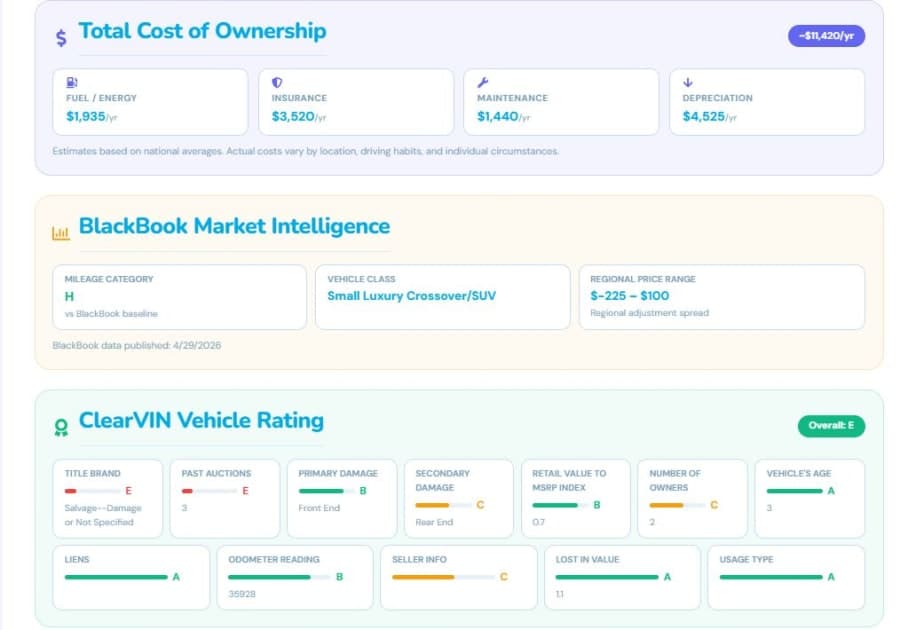
What does Black Book say this car is really worth right now?
Black Book market intelligence gives you a real, data-backed valuation — not just a guess — so you know your negotiating range.
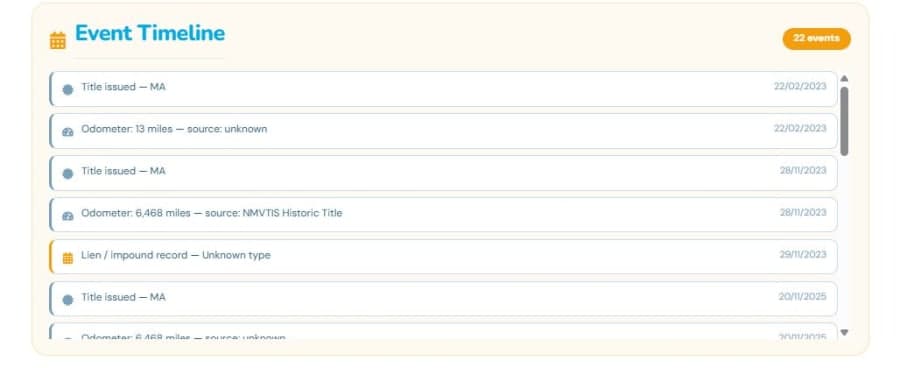
Can I see every event in this car's life laid out in order?
Every accident, title change, ownership transfer, and inspection is plotted on a single timeline, so the whole story makes sense at a glance.
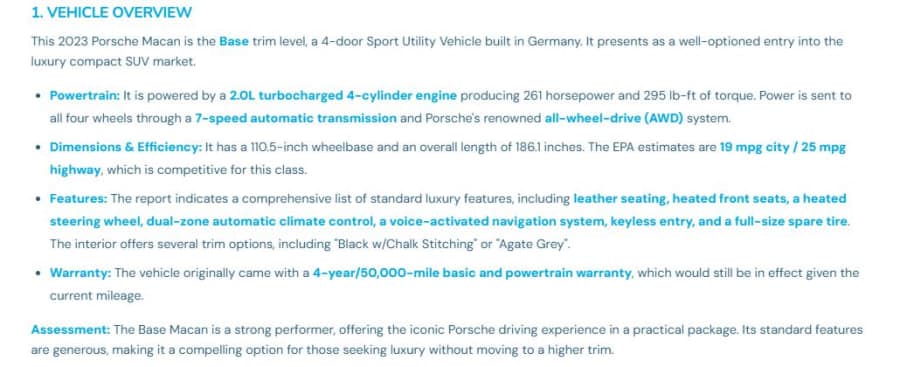
What's the AI's quick snapshot of this exact vehicle?
Year, make, model, trim, and the key facts that matter — summarized by the AI before you dive into the deeper analysis.
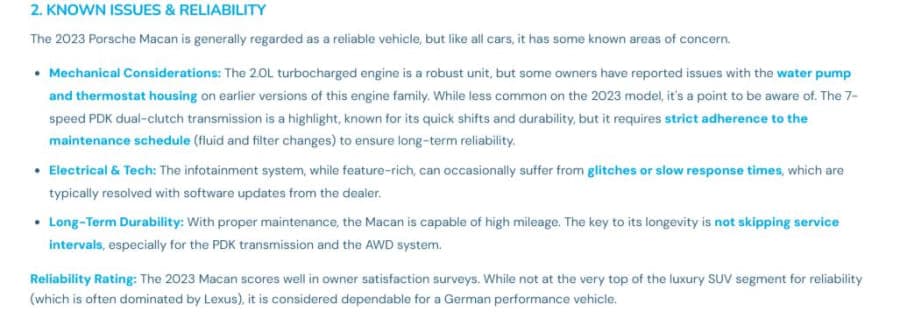
What problems are common for this exact year, make, and model?
The AI flags known recalls, common failure points, and complaints reported for this specific model year — so you know what to inspect.
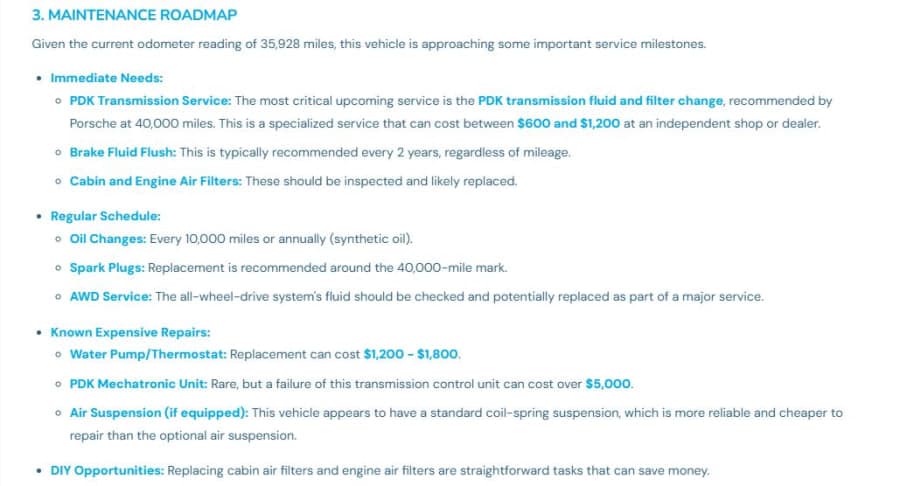
What maintenance is this car due for next, based on its mileage?
Based on the recorded mileage and age, the AI lays out the maintenance that's coming due — handy for budgeting before you buy.
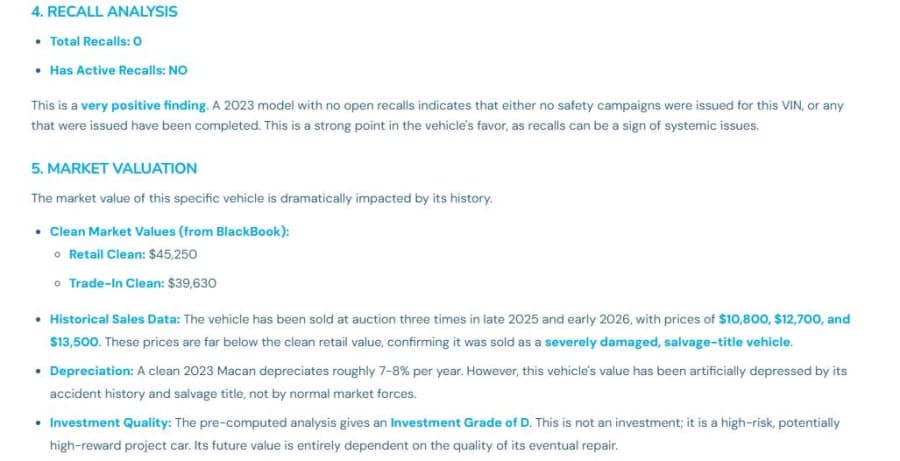
How do open recalls affect what this car is actually worth?
The AI weighs open NHTSA recalls against current market value, so you understand how unresolved recalls could affect price and safety.
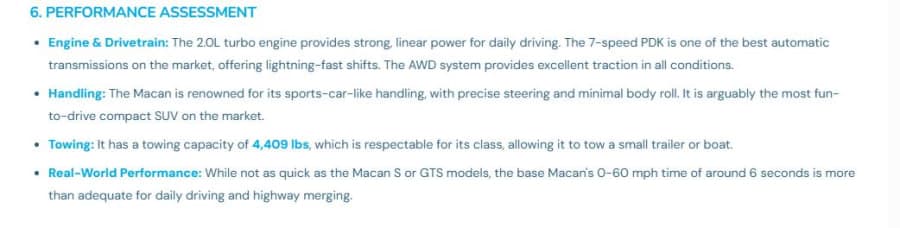
How does this car's recorded history affect how it drives today?
The AI connects accident severity, mileage, and maintenance gaps to flag anything that could affect performance or reliability now.
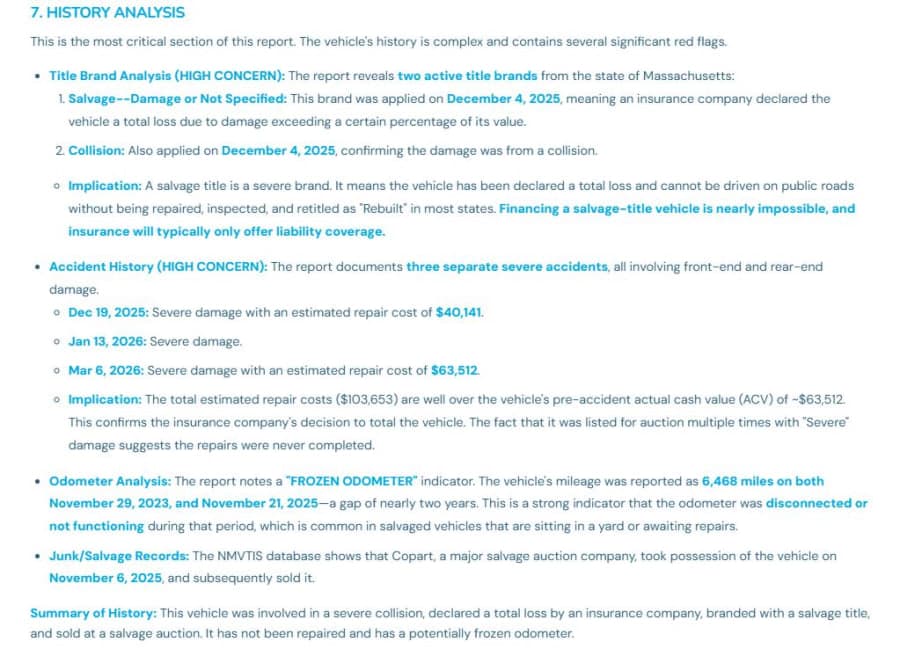
What pattern does the AI see across this car's full history?
Instead of a wall of records, the AI connects the dots across ownership, accidents, and title changes to explain what really happened to this car.
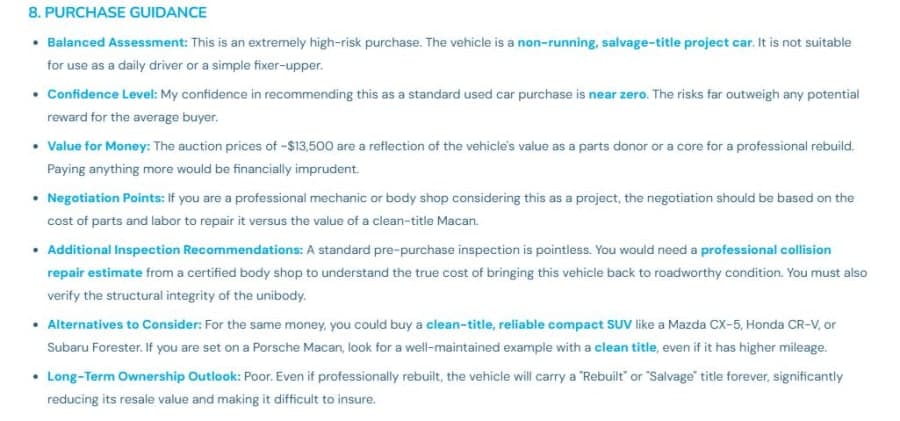
Should I buy this car — and what should I offer?
Based on everything in the report, the AI gives you a clear buy or avoid recommendation and a suggested price range to negotiate from.
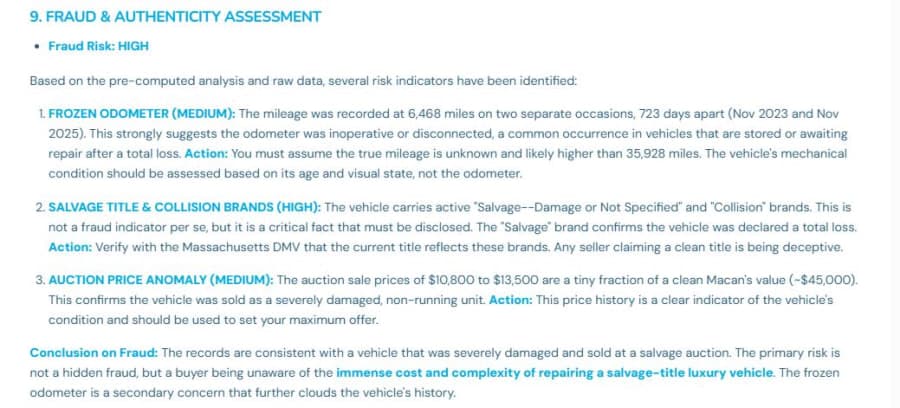
How confident can I be that this VIN matches this exact car?
A deeper authenticity check confirms the VIN, specs, and records all match up — an extra layer of confidence before you commit.
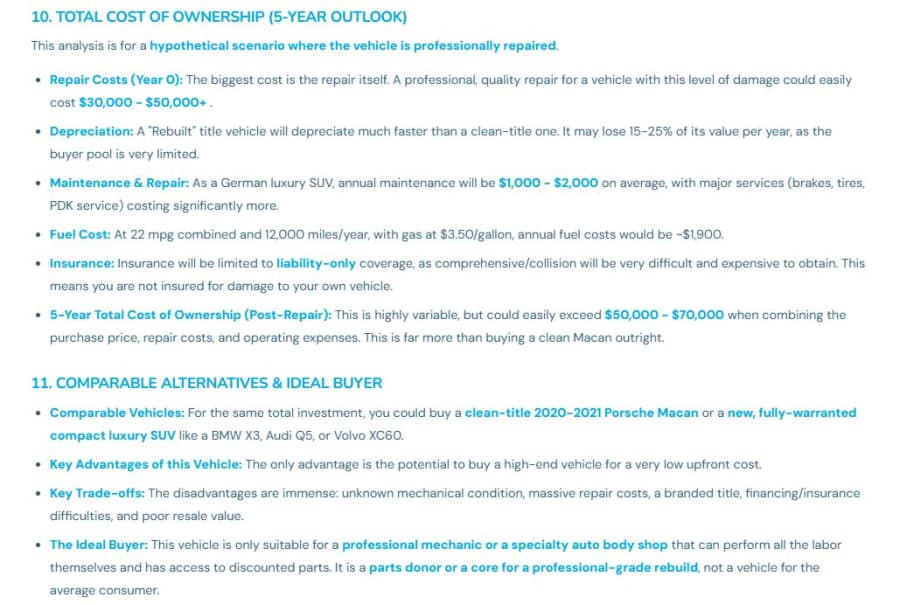
What will it really cost to own this car over the next few years?
The AI estimates fuel, insurance, maintenance, and depreciation together, so you can budget for the true cost — not just the sticker price.
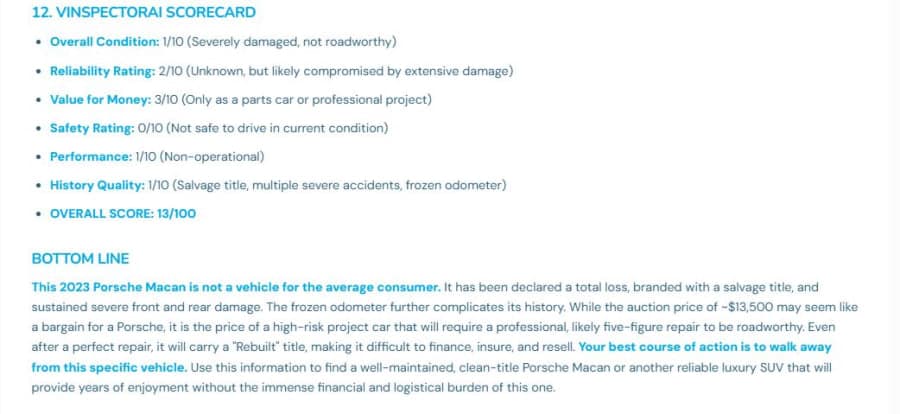
What's the AI's final verdict — and how did it get there?
Every signal from the report — accidents, title, value, recalls — rolls up into one final assessment with the reasoning spelled out.
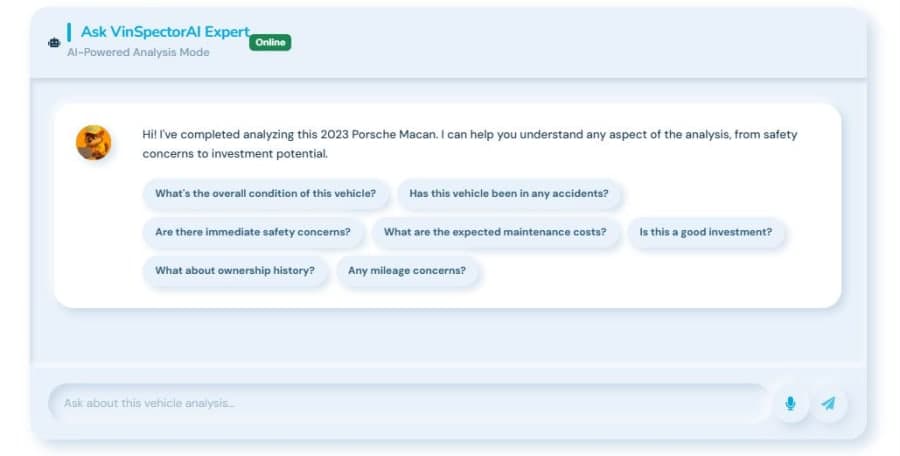
Can I just ask the AI my own questions about this car?
Chat with the AI about this exact vehicle — ask about negotiation, repair costs, or anything else in the report, in plain English.
Why Michigan buyers choose VinSpectorAI
Trusted by Michigan Buyers • Instant Digital Delivery • Secure Encryption
Michigan buyers face unique risks—from Great Lakes flooding to Detroit's high theft rates. Our reports give you the local context you need before buying. View our pricing plans to see how we compare.
One Simple Price: $12.95
Pay once, get everything. No subscriptions, no surprise fees. Includes unlimited re-downloads for 30 days and instant PDF access.
Reports in 60 Seconds
Enter your VIN, get your report. Works on any device—phone, tablet, or computer. Download and save your PDF immediately.
15+ Data Sources Combined
We pull from Michigan Secretary of State, NMVTIS, insurance claims, auction records, and flood databases. Everything in one report.
AI Spots Hidden Problems
Our algorithms flag inconsistencies, odometer rollbacks, and damage patterns that humans might miss. Get alerts on potential red flags.
Michigan-Specific Checks
Great Lakes flood damage, Detroit theft records, I-94 accidents, salt corrosion history—issues that matter to Michigan buyers.
Bank-Level Security
SSL encryption on every search. PCI-compliant payment processing. Your information stays private.
Frequently asked questions about Michigan VIN checks
Can't find what you're looking for? Visit our complete FAQ page or contact us directly.
Make an informed decision — get your Michigan vehicle report
Don't gamble on a used car with hidden flood damage or salvage history. Get your Michigan VIN check now and know exactly what you're buying.
VinSpector AI provides Michigan residents with vehicle history data from NMVTIS, Michigan Secretary of State records, NHTSA, and national insurance databases to help verify title status and vehicle condition.
Popular Michigan VIN checks
City-level pages with local DMV details and title-fraud trends.