Is a Car Totaled If the Airbags Deploy? Repair Costs Explained
No. A deployed airbag does not total a car by itself, and no state has a rule that says otherwise.
What totals a car is arithmetic: what the repair costs versus what the car was worth the moment before the crash. Airbags matter only because they push that repair number up fast — sometimes by $4,000 on a car worth $7,000.
Here's what the repair actually costs, how your insurer runs the math, and what any of it means if you're the one buying a car that's already been through it.
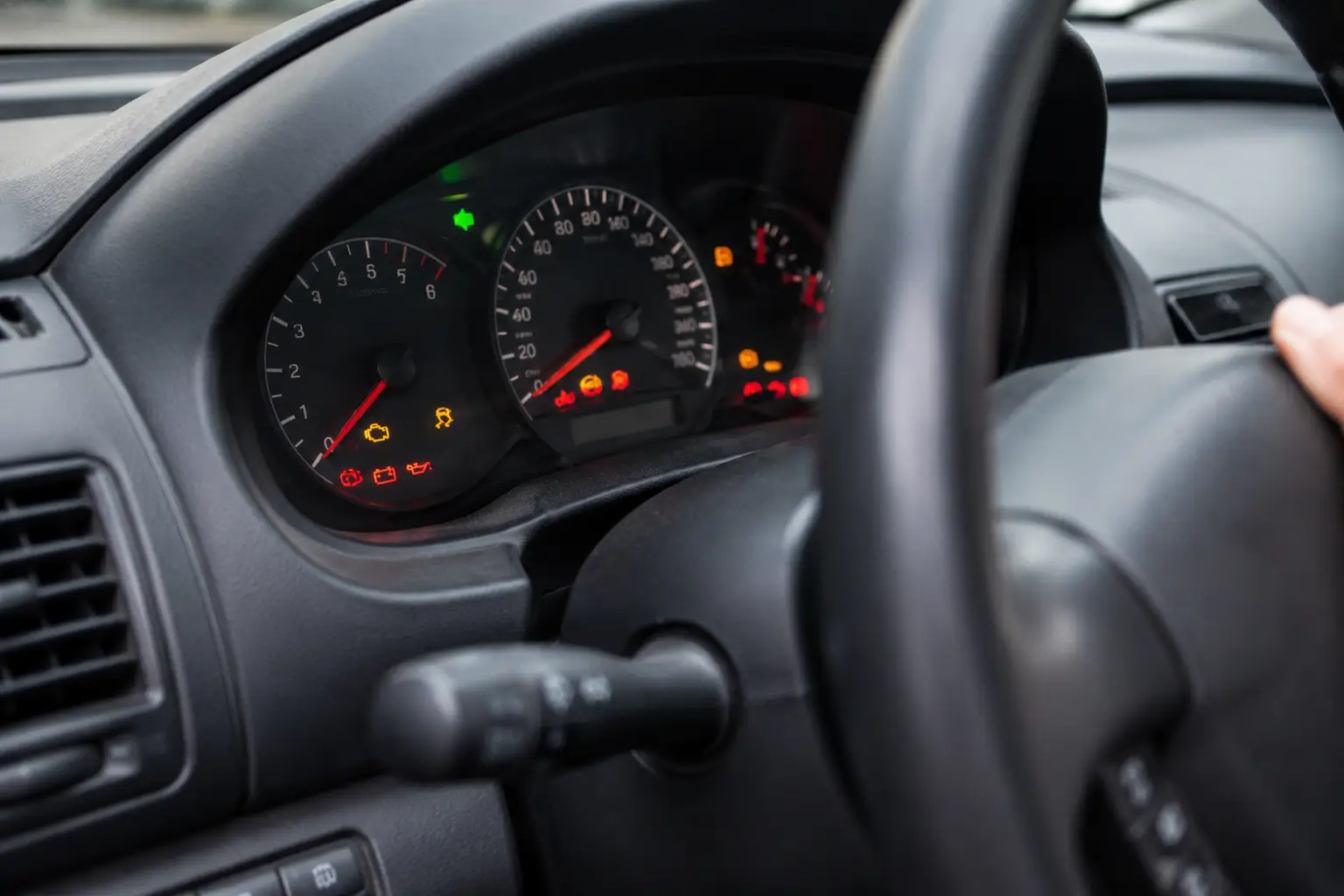
The Short Answer
Why airbag deployment isn't the deciding factor
Adjusters don't have an airbag rule. They have a threshold, and the threshold applies to the whole repair estimate — bodywork, frame, glass, paint, and restraints together.
A deployed driver's airbag on a three-year-old truck is a line item. The same airbag on a fifteen-year-old sedan can be most of the car's value. Same part, same deployment, opposite outcome.
The number that actually decides
Two figures drive everything:
Repair cost — the full estimate, including parts most owners never think about.
Actual cash value (ACV) — what your specific car, with its mileage and condition, was worth immediately before the crash. Not what you paid. Not what you owe.
Divide the first by the second and you get a percentage. That percentage meets your state's rule, and the decision is made.
Where deployment does change things
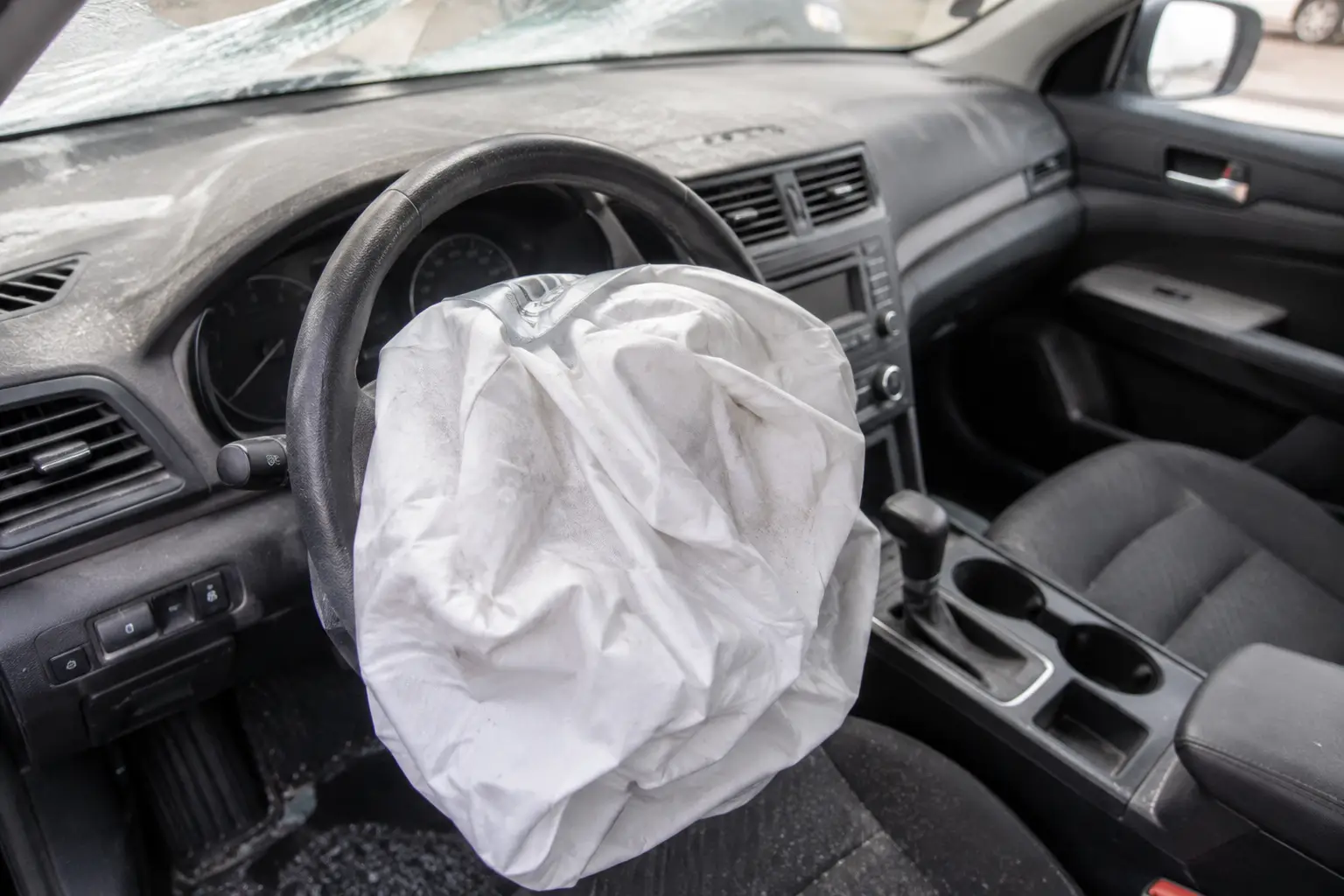
Deployment usually means the crash was hard enough to trigger sensors, which tends to correlate with structural damage. It also means the SRS system has to be fully restored before the car is legal and safe to drive — and that's a bigger bill than most people expect.
What Airbag Repair Actually Costs
Component | Typical cost (parts + labor) | Notes |
|---|---|---|
Airbag (per unit) | $300–$1,000 | Parts run $200–$700; labor adds $100–$300. Deployed bags cannot be reused |
SRS control module | $50–$150 to reset, $400–$1,200 to replace | The single biggest place people overpay |
Clock spring | $300–$900 | Almost always destroyed when the driver's bag deploys |
Crash sensors (each) | $120–$450 | Multiple sensors may need replacing |
Seat belt pretensioners | $80–$250 per belt | Fire during the same crash event, and get forgotten |
The airbags themselves
A deployed airbag is consumed. It cannot be repacked, repaired, or reused, and used airbags pulled from salvage vehicles are a genuine safety risk regardless of what the seller claims.
Most modern collisions deploy more than one. Front bags, side bags, and curtain airbags can all fire in a single impact — and if several went off, parts alone can reach $1,000 to $2,500 before anyone touches labor.
The SRS control module — reset or replace
When airbags deploy, the SRS module stores crash data and hard fault codes. Until it's dealt with, the warning light stays on and the system won't arm.
Dealers frequently quote replacement. But in many cases the module isn't damaged — it's just locked with crash data, and a professional reset restores it to factory spec. That's the difference between roughly $100 and roughly $1,000 on the same repair.
Worth knowing before you accept an estimate, whether you're the owner or negotiating a used car's price down.
The clock spring
The clock spring is the coiled ribbon that keeps electrical contact with the steering wheel while it turns. Driver's airbag deployment usually destroys it, which is why the horn and the steering wheel buttons stop working after a crash.
Since the wheel comes off anyway during the repair, most shops replace it in the same job.
Seat belt pretensioners
Pretensioners fire in the same event that triggers the airbags, tightening the belt against your body. Afterward they must be reset or replaced.
They're small money individually and they're the item most often missing from a first estimate.
Why your estimate may be incomplete
This is the part worth reading twice. An estimate that lists the visible deployed bag and the crumpled fender — but skips the module, the sensors, and the post-repair calibration — produces a lower number than the real repair.
A lower number can keep a borderline car under the threshold, so the insurer authorizes repairs on a vehicle that should have been totaled. Read the restraints section of the estimate specifically. If it looks thin, ask what's missing and why.
How Insurers Decide: Threshold vs. Formula
Total loss threshold states
About half the states set a fixed percentage. Once repair cost reaches that share of ACV, the insurer must declare a total loss and apply for a salvage title.
State | Rule | Threshold |
|---|---|---|
Iowa | Percentage | 50% |
Oklahoma | Percentage | 60% |
Alabama | Percentage | 75% |
Florida | Percentage | 80% |
Texas | Percentage | 100% |
Georgia | Total loss formula | Repair + salvage vs. ACV |
The most common threshold is 75%. Percentages do get revised, so confirm your state's current figure with its department of insurance before you rely on it in a dispute.
Total loss formula states
States without a fixed percentage typically use the total loss formula: if repair cost plus salvage value exceeds ACV, the car is totaled.
This one surprises people, because a car can be written off at a relatively low repair percentage when its salvage value is high. Trucks and popular SUVs with strong parts demand hit this more often than economy sedans.
States where the insurer sets its own
A few states leave the standard to the insurer's own guidelines. In practice most land near 70–75%, but there's no statutory floor to point at, which weakens your position if you want the car repaired rather than written off.
A worked example
Your car's ACV is $9,000. The estimate comes in at $6,400 — bodywork, two airbags, module, clock spring, calibration. That's 71%.
In a state with a 70% threshold, that car is totaled. In Texas, where the threshold is 100%, the same car with the same damage gets repaired and stays on a clean title.
Nothing about the vehicle changed. Only the state line did.
Why the ACV number is the one to fight about
Notice that the threshold is a percentage of ACV. If the insurer's valuation of your car is low, the repair percentage rises and a repairable car becomes a total loss — with a smaller payout attached.
That makes ACV the number worth challenging, not the repair estimate. Understanding how wholesale and market values like MMR are calculated gives you something concrete to argue with instead of an opinion.
When Deployment Almost Always Means Totaled
Older, low-value cars
On a car worth $4,000, a single deployed airbag plus module and clock spring can approach half the value before any bodywork is priced. Add a bent fender and you're past most thresholds.
This is why older cars get written off after crashes that look survivable in the parking lot.
Multiple airbags and curtains
Side curtain airbags run the length of the cabin and usually require removing headliner and trim to replace. When curtains deploy, the repair moves from a component job to a cabin teardown.
Any crash that fires four or more bags rarely stays under threshold on a mainstream vehicle.
Structural and EV-specific damage
Airbags deploy in impacts hard enough to affect structure. Once frame or unibody straightening enters the estimate, the number climbs quickly.
Electric vehicles are their own category. Damage near the battery casing can total an EV at a repair cost that would be routine on a gas car, because inspection and replacement protocols for high-voltage packs are expensive and conservative by design.
What This Means If You're Buying Used
A car with repaired airbags isn't automatically bad
A properly repaired vehicle with documented OEM parts, a genuine module reset, and a passing post-repair scan is a normal used car. Deployment is evidence of a crash, not evidence of a bad repair.
What matters is who did the work and whether it can be proven.
The dangerous version
The fraud is straightforward and common: dashboard covers installed over empty airbag housings, salvage bags stuffed back in, resistors wired in to kill the SRS warning light, modules reset without ever replacing the parts.
The car looks fine, the light is off, and nothing deploys in the next crash. This is one of the reasons a car can carry a salvage or rebuilt title and still be listed as if nothing happened.
What to ask the seller
Ask directly whether the airbags have ever deployed. Then ask for the repair invoice showing part numbers and the post-repair SRS scan.
An honest seller with a proper repair has this paperwork and hands it over. Evasion on this specific question tells you most of what you need.
How to check before you buy
Turn the key to accessory position without starting the engine. The SRS light should illuminate for a few seconds during the self-test, then go out. A light that never comes on at all is a stronger warning sign than one that stays on — it usually means someone disabled it.
Then check the record. A free accident check on the VIN will surface reported collisions and total-loss events the seller didn't mention, including ones from states the car has since left. If the title was rebranded along the way, that shows too — and in Ohio or any state with its own reporting quirks, the VIN record outlasts the paper.
If the paperwork is missing entirely
Occasionally a totaled car resurfaces with no clean chain of title at all. Getting it road-legal then means a bonded title application rather than a standard transfer, and in some states a VIN inspection on top — the same process buyers hit when bringing an out-of-state car into Florida.
Frequently Asked Questions
Get answers to common questions about Is a Car Totaled If the Airbags Deploy? Repair Costs Explained
Uncover Complete Vehicle History Reports
Discover critical vehicle information before you buy. Our VIN decoder reveals accident records, title status, recalls, and service history to help you make informed decisions.