Where Is the VIN Number Located on a Car? 7 Places to Find It
Have the VIN in front of you?
Enter it for a free decode with specs and open recalls, then get the full history report if the car is worth a closer look.
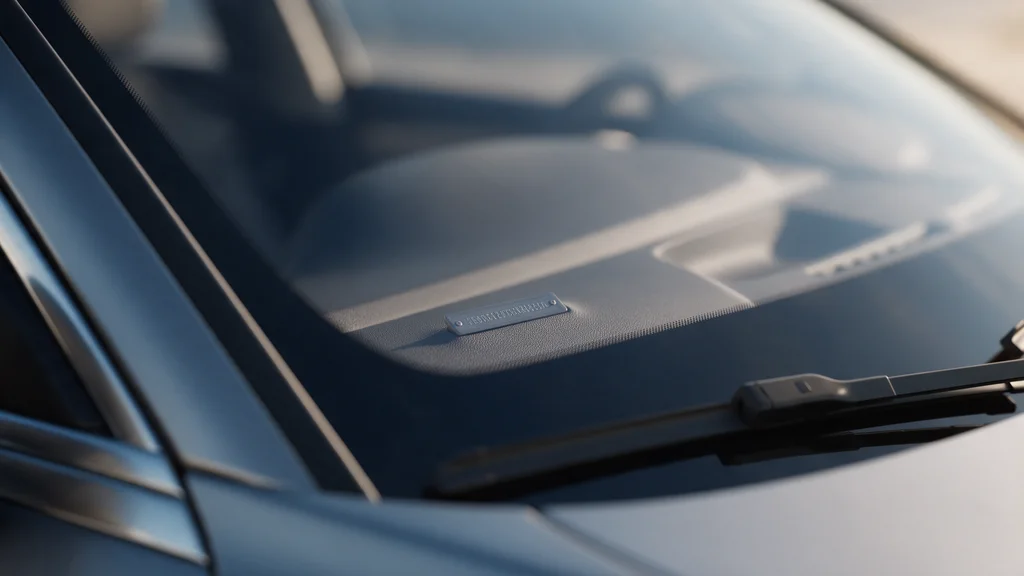
You're looking at a used car and the listing doesn't show the VIN. You can't run a single check without it. So where is the VIN number located on a car? Start at the driver-side dashboard: the plate sits in the lower-left corner, and you can read it from outside through the windshield.
This guide covers all seven places to find the VIN, which one to trust first, and how to tell when a VIN has been tampered with. Have the car in front of you? Good, because most of these spots are a few steps from the driver's door.
Where is the VIN number located on a car?
Look at the driver-side dashboard, where the dash meets the windshield, and read the plate from outside the vehicle. If you want a second look, the driver's door jamb carries a sticker with the same number.
Driver-side dashboard
This is the fastest spot. The Texas DMV tells you to stand outside the car and look at the corner where the dashboard meets the windshield. The National Insurance Crime Bureau (NICB) calls it the public VIN, and its vehicle identification guide describes it as etched into a plate at the top of the driver-side dashboard. Some manufacturers use a label in the same area instead of an etched plate.
Glare on the windshield can make the characters hard to read. Tilt your head, shade the glass with your hand, or zoom in with your phone camera and read the photo instead. Do it in daylight if you can, and don't lean on the dash to get closer.
VIN plate visible through the windshield at the lower-left corner of the driver-side dashboard
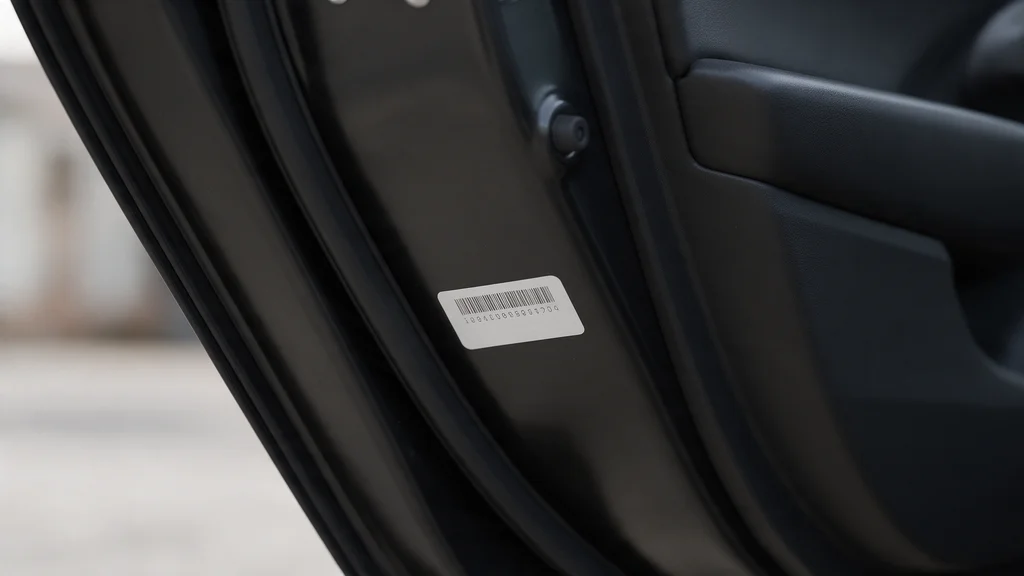
Driver-side door jamb label
Open the driver's door and look at the pillar or the edge of the door. The same NICB guide says the federal safety certification label is inside the driver's door, and it can sit on the rear pillar, the forward pillar or the door itself. The label should carry the same VIN as the dash plate.
Certification label with the VIN on the driver-side door jamb of a car
Under the hood
Pop the hood and check the firewall. According to the NICB, the body plate is usually on the firewall, sometimes on a shock tower or wheel well, and it shows the full or partial VIN. Many foreign manufacturers stamp the firewall instead. The emissions label under the hood can help confirm the number too.
Front end of the frame
Progressive's VIN guide also lists the front end of the frame. It's the hardest place to reach, so treat it as a backup check, not your first look.
Write it down correctly
A VIN is a 17-character number, so count what you copied. If you end up with 16 or 18 characters, you've misread or mistyped something, and a decoder won't return the right car. The easiest fix is to photograph every location you check. You'll have a clean record to compare against the title later, and you won't have to trust your eyes twice.
Where can you find the VIN if the car isn't with you?
Check the vehicle title, the registration or your insurance card. Each document should show the same VIN as the car, so you can match them character by character.
Where is the VIN number on a title?
Both the Texas DMV and Progressive list the vehicle title as a place to find the VIN. Compare it with the dash plate before you hand over any money.
Where is the VIN number on registration?
Your vehicle registration shows it too. Progressive lists registration among the documents that carry the VIN, so it's an easy second paper check when the title isn't handy.
Insurance card and policy
Your insurance card and policy papers also show the VIN. That makes them the quickest source if you own the car and need the number right now.
Which VIN location should you check first?
Start with the dashboard plate, then confirm with the door jamb label. Use the title or registration to match both against paperwork.
The table below follows the NICB guide's checks and the Texas DMV's list of locations.
Location | What you'll see | What to check |
|---|---|---|
Dashboard plate | Etched plate or label where the windshield meets the dash | Readable from outside; matches your paperwork |
Door jamb label | Federal safety certification label inside the driver's door | Same VIN as the dash; label date fits the model year |
Firewall or body plate | Plate or stamping showing the full or partial VIN under the hood | Rivets and paint look original |
Emissions label | Label usually found under the hood | VIN matches the other locations |
Title, registration, insurance | Paper documents | Every character matches the car |
How do you tell if a VIN has been tampered with?
Compare the VIN on the dash plate, the door label, any under-hood plate and your paperwork. They should match exactly, and if they don't, don't buy the car until the seller explains it with proof.
Check that every VIN matches
The NICB guide tells inspectors to verify that the VIN on the label matches the documents and the public VIN plate. It also says the label's production date should fit the model year. One mismatch is enough to stop and ask questions.
Do this check in front of the seller, not afterwards from your photos alone. A seller who is happy to let you read the plate, open the door and look under the hood is easier to trust than one who rushes you. If the seller hesitates when you start comparing numbers, that tells you something too.
Look for physical signs
The same guide lists what to watch for. Scratches, damage or glue around the dash plate, the dashboard, the windshield and the window molding can point to a windshield that's been removed. Labels that look removed, replaced, scratched or covered are another sign, and so is printing that looks typed over. On the firewall, look for extra rivet holes and paint or cleanliness that differs from the surrounding area.
Check the model year
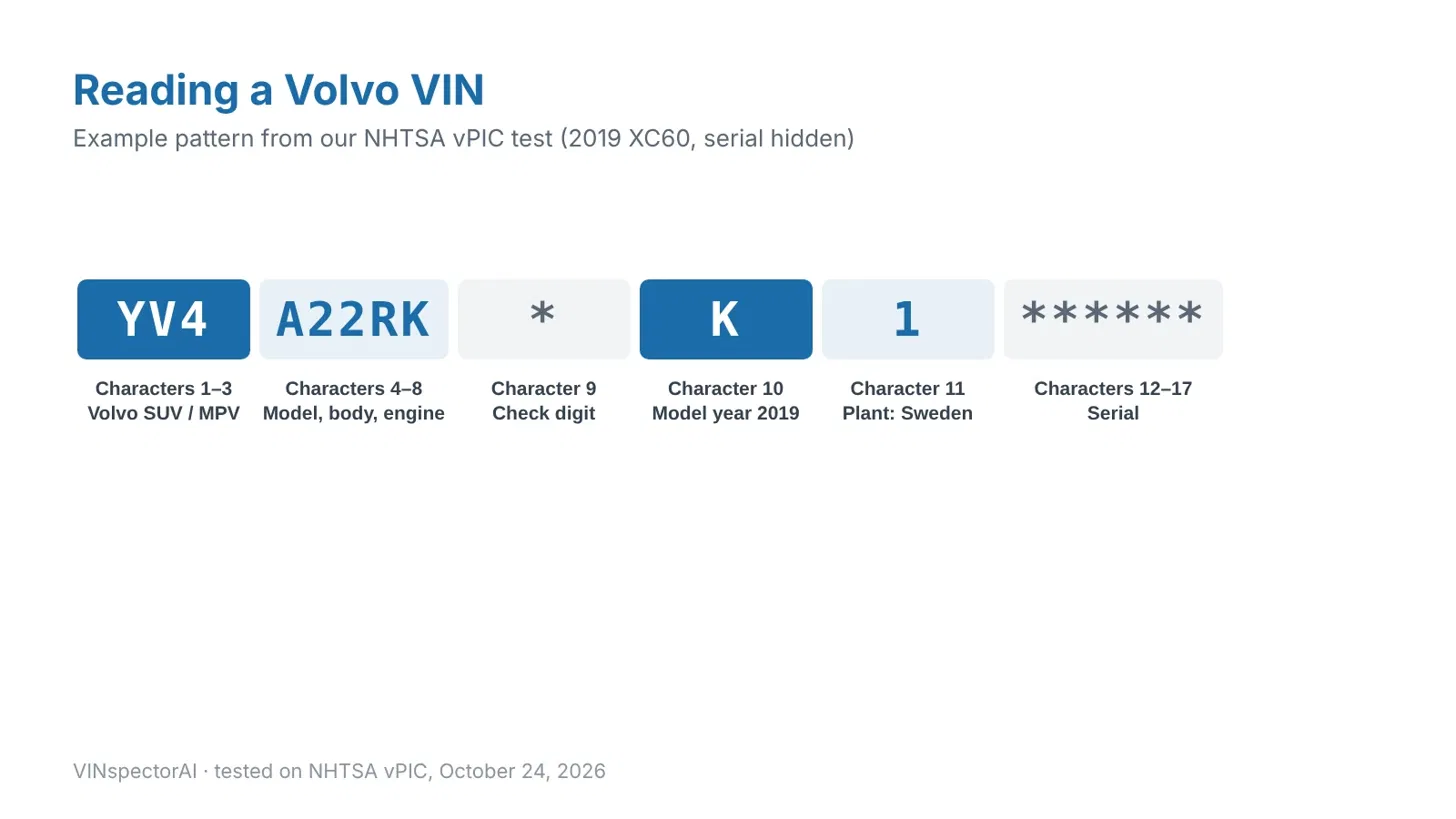
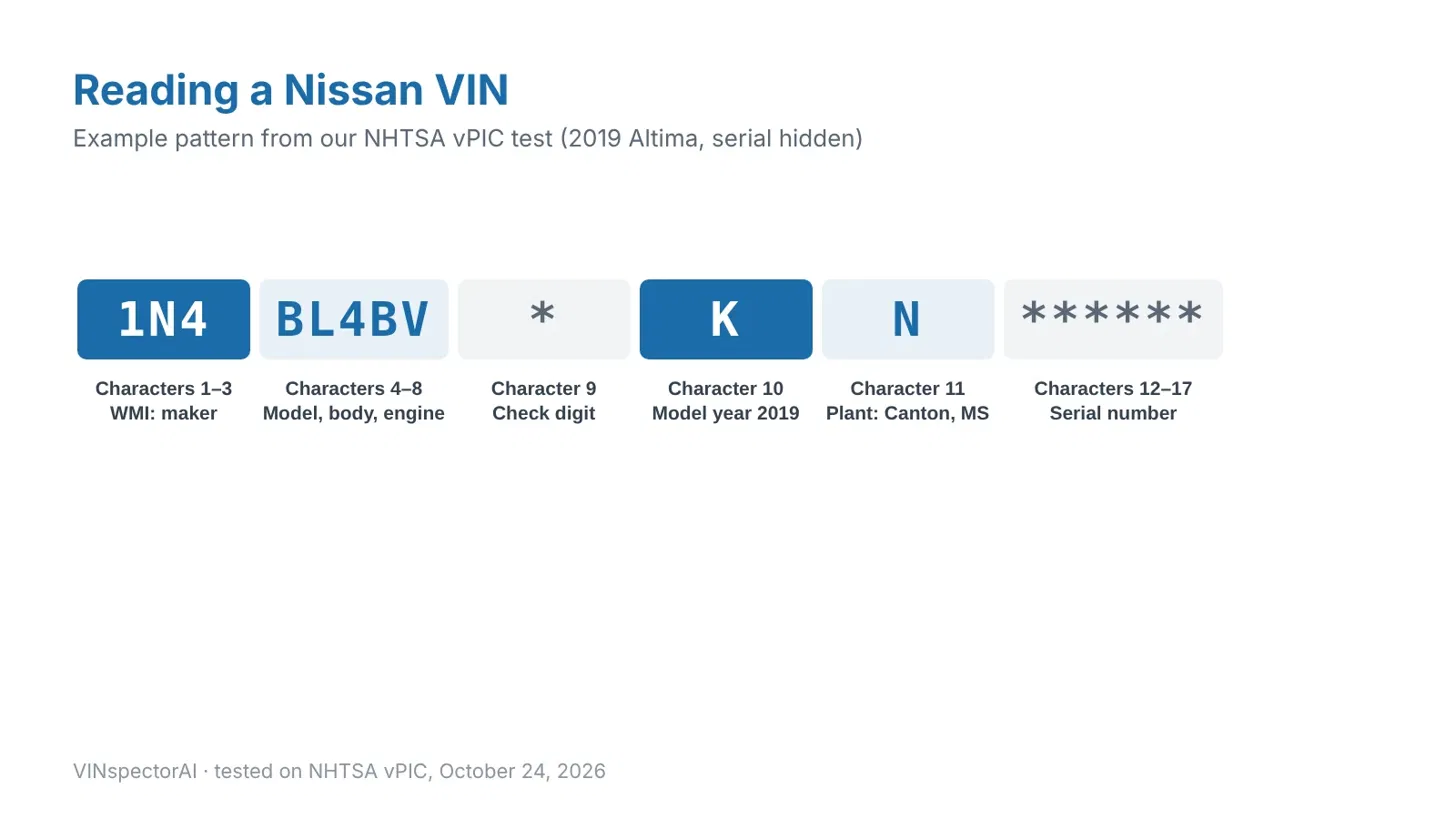
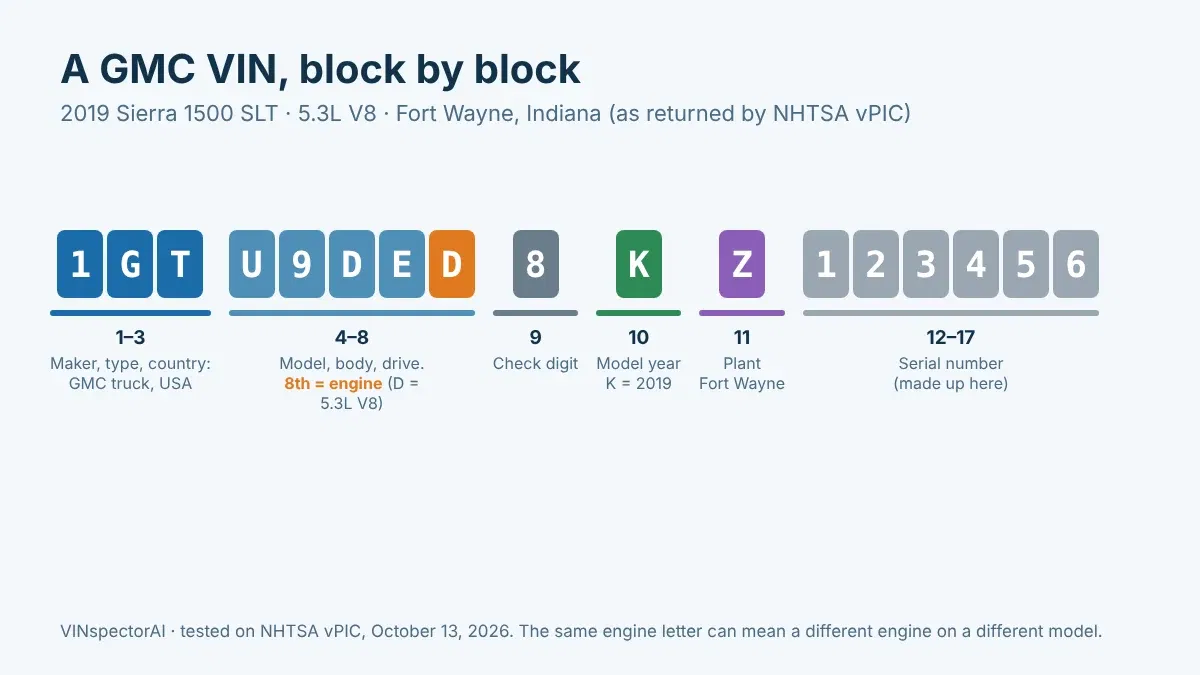
A model year character that doesn't match the year the seller states is another warning sign in the NICB guide. If you want to read the other characters, our guide on how to decode a VIN walks through each section.
If something looks off
The NICB says to contact it or law enforcement if you suspect tampering. A red flag isn't proof of wrongdoing, but it's a good reason to walk away. For the full picture of how copied identities work, read VIN cloning explained.
What should you do with the VIN once you find it?
Decode it to confirm the make, model and year, then run a history check. A decode tells you what the car was built as, and a history check tells you what happened to it afterwards.
Decode it
NHTSA's VIN decoder shows the information encoded in a VIN, including the build plant and country. NHTSA notes that this data is reported by manufacturers. If the decoded details don't match the car you're looking at, that's one more reason to slow down.
Check its history
A decode won't tell you about accidents, title brands or recalls. A free check on VINspectorAI gives you the basic specs, recall count, accident count and title status in one place. Buying in Texas? Moving a car to Florida? Selling in California? Each one has its own state VIN check page.
Motorcycles and other vehicles
This guide covers cars and light vehicles. For bikes, use our motorcycle VIN guide.
Frequently Asked Questions
Get answers to common questions about Where Is the VIN Number Located on a Car? 7 Places to Find It