Volkswagen VIN Decoder: Check Any VW's History
Buying a used Volkswagen without decoding the VIN first is like buying a house without checking the foundation. The 17-character code on the dashboard, door jamb, and title tells you the exact model, engine, plant, and production year — and, if you know where to look, whether that VW has an open recall waiting to bite you.
In this guide, you'll learn how to decode a Volkswagen VIN, what each section actually means, which VW models have the most reported issues, and how a full VIN check on VINspectorAI goes further than a basic decoder ever can.
What Is a Volkswagen VIN and What Does It Tell You?
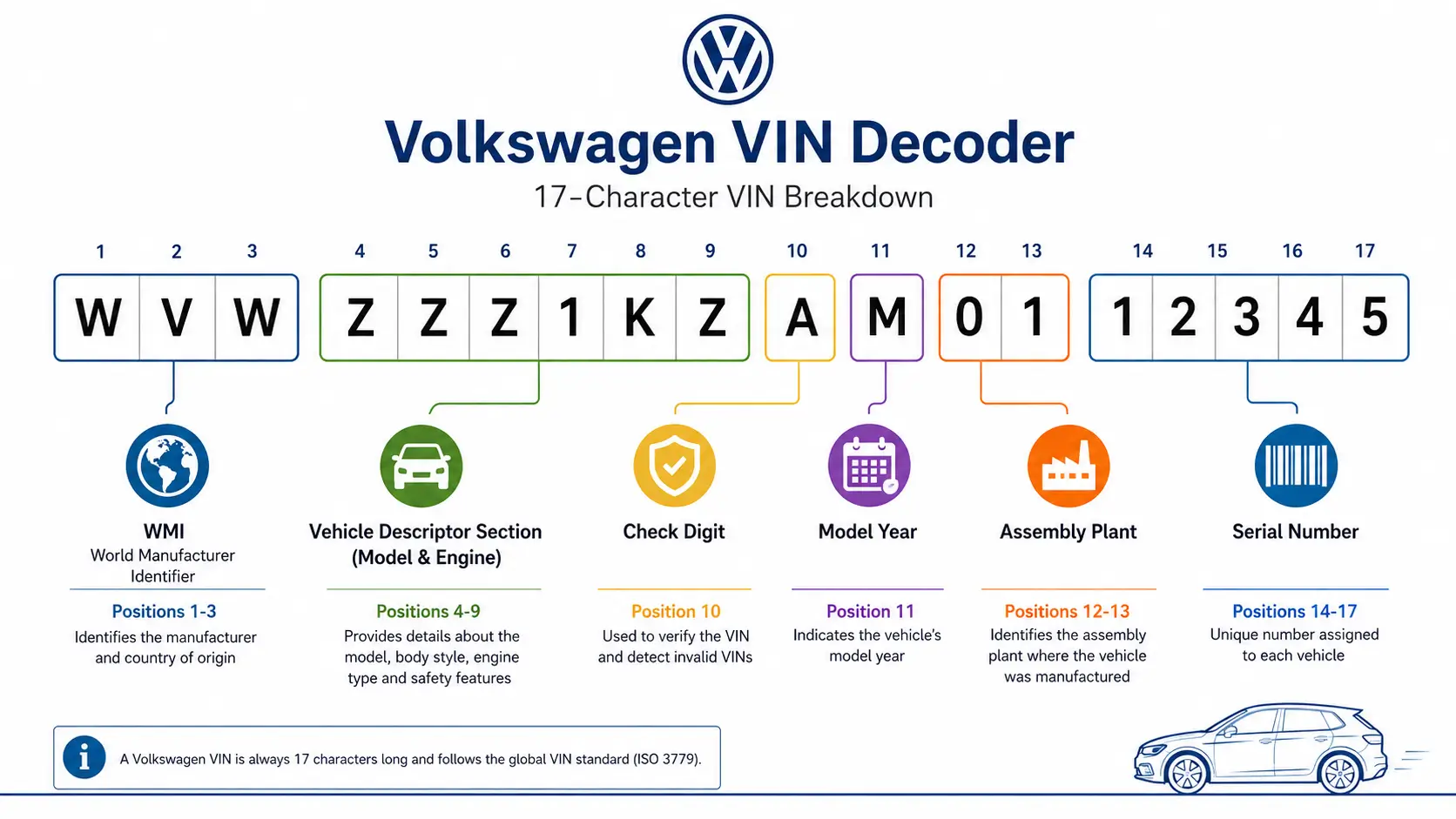
Every Volkswagen built for the U.S. market since 1981 carries a 17-character Vehicle Identification Number. It's not random — each position encodes a specific fact about the car.
Where to Find Your VW's VIN
You'll find the VIN in four places:
Driver-side dashboard, visible through the windshield
Driver-side door jamb sticker
Vehicle title and registration
Insurance card
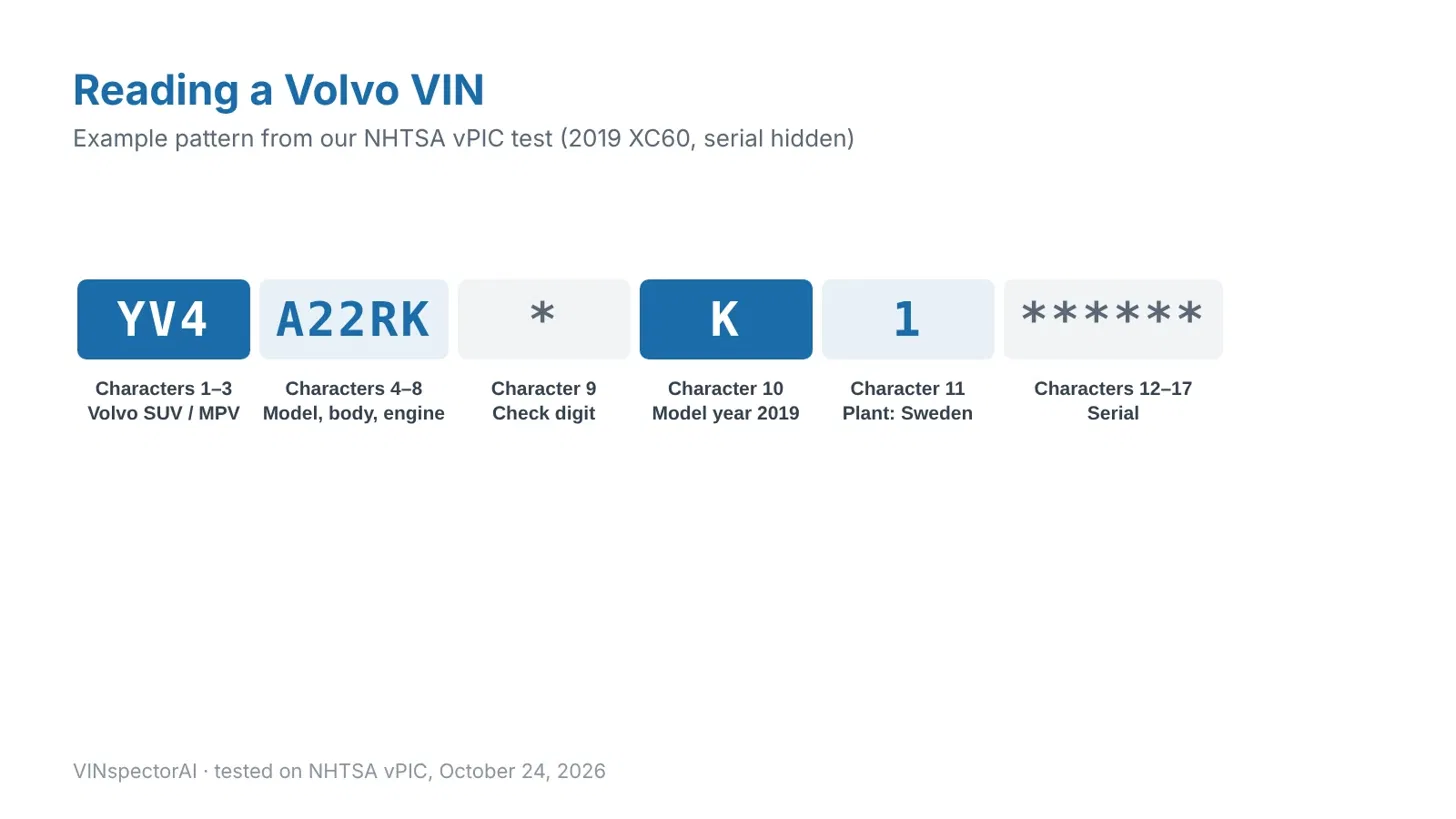
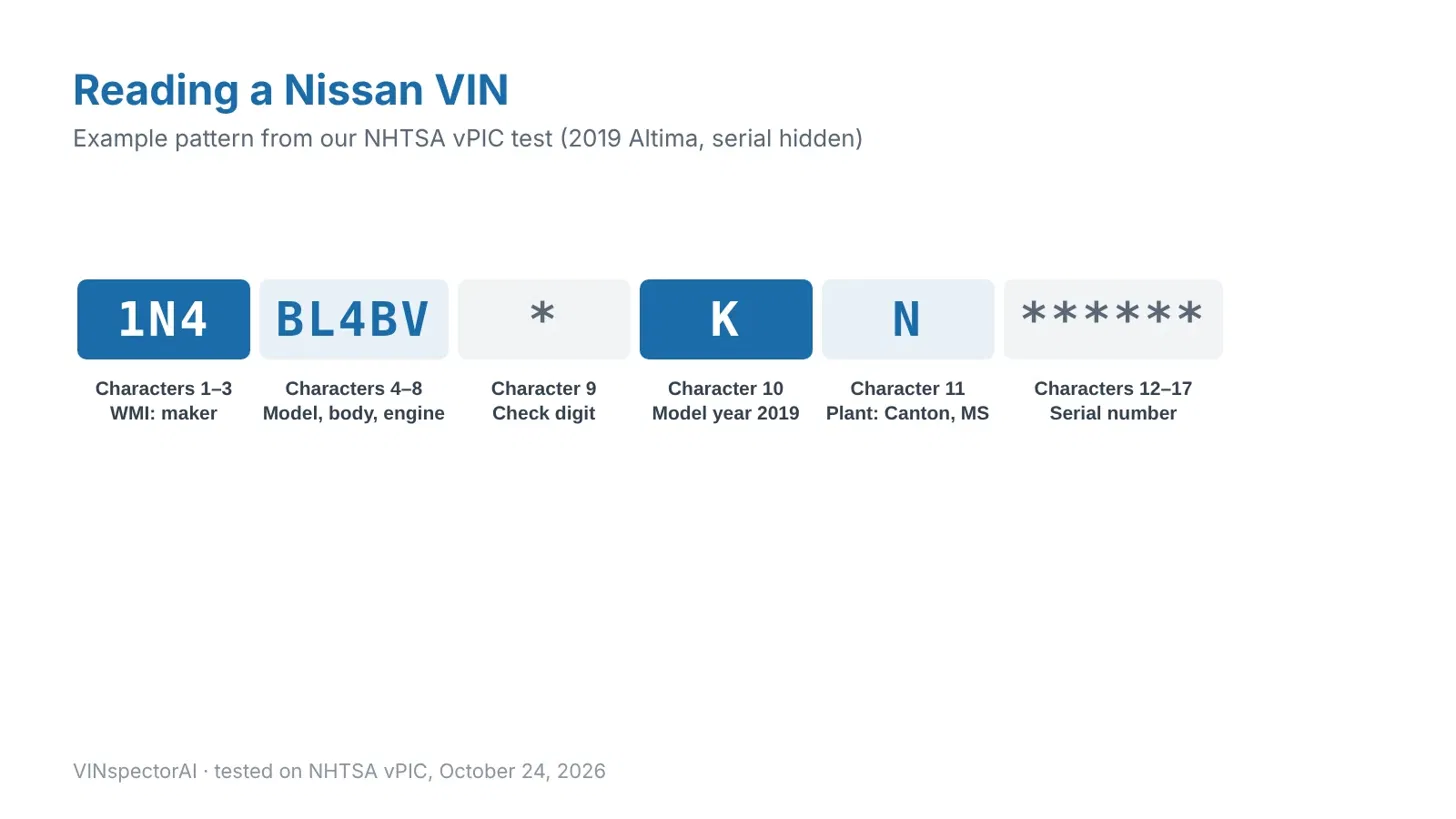
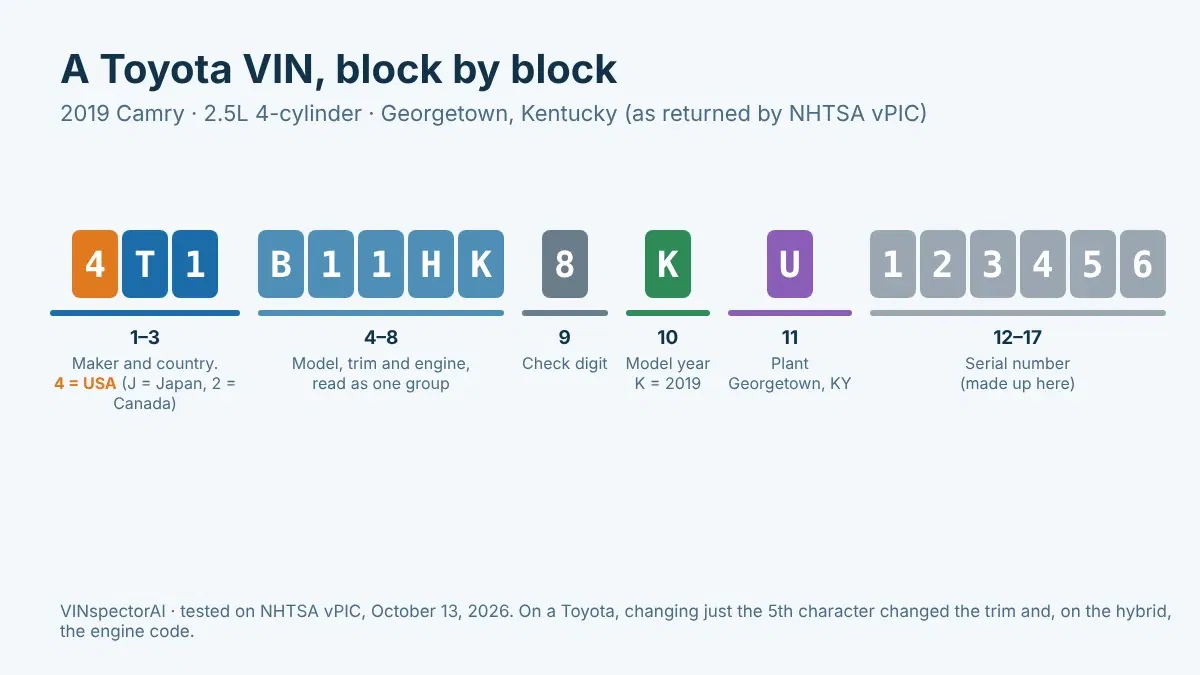
What Each VIN Section Decodes
Positions | What It Tells You | Example |
|---|---|---|
1–3 | World Manufacturer Identifier (WVW = VW passenger car built in Germany) | WVW |
4–8 | Model, body style, engine type | Tiguan, 2.0T |
9 | Check digit (validates the VIN isn't altered) | — |
10 | Model year | L = 2020 |
11 | Assembly plant | Wolfsburg, Chattanooga, Puebla |
12–17 | Sequential production number (unique to that car) | 123456 |
A decoder reads positions 1–9 instantly. Position 10 requires a lookup table since VW (like every manufacturer) reuses letters on a cycle. If two numbers don't match — say the door sticker says one model year and the title says another — that's a red flag worth investigating before you buy.
VIN vs. Chassis Number on Older VWs
Pre-1981 Volkswagens — classic Beetles, early Golfs, vintage Buses — don't use the modern 17-character format at all. They carry a chassis number instead, usually shorter and formatted differently by year and market. If you're shopping for a classic VW, a modern VIN decoder won't return useful results; you'll need a chassis-number reference specific to that model and era. This matters because sellers sometimes list a "VIN" for an older car that's actually the chassis number reformatted to look like a standard VIN — a small but telling sign the listing wasn't put together carefully.
How to Decode a VW VIN Step by Step
Locate the full 17-character VIN and copy it exactly — no spaces, no guessing on characters that look alike (0 vs. O, 1 vs. I).
Run it through a decoder to confirm model, trim, and engine match what the seller listed.
Cross-check the decoded model year against the title and registration.
Go beyond decoding — pull the vehicle's actual history, not just its factory specs.
Free Decoder vs. Full History Report
A free decoder tells you what the car was built as. It won't tell you what happened to it since. For that, you need a report pulling NHTSA complaint data, recall status, title brands, and odometer records tied to that specific VIN — which is where decoding stops and a real Volkswagen VIN check starts.
Common VW Models & Their Known Issues
Some Volkswagen models carry heavier complaint histories than others. Here's what NHTSA data shows across the most-searched models:
Model | Total NHTSA Complaints | Recall Campaigns | Top Reported Issue |
|---|---|---|---|
Tiguan | 1,263+ | 40 | Engine |
Passat | High volume | Multiple | Electrical (EPC light) |
Atlas | Elevated for model-year profile | 16+ (2018 alone) | Electrical system |
Golf | Moderate | Ongoing | Fuel system |
Taos | Growing (newer model) | Active | Engine / brakes |
Source: NHTSA Complaints Database, aggregated by VinSpectorAI.
Recalls & Reliability by Model
Tiguan — Engine & Electrical
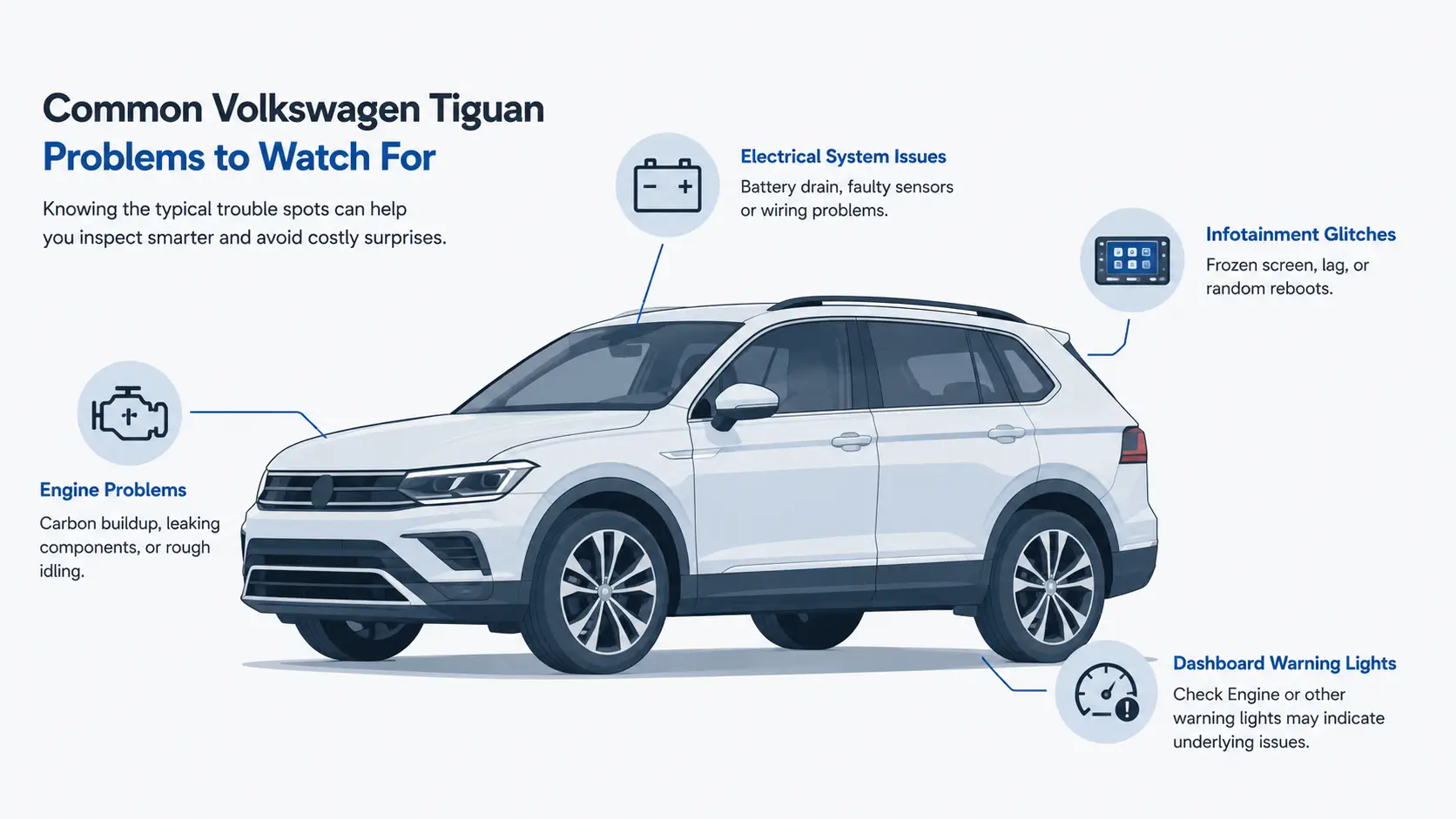
The Tiguan's top complaint category is the engine, followed closely by electrical system issues — including infotainment module failures that can disable the backup camera, a problem that's shown up repeatedly in recent owner complaints. Worst model years by complaint volume: 2018, 2022, and 2019. See the full Tiguan reliability breakdown by year.
Golf — Fuel System
Multiple Golf model years have been tied to fuel pump and fuel delivery recalls, some involving unexpected engine stalling — a safety-critical issue worth checking recall completion status on before you buy. Details by year: Golf reliability report.
Atlas — Electrical System
The Atlas shows a pattern of electrical complaints spanning wiring, airbag components, and engine-related warning lights. If you're looking at a used Atlas, service records showing repeated electrical visits are worth asking about directly. Full data: Atlas reliability by model year.
Passat — Electrical (EPC Light)
Passat owners have reported the Engine Power Control (EPC) light triggering unexpected idle and RPM drops at highway speed — a pattern that shows up across multiple model years. See Passat reliability data.
Taos — Engine & Brake Complaints
As VW's newest compact SUV, the Taos has a shorter track record, but early complaint data already points to engine power loss and brake wear as the top two categories — including reports of Engine Power Control faults similar to the Passat's. Because it's a newer model, most complaints so far cluster in the first three model years. Check Taos reliability by year before buying one under three years old.
How to Check if a Recall Was Actually Fixed
Knowing a recall exists isn't the same as knowing it was resolved. Here's the difference that trips up most buyers:
NHTSA's recall lookup tells you whether a campaign was issued for that model and year — it doesn't confirm whether this specific car received the repair.
The dealer service history (if the seller has it) should show a completed recall repair order, dated after the recall's issue date.
A VIN-specific history report cross-references the exact VIN against completion records, which is the only reliable way to confirm status without calling a VW dealer directly and asking them to look it up.
If a seller says "the recall doesn't apply" without pointing to documentation, don't take that at face value — verify it on the exact VIN before you commit to buying.
Common VW-Specific Buying Red Flags
Beyond decoding, a few patterns show up often enough in VW listings to be worth knowing:
"Clean title" claims with no documentation. Ask to see the actual title, not just a verbal assurance — especially on Golfs and Jettas, which see disproportionate salvage-title relisting in some states.
Recently completed "electrical fix" with no paper trail. Given how often Tiguan and Atlas complaints trace back to electrical systems, a vague mention of "we fixed the electrical issue" without an invoice is a reason to ask more questions, not less.
Mismatched VIN plates. On any car advertised as a rare trim (GTI, R-Line, Alltrack), confirm the VIN on the dashboard matches the VIN on the title and the door jamb sticker. A mismatch across all three is rare but serious — it can indicate a swapped or reconstructed vehicle.
What a Full VIN Check Adds Beyond Decoding
Decoding tells you what the car is. A full report tells you what happened to it:
Whether any of the recalls above were actually completed on this exact VIN
Accident and structural damage history
Title brands — salvage, flood, rebuilt (see our guide on what a branded title means if you're unfamiliar with the terms)
Odometer consistency across service records
Prior ownership pattern (personal use vs. fleet or rideshare)
If the seller can't produce clean service records, or the VIN decodes to one model year while the title shows another, treat that as a reason to dig deeper — not necessarily to walk away, but to verify before you commit.
What Should You Do Before Signing?
Decoding a VW VIN takes ten seconds and confirms the basics. Verifying its actual history — recalls, accidents, title status — takes about a minute longer and is the part that actually protects your money. Run a full Volkswagen VIN check on VinSpectorAI before you hand over a deposit.
Frequently Asked Questions
Get answers to common questions about Volkswagen VIN Decoder: Check Any VW's History
Uncover Complete Vehicle History Reports
Discover critical vehicle information before you buy. Our VIN decoder reveals accident records, title status, recalls, and service history to help you make informed decisions.