Kia VIN Decoder: Check Recalls, Theft History & Model Issues
In 2022 and 2023, a wave of Kia thefts swept through American cities after a viral social media trend showed how easy certain models were to steal. Kia responded with a software fix and an anti-theft kit rollout — but here's the catch: not every affected VIN got the update, and a stolen-then-recovered Kia doesn't always come with a disclosure. That's just one reason decoding — and properly checking — a Kia VIN matters more than it used to.
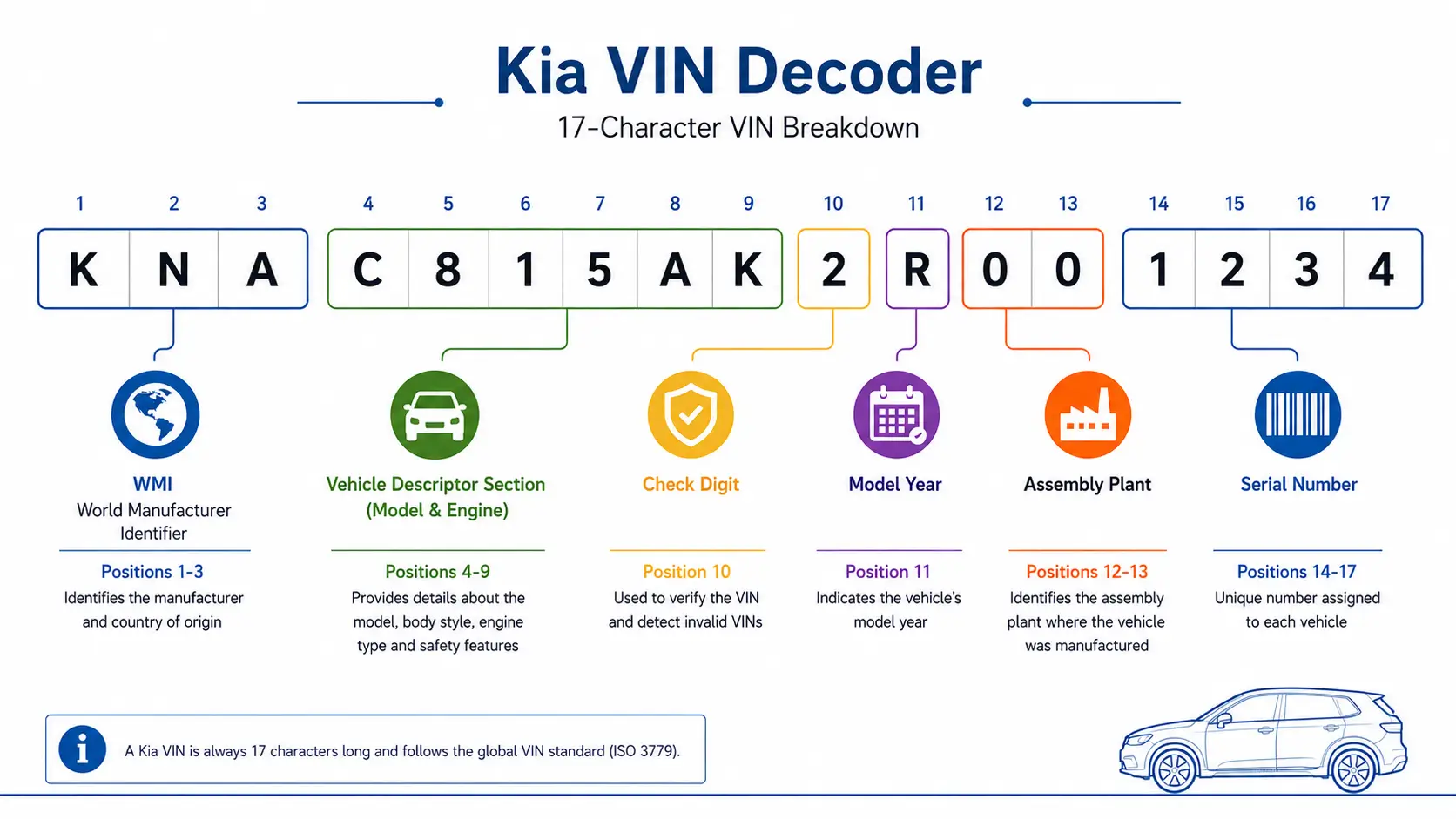
Quick answer: A Kia VIN is a 17-character code starting with KNA, KND, or KNM. Positions 1–3 identify the manufacturer, 4–8 the model and engine, 10 the model year, 11 the assembly plant, and 12–17 the unique production number. Decoding it confirms the car's factory specs — it won't tell you about theft history, recalls, or accidents, which require a separate VIN-specific check.
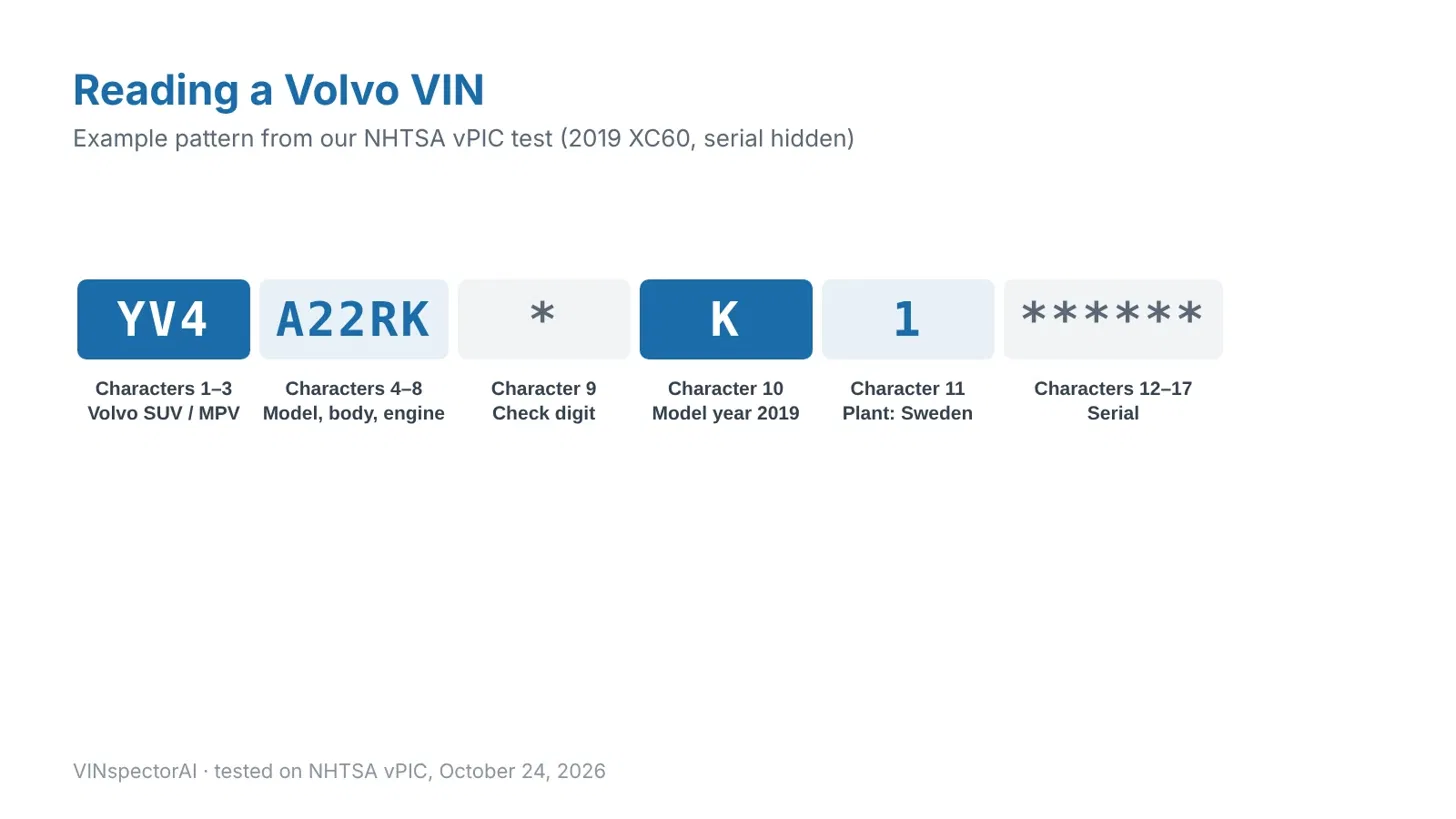
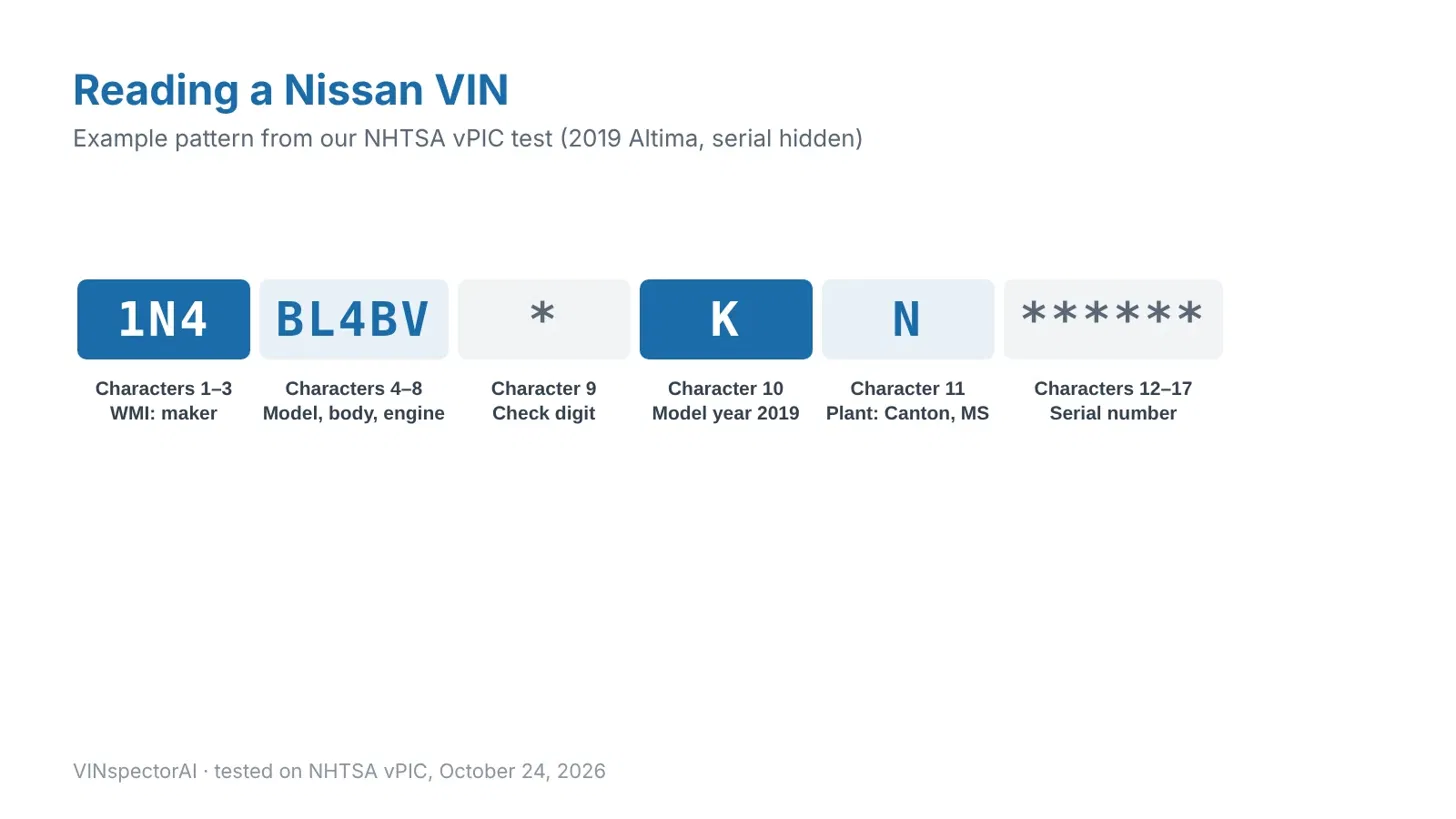
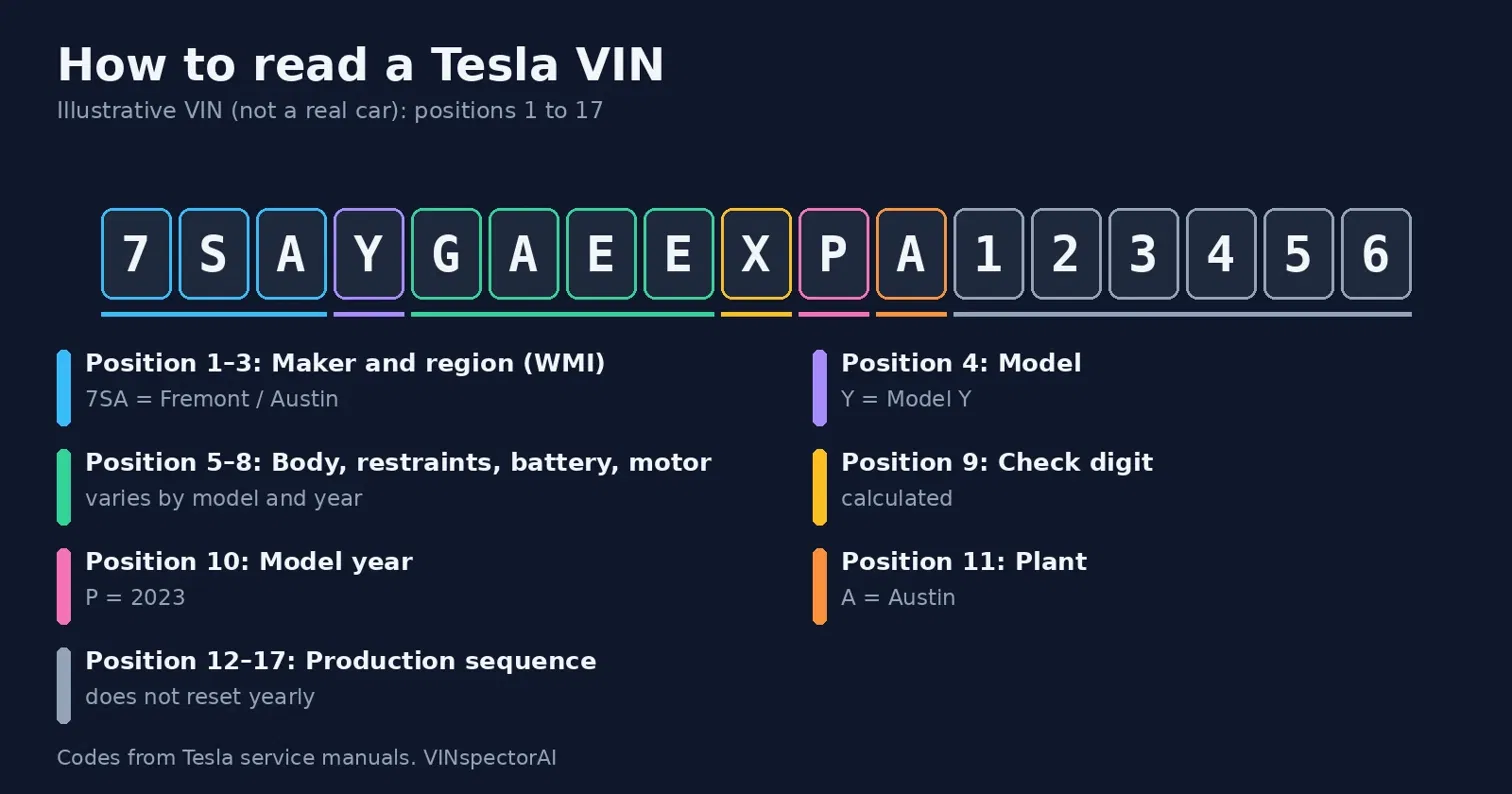
Reading a Kia VIN: What Each Character Means
Kia's VIN structure follows the same 17-character industry standard as every U.S.-market vehicle, but the manufacturer codes and plant identifiers are Kia-specific.
Positions | What It Tells You | Example |
|---|---|---|
1–3 | World Manufacturer Identifier (KNA/KND/KNM = Kia) | KNDPM |
4–8 | Model, body style, engine/restraint system | Sportage, 2.5L |
9 | Check digit | — |
10 | Model year | P = 2023 |
11 | Assembly plant | West Point (GA), Sohari, Gwangju |
12–17 | Sequential production number | 654321 |
You'll find the full VIN in four places: the driver-side dashboard (visible through the windshield), the driver-side door jamb sticker, the vehicle title, and the insurance card. If the model year in position 10 doesn't match what's on the title, treat that as a reason to ask more questions before signing anything.
Decoding vs. Checking: They're Not the Same Thing
A lot of buyers stop at decoding and assume they're done. They're not — and the Kia theft situation is a good illustration of why.
Decoding a VIN tells you the car was built as a 2021 Kia Sportage with a 2.5L engine, assembled in West Point, Georgia. That's it. It says nothing about whether:
This specific VIN was ever reported stolen and later recovered
The anti-theft software update was installed
An engine fire recall (Kia's Theta II and Nu engines have both been subject to campaigns) was actually completed
The car has open safety recalls of any kind
Getting that information means running the VIN through NHTSA's databases and a full history report — not just a decoder. Free decoders are useful for confirming a listing is accurate; they're the wrong tool for confirming a car is safe to buy. That distinction is where a Kia VIN check does the work a decoder can't.
Reliability Snapshot: Which Kia Models Draw the Most Complaints
Model | Segment | Top Reported Issue | Recall Activity |
|---|---|---|---|
Seltos | Compact SUV | Sudden power/acceleration loss | Active, recent complaints |
Forte | Compact sedan | Transmission/drivetrain, engine | Ongoing across model years |
Sportage | Compact SUV | Engine problems | Multiple campaigns |
Sorento | Midsize SUV | Powertrain, engine | Multiple campaigns |
Telluride | Three-row SUV | Engine, electrical | Fewer, newer model |
Source: NHTSA Complaints Database, aggregated by VinSpectorAI.
A few patterns worth knowing before you shop a specific model:
Seltos — Sudden Power Loss Complaints
Recent complaints describe sudden, intermittent loss of accelerator response — serious enough that confirming recall status matters even on newer model years still under active review. Full breakdown: Seltos reliability by year.
Forte — Transmission & Drivetrain
Complaints skew toward transmission and drivetrain issues, with 2017 models drawing noticeably more reports than surrounding years. See Forte reliability data.
Sportage — Engine Problems Across Generations
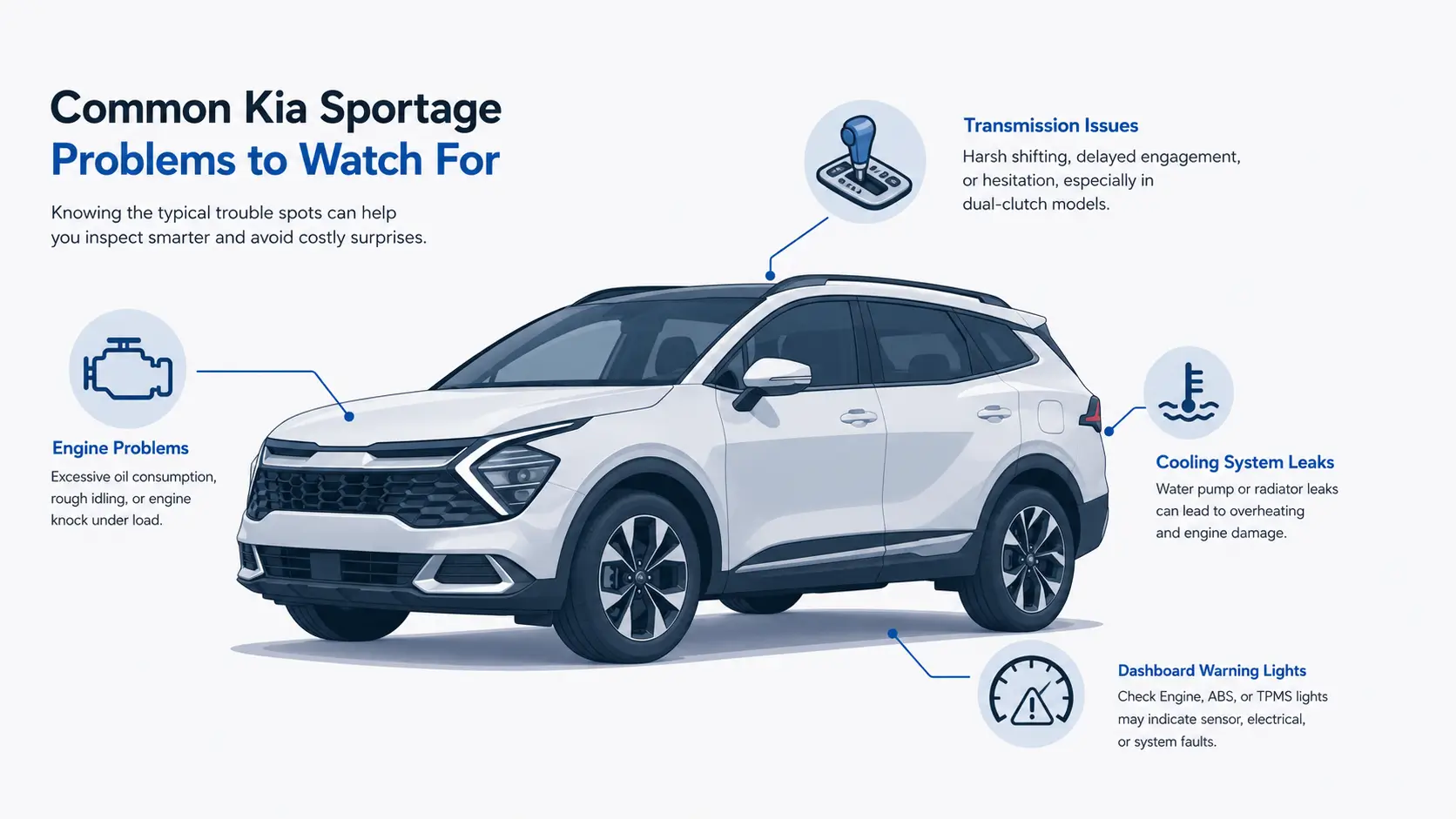
Engine complaints dominate across several generations. If you're looking at a high-complaint model year, ask specifically about engine service history — don't rely on "runs fine" from a test drive alone. Details: Sportage reliability report.
Sorento & Telluride — Towing Capacity Depends on the Exact Build
Both get shopped heavily for towing — but the actual capacity depends on the exact trim, engine, and tow package in the VIN, not the number on a brochure. Our guide on finding towing capacity by VIN covers how to confirm the real rating before hitching anything. The Telluride, being newer, naturally shows fewer total complaints than the Sorento — that reflects less time on the road, not necessarily better reliability, so compare complaints per year of ownership rather than raw totals.
Was the Recall Actually Fixed? Three Ways to Check
An issued recall and a completed repair are two different facts, and sellers don't always know the difference themselves.
1. Check NHTSA's Recall Lookup
This confirms a campaign exists for that model and year — nothing more. It won't tell you if your specific car got the fix.
2. Ask for Dealer Service Records
These should show a completed repair order dated after the recall's issue date, if the seller has them on hand.
3. Run a VIN-Specific History Report
This cross-references the exact VIN against completion data — the most reliable check without calling a Kia dealer directly and asking them to look it up.
This three-step check is especially relevant for Kia's engine-fire recalls on certain Theta II and Nu engine variants, where completion rates have lagged behind the number of vehicles affected.
Buying Red Flags Specific to Kia
Skipped anti-theft update. Given the 2022–2023 theft wave, ask directly whether the software fix and steering-wheel lock kit were installed — especially on Soul, Forte, and Sportage models from the affected years.
Undisclosed recovery-after-theft history. A stolen-and-recovered Kia can show ignition or steering column damage that a quick walk-around inspection won't catch.
Assuming Hyundai data applies. Kia and Hyundai share platforms and engines on several models, but they use different manufacturer codes and separate recall records. A Hyundai Tucson's clean recall history says nothing about a mechanically similar Kia Sportage — check each VIN independently.
"No accidents" with no paperwork. Ask for a written report tied to the VIN, particularly on higher-mileage Sportage and Sorento listings.
What to Verify Before You Sign
Run a full Kia VIN check on VINspectorAI before handing over a deposit. Decoding confirms the car is what the listing says it is. Checking confirms it's safe to buy — recalls completed, no undisclosed theft or accident history, and a title that matches the odometer.
Frequently Asked Questions
Get answers to common questions about Kia VIN Decoder: Check Recalls, Theft History & Model Issues
Uncover Complete Vehicle History Reports
Discover critical vehicle information before you buy. Our VIN decoder reveals accident records, title status, recalls, and service history to help you make informed decisions.