Towing Capacity by VIN: How to Find Your Vehicle's Tow Rating
You're about to buy a used truck. The seller says it can tow 10,000 lbs. But is that actually true for this specific truck — with this engine, this trim, this axle ratio?
The answer is in the VIN. And most buyers never think to check it.
Here's how to find your vehicle's exact towing capacity by VIN number — and why it matters more than the number on a spec sheet.
What Is Towing Capacity and Why It Matters
Towing capacity is the maximum weight your vehicle can safely pull behind it. Exceed that number and you're not just risking a ticket — you're risking brake failure, transmission damage, and loss of control on a downgrade.
The problem is that towing capacity isn't a single fixed number for a given model. A 2020 Ford F-150 can tow anywhere from 5,000 lbs to 13,200 lbs depending on how it was built. Same name on the badge. Wildly different capability underneath.
That's why the only reliable number is the one tied to your specific VIN.
Can You Find Towing Capacity by VIN?
Yes — and it's one of the most accurate ways to do it.
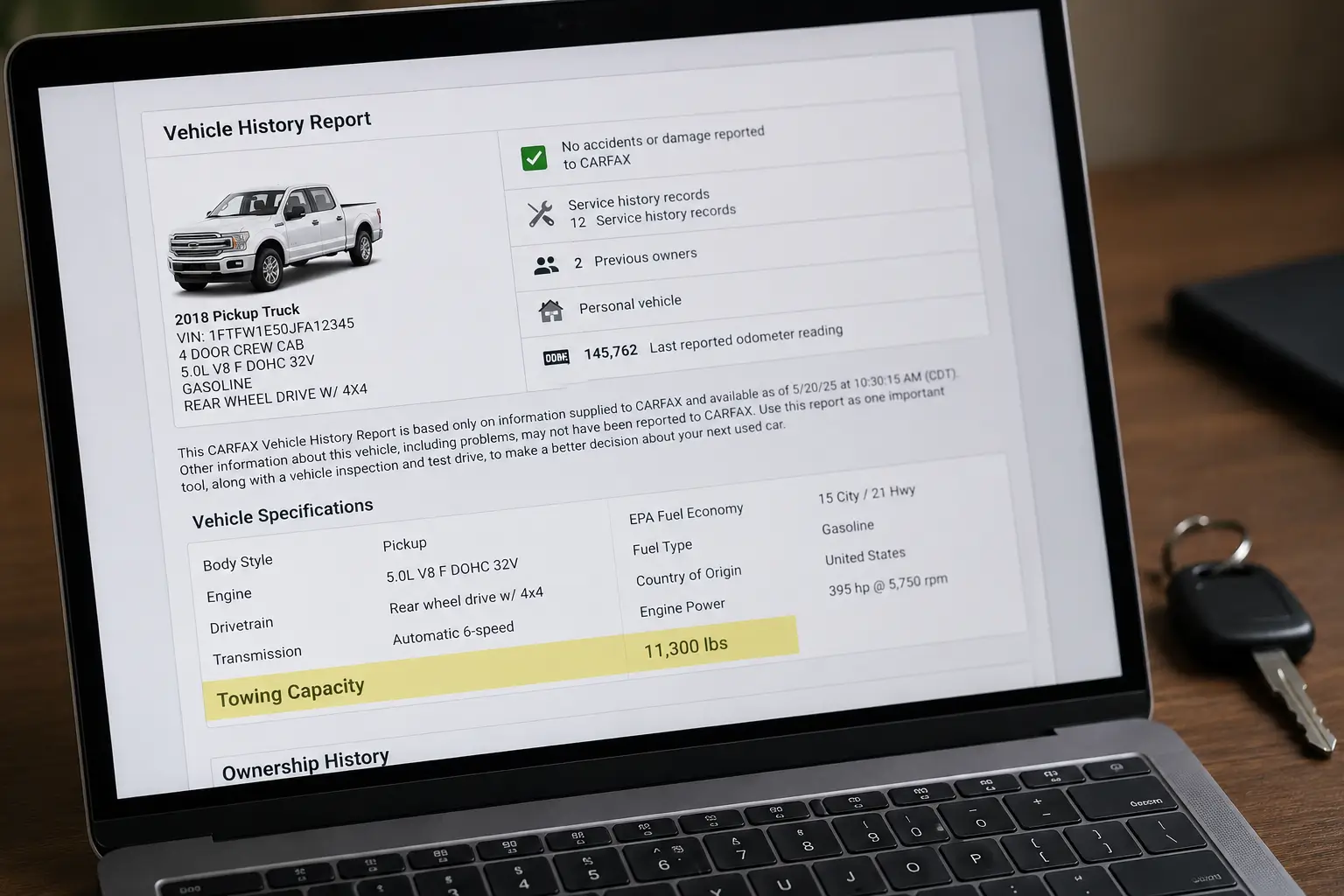
Your VIN (Vehicle Identification Number) is a 17-character code that encodes your vehicle's exact factory configuration: engine type, transmission, axle ratio, tow package, and more. All of these directly affect towing capacity.
When you decode a VIN properly, you get the build specs that manufacturers use to calculate the tow rating. No guessing. No relying on a brochure that covers 12 different configurations.
This is especially important when buying used. A truck listed as "tow package equipped" may have had it removed or may never have had it at all. The VIN doesn't lie.
How to Look Up Towing Capacity by VIN Number
There are three practical ways to do this.
Using the Manufacturer's Website
Most major manufacturers have a VIN decoder or build sheet lookup tool:
Ford: owner.ford.com — enter your VIN to get the original window sticker with tow ratings
GM (Chevrolet/GMC): myvehicle.com — full build sheet including tow package codes
Ram: buildsheet.mopar.com — original order details
Toyota: use the dealer portal or contact Toyota customer service with your VIN
These tools give you the factory-spec tow rating for your exact configuration. It's the most authoritative source available.
Using a VIN Decoder Tool
A VIN decoder breaks down your 17-character code into individual specs. Run your VIN through VINspectorAI to decode engine, transmission, and package codes — then cross-reference with the manufacturer's towing guide for your model year.
This approach works well when the manufacturer's tool isn't available or when you want to verify the build specs before going further.
Checking the Driver's Door Sticker
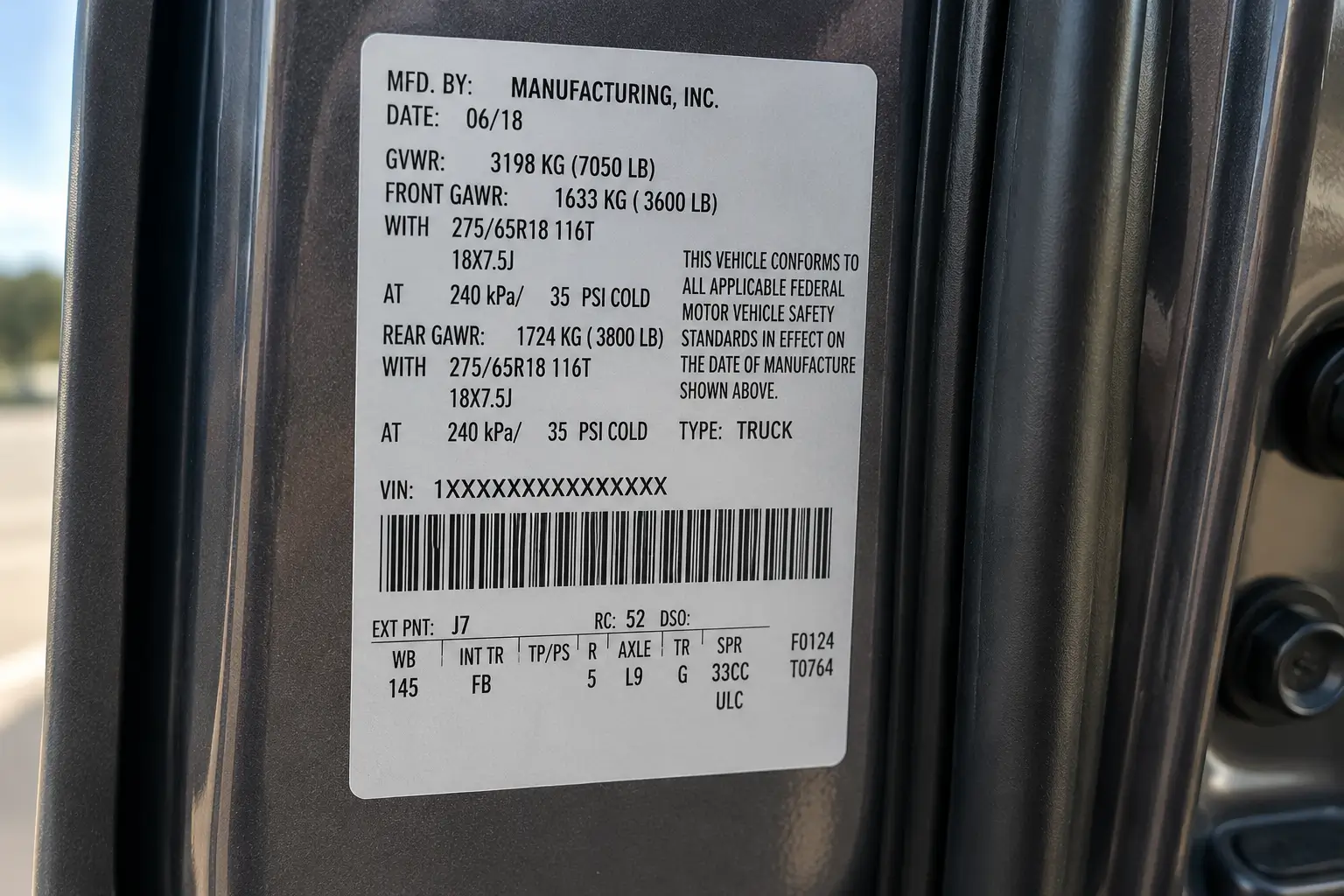
Every vehicle has a certification label on the driver's door jamb. It lists GVWR (Gross Vehicle Weight Rating) and GAWR (Gross Axle Weight Rating). These don't directly state towing capacity, but they're part of the calculation — and they're physically attached to the vehicle, not a database.
If the door sticker is missing or looks tampered with on a used vehicle, that's a red flag worth investigating.
Why Towing Capacity Varies — Even for the Same Model
This is the part most buyers miss.
Take the 2022 Chevrolet Silverado 1500. Depending on configuration, towing capacity ranges from 7,900 lbs to 13,300 lbs. The variables:
Engine: A 2.7L turbocharged four-cylinder vs. a 6.2L V8 — completely different ratings
Transmission: Some configurations require a specific 10-speed automatic for max tow capacity
Axle ratio: A 3.42 rear axle vs. a 3.73 changes the number significantly
Tow package: Adds a transmission cooler, upgraded hitch receiver, and trailer brake controller wiring — without it, the max rating drops
Two Silverados parked side by side can look identical and have a 5,000 lb difference in tow rating. The only way to know which one you're buying is the VIN.
If you're buying in a high-truck state like Texas or Florida, where used work trucks are common, this check is essential — sellers often overstate tow capacity, sometimes without even knowing they're wrong.
What Happens If You Exceed Your Tow Rating
Overloading your hitch isn't just a mechanical risk — it's a liability.
Mechanically, exceeding tow capacity puts strain on:
The transmission (overheating is the most common failure)
Brakes (longer stopping distances, potential fade on long descents)
Wheel bearings and suspension components
The frame itself on repeated overloads
Legally, if you're in an accident while towing over capacity, your insurance company can deny the claim. In commercial contexts, the driver can face fines and the vehicle can be placed out of service.
Practically, handling degrades — sway becomes harder to control, especially at highway speeds or in crosswinds. Trailer sway is one of the leading causes of towing-related accidents.
The fix is simple: know your number before you hitch anything.
Before You Tow: Run a Full VIN Check
Towing capacity is only part of what a VIN reveals.
If you're buying a used truck or SUV for towing, you also need to know:
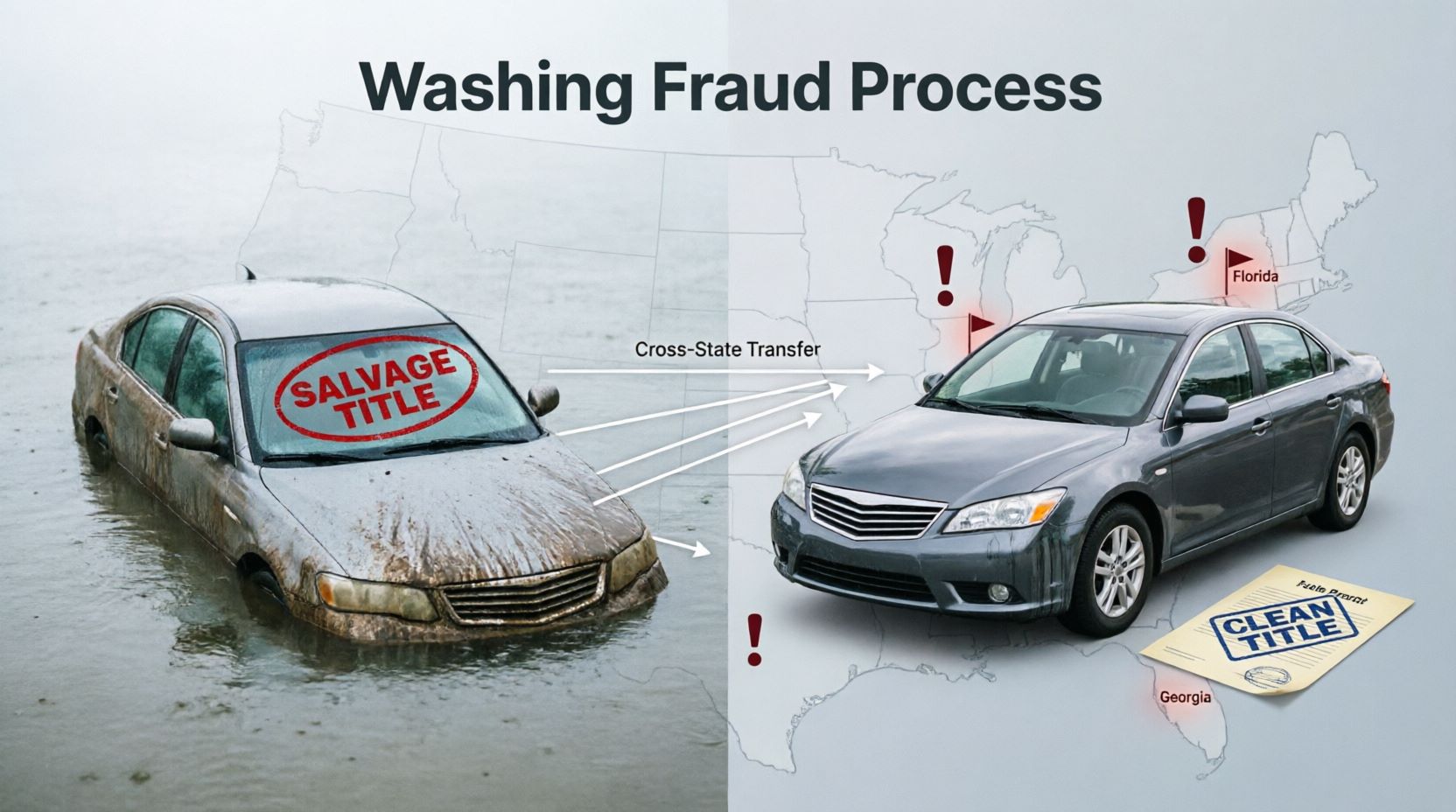
Has it been in a flood? Water damage destroys electrical systems and corrodes frame components — both critical for towing safety.
Does it have a salvage or rebuilt title? That affects structural integrity.
Has the odometer been rolled back? A truck with 180,000 real miles on the transmission tows very differently than one with 60,000.
Has it had prior accident damage near the hitch receiver or frame?
A full vehicle history report answers all of these. Before you commit to a tow-capable vehicle, run the VIN through VINspectorAI — it takes under two minutes and could save you from an expensive mistake.
Buyers in California should also note that the state has specific emissions rules that can affect which tow configurations are legally operable on California roads — another reason to verify specs before purchase.
What to Do Before You Hitch Anything
Finding towing capacity by VIN is straightforward once you know where to look. Use the manufacturer's build sheet tool for the most accurate factory spec. Cross-reference with a VIN decoder to confirm the configuration. And always verify the vehicle's full history before buying.
A truck that looks capable isn't always a truck that is capable. The VIN tells the real story.
Check your VIN at VINspectorAI.com before you buy — and know exactly what you're getting.
Frequently Asked Questions
Get answers to common questions about Towing Capacity by VIN: How to Find Your Vehicle's Tow Rating
Uncover Complete Vehicle History Reports
Discover critical vehicle information before you buy. Our VIN decoder reveals accident records, title status, recalls, and service history to help you make informed decisions.