Trailer VIN Decoder: How to Read the Frame Plate Code
Trailers get the same 17-character treatment as cars under federal rules, but the code inside works differently — there's no engine to describe, axle count gets its own position, and length is sometimes given as a range instead of an exact figure. If you're buying a used utility, cargo, or travel trailer, here's what those characters actually mean, and the one case where there's no VIN to decode at all.
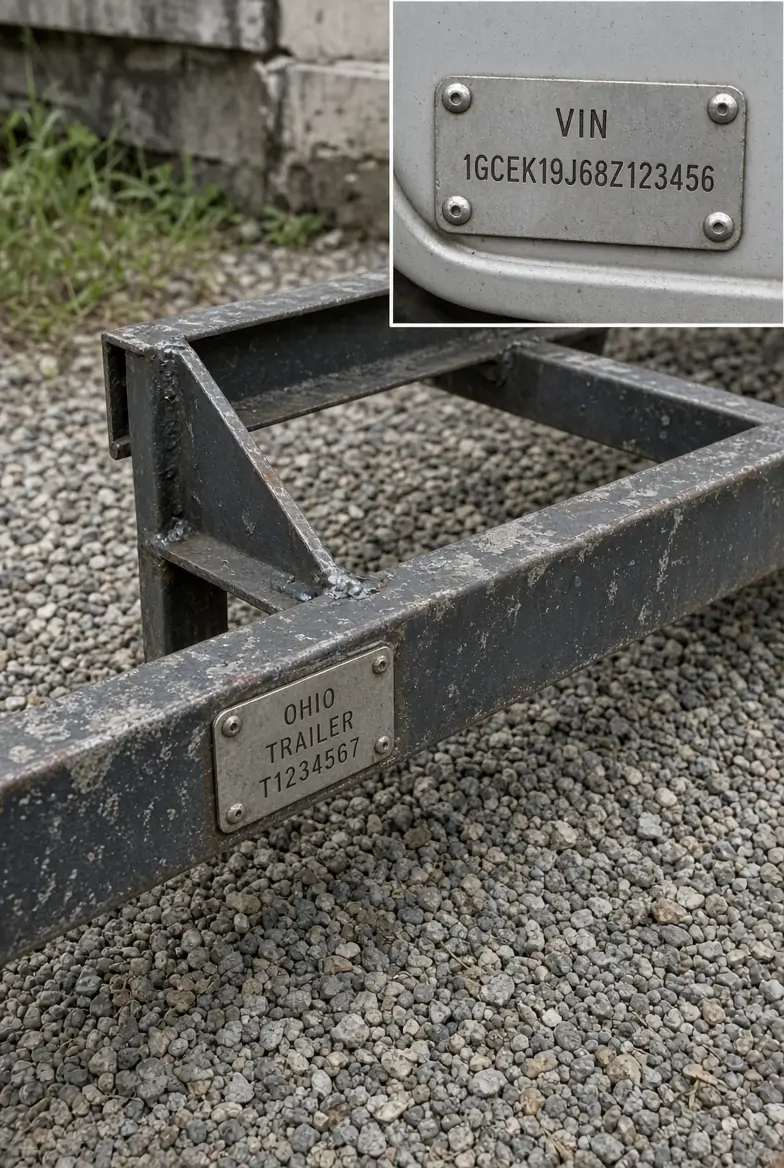
Where to Find It
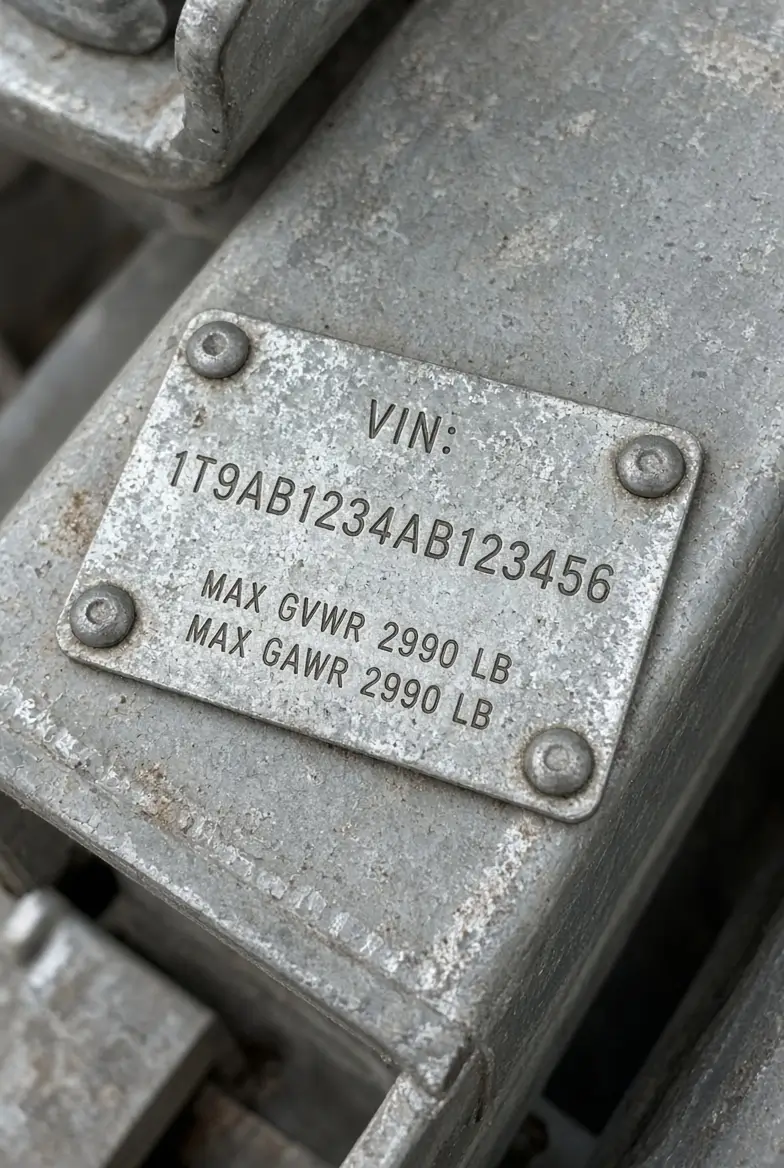
Unlike a car, there's no windshield or door jamb to check. On most road-legal trailers, the VIN plate is riveted to the frame near the tongue or A-frame, or along the left front rail. It should also be printed on the title — matching the two before you buy is one of the simplest fraud checks available, and one of the most skipped.
How the Code Differs From a Vehicle VIN
Every trailer built for road use since 1981 follows the same ISO 3779 structure as a car, but the middle section reflects what actually varies between trailers.
Position | Section | What It Tells You |
|---|---|---|
1–3 | WMI | Trailer manufacturer and country |
4–7 | Trailer type & length | Body type, sometimes a length range rather than an exact figure |
8 | Axle count | Number of axles — used by some states for registration fees |
9 | Check digit | Validates the code mathematically |
10 | Model year | Standard letter/number code |
11 | Plant code | Manufacturing plant or line |
12–17 | Serial number | Sequential production number |
Why the WMI Matters More Here
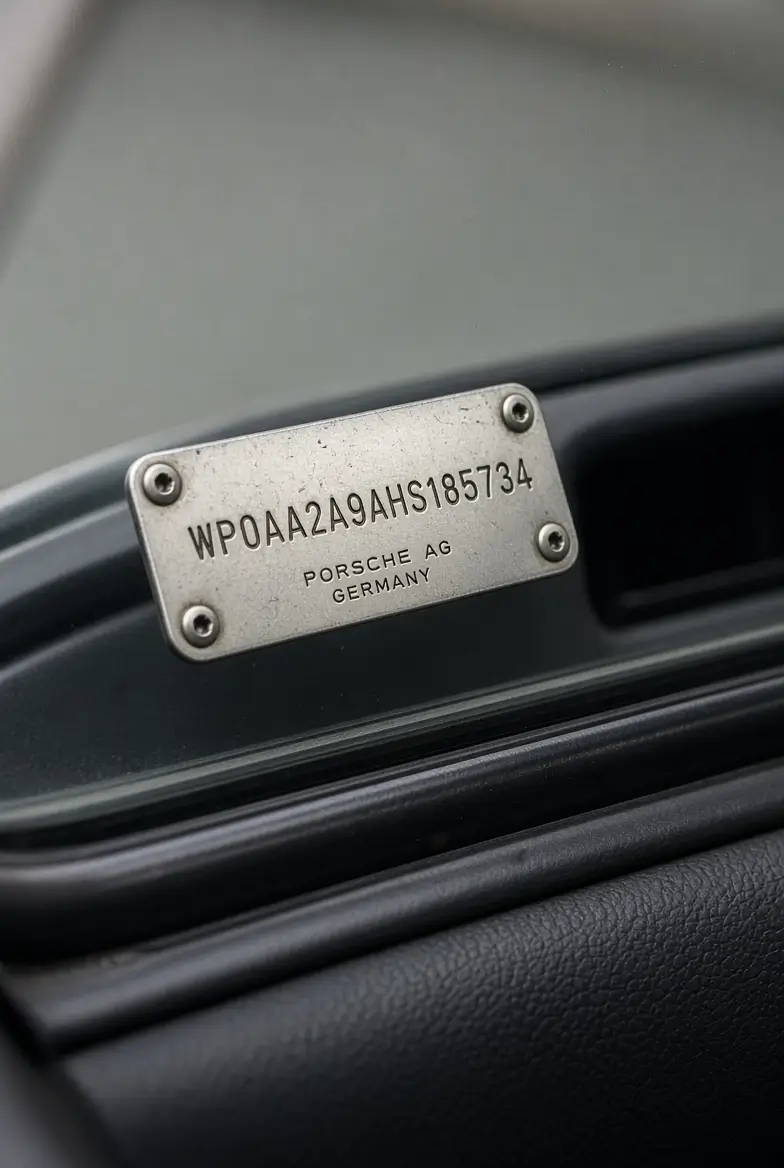
Car manufacturing is dominated by a handful of large automakers, so a handful of WMI prefixes cover most of the market. This industry is the opposite — hundreds of small and mid-size builders each hold their own WMI, which means there's no shortcut table that covers "most" units the way KMH or WP0 covers most Hyundais or Porsches. Identifying the builder reliably means decoding the specific WMI rather than guessing from appearance alone.
Length as a Range, Not a Fixed Number
One quirk worth knowing before you're confused by a decode result: some manufacturers encode length as a range rather than an exact measurement — a position might indicate "16–19 ft" instead of a specific number. That's normal, not a decoding error, and it means you should confirm exact dimensions against the title or manufacturer's spec sheet if precision matters for towing calculations.
When There's No VIN to Decode
Not every unit on the road has a manufacturer-issued VIN. Very light models, older units, and homemade or owner-built rigs often carry a state-issued identification number instead, assigned by the DMV at registration rather than stamped at the factory. These numbers don't follow the 17-character ISO format and won't return results in a standard decoder.
This isn't automatically a red flag — plenty of legitimate small utility units fall into this category — but it does mean you're relying more heavily on the paper title and the seller's word, since there's no manufacturer record to cross-check against. If a listing is advertised as factory-built but the "VIN" is clearly a short state-assigned number rather than 17 characters, ask why.
What the Decode Confirms — and What It Doesn't
Confirmed by the code:
Manufacturer and country of origin
Trailer type and approximate length
Axle count
Model year
Not confirmed by the code alone:
Frame or structural damage from a prior accident
Whether the axles or suspension have been replaced or upgraded
Title status (salvage, rebuilt, abandoned)
Whether the trailer was ever reported stolen
For that layer, run the VIN through a full history check — available for road-legal trailers the same way it is for cars — rather than treating a clean decode as a clean history.
Matching It to Your Tow Vehicle
A decoded VIN tells you what the unit is, not whether your vehicle can safely pull it. Gross trailer weight, tongue weight, and your tow vehicle's rated capacity all have to line up — mismatching them is a common and dangerous mistake, especially with private-party sales where nobody checks the math. Our guide on finding towing capacity by VIN walks through pulling your tow vehicle's rated capacity directly from its own VIN, so you can compare it against the specs before you hook up. If the tow vehicle is a Hyundai Santa Fe or Tucson, see our Hyundai VIN decoder for model-specific notes on checking build details first.
Frequently Asked Questions
Get answers to common questions about Trailer VIN Decoder: How to Read the Frame Plate Code
Uncover Complete Vehicle History Reports
Discover critical vehicle information before you buy. Our VIN decoder reveals accident records, title status, recalls, and service history to help you make informed decisions.