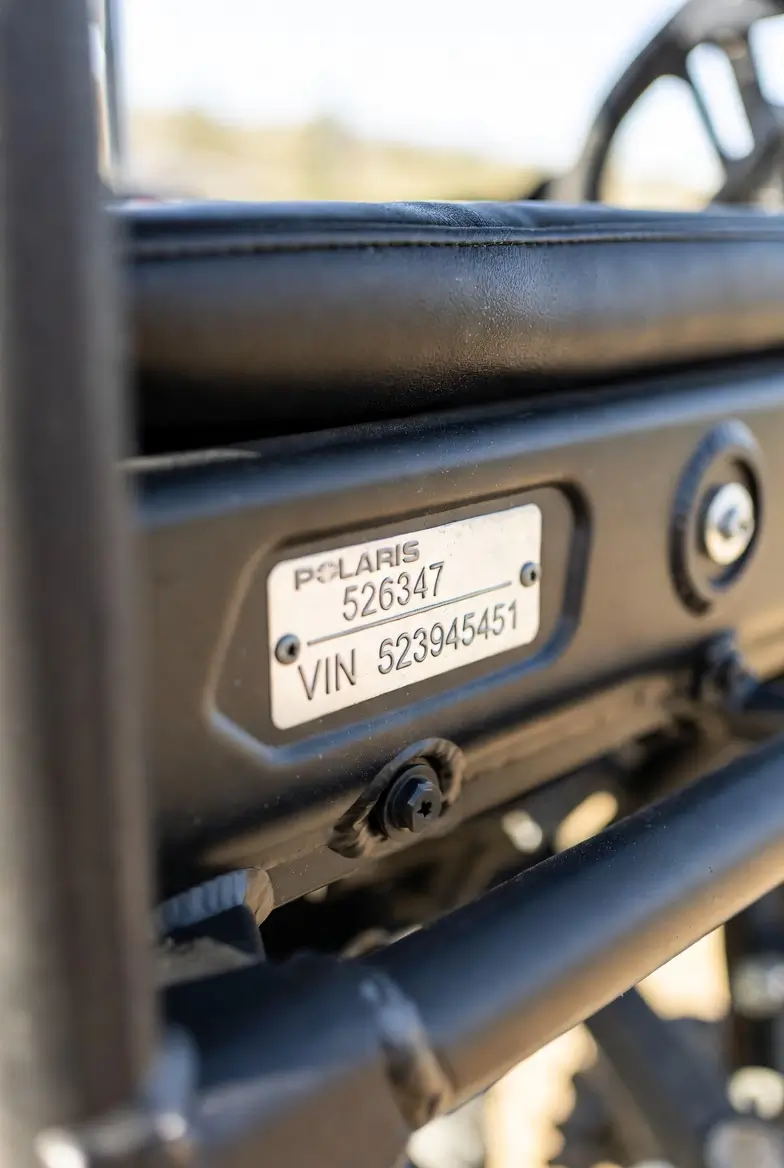
Polaris VIN Decoder: How to Check Your ATV/UTV Code | VinSpectorAI
An Audi's VIN encodes far more than the badge on the trunk suggests — engine variant, production plant, and body style are all buried in those 17 characters. Here's how to read them, and why it matters more than usual for a brand with as many trim variations as Audi.

Where to Find Your Audi's VIN
Look at the lower corner of the windshield on the driver's side, visible from outside the car, or check the driver's door jamb sticker. It's also printed on the title, registration, and insurance documents.
Audi VIN Structure
Position | Represents | Example |
|---|---|---|
1–3 | WMI — WAU for German-built Audis, TRU for some markets | WAU |
4–8 | VDS — model line, body style, engine, restraint system | Model-specific coding |
9 | Check digit | Validates VIN authenticity |
10 | Model year | L = 2020, M = 2021, N = 2022 |
11 | Plant code | Identifies assembly location (Ingolstadt, Neckarsulm, etc.) |
12–17 | Production sequence number | Sequential |
The WMI: Confirming Manufacturer and Market
Audis built for the US market typically start with WAU or WA1 (for SUVs like the Q5 and Q7), while some markets use different WMI prefixes. A VIN starting with a WMI inconsistent with the claimed model — for example, a WMI associated with SUVs on a car listed as a sedan — is worth double-checking before you assume it's a simple typo.
The VDS: Where Model and Trim Live
Positions 4 through 8 hold the model line, body style, and engine details — the section that matters most for confirming a listing's claims against the vehicle's actual build.
How to Identify the Model From a VIN
Positions 4 through 8 carry the model line and body style — A3, A4, A6, Q5, Q7, and so on. Because Audi uses similar-looking badges across trims (an A4 badge doesn't always confirm the actual drivetrain or engine underneath), the VIN is the more reliable source when a listing's description and the vehicle's actual configuration might not match.
How to Check Engine and Trim From the Code
Engine displacement and drivetrain (quattro all-wheel drive versus front-wheel drive) are encoded in the VDS section. This is particularly useful for buyers comparing trims where the difference in price is significant — a base engine versus an S-line or performance variant isn't always obvious from photos alone.
Model Year and Production Plant
Position 10 uses the standard industry letter-year code. Position 11 identifies which Audi plant built the vehicle — Ingolstadt and Neckarsulm in Germany handle most models, while some SUVs are built in Bratislava, Slovakia, or Győr, Hungary. This detail rarely changes a buying decision on its own, but it can help confirm a vehicle's stated origin matches its documented history.
Why This Matters When Buying a Used Audi
Audi listings often lean on trim names and package descriptions that can be inconsistent or outdated by the time a car resells. Decoding the VIN gives you the factory-confirmed configuration — engine, drivetrain, and body style — independent of what a seller remembers or claims.
Checking Before You Buy
If you're shopping for a used Audi in New York or Illinois, pairing a VIN decode with a full history check can also flag prior accidents, title issues, or odometer discrepancies that a decoder alone won't reveal.
For the fundamentals of VIN structure across manufacturers, see our guide on how to decode a VIN number. Comparing another European or domestic brand? See our Dodge VIN decoder guide.
Frequently Asked Questions
Get answers to common questions about Polaris VIN Decoder: How to Check Your ATV/UTV Code | VinSpectorAI
Uncover Complete Vehicle History Reports
Discover critical vehicle information before you buy. Our VIN decoder reveals accident records, title status, recalls, and service history to help you make informed decisions.