Dodge VIN Decoder: How to Read Your Vehicle's Code | VinSpectorAI
Dodge's lineup has shifted more than most brands over the past two decades — Ram trucks spun off as a separate brand in 2010, and the Charger, Challenger, and Durango have gone through multiple engine and platform generations. The VIN cuts through all of that and tells you exactly what a specific vehicle is.

Where to Find Your Dodge's VIN
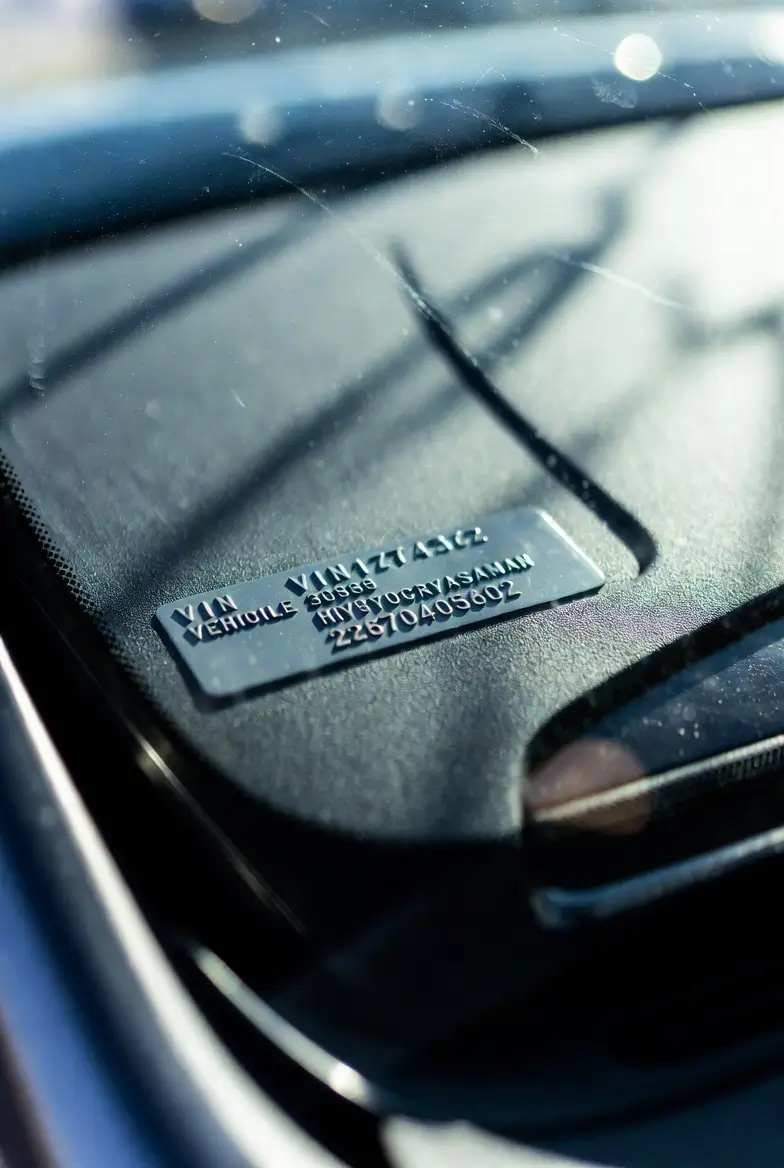
Check the lower driver-side corner of the windshield, visible from outside the vehicle, or the sticker inside the driver's door jamb. It also appears on the title, registration, and insurance card.
Dodge VIN Structure
Position | Represents | Example |
|---|---|---|
1–3 | WMI — 1B3, 2B3, 3B3, or similar for Dodge USA/Canada/Mexico | 1B3 |
4–8 | VDS — model line, body style, engine, restraint system | Model-specific coding |
9 | Check digit | Validates VIN authenticity |
10 | Model year | L = 2020, M = 2021, N = 2022 |
11 | Plant code | Assembly plant identifier |
12–17 | Production sequence number | Sequential |
The WMI: Dodge, Chrysler, and Shared Codes
Dodge, Chrysler, and Ram share overlapping WMI conventions since they're built by the same parent company, which is one reason a generic decoder sometimes misidentifies a Dodge as a Chrysler-badged vehicle or vice versa — the VDS section is what actually distinguishes them.
The VDS: Model, Body Style, and Engine
Positions 4 through 8 identify the specific model line and configuration, and it's the section that matters most when confirming engine or trim claims.
An Important Note: Dodge vs. Ram
If you're decoding a truck VIN and expecting "Dodge" but the decoder returns "Ram," that's not an error. Ram Trucks became a standalone brand in 2010 — vehicles from 2011 onward that would have been called Dodge Ram are now simply Ram, even though many buyers still refer to them as Dodge trucks out of habit. Pre-2011 trucks correctly decode as Dodge.
How to Identify the Model From a VIN
Positions 4 through 8 identify the specific model line — Charger, Challenger, Durango, Journey, or (for pre-2011 trucks) Ram — along with body style and engine family. This matters especially for the Charger and Challenger, which span a wide range of engine options from base V6 to supercharged Hellcat variants that look nearly identical from the outside.
How to Check Engine Specs From the Code
Engine displacement and configuration are encoded in the VDS section, which is the most reliable way to confirm whether a Charger or Challenger listed as a performance trim actually has the engine to match — a meaningful price difference that isn't always visible in photos.
Why This Matters When Buying a Used Dodge
Because Dodge's performance trims (SRT, Hellcat, Scat Pack) carry substantial price premiums over base engines, VIN decoding is one of the fastest ways to confirm a listing's claims before you go see the car in person. It also helps catch a mismatched VIN — one that doesn't correspond to the body style or trim being advertised, which can be a sign of a title or identity issue.
Checking Before You Buy
If you're shopping for a used Dodge in Michigan or Georgia, pairing a VIN decode with a full history report can also flag prior accidents, salvage titles, or odometer inconsistencies.
For the fundamentals of VIN structure across manufacturers, see our guide on how to decode a VIN number. Comparing another brand? See our Audi VIN decoder guide.
Frequently Asked Questions
Get answers to common questions about Dodge VIN Decoder: How to Read Your Vehicle's Code | VinSpectorAI
Uncover Complete Vehicle History Reports
Discover critical vehicle information before you buy. Our VIN decoder reveals accident records, title status, recalls, and service history to help you make informed decisions.