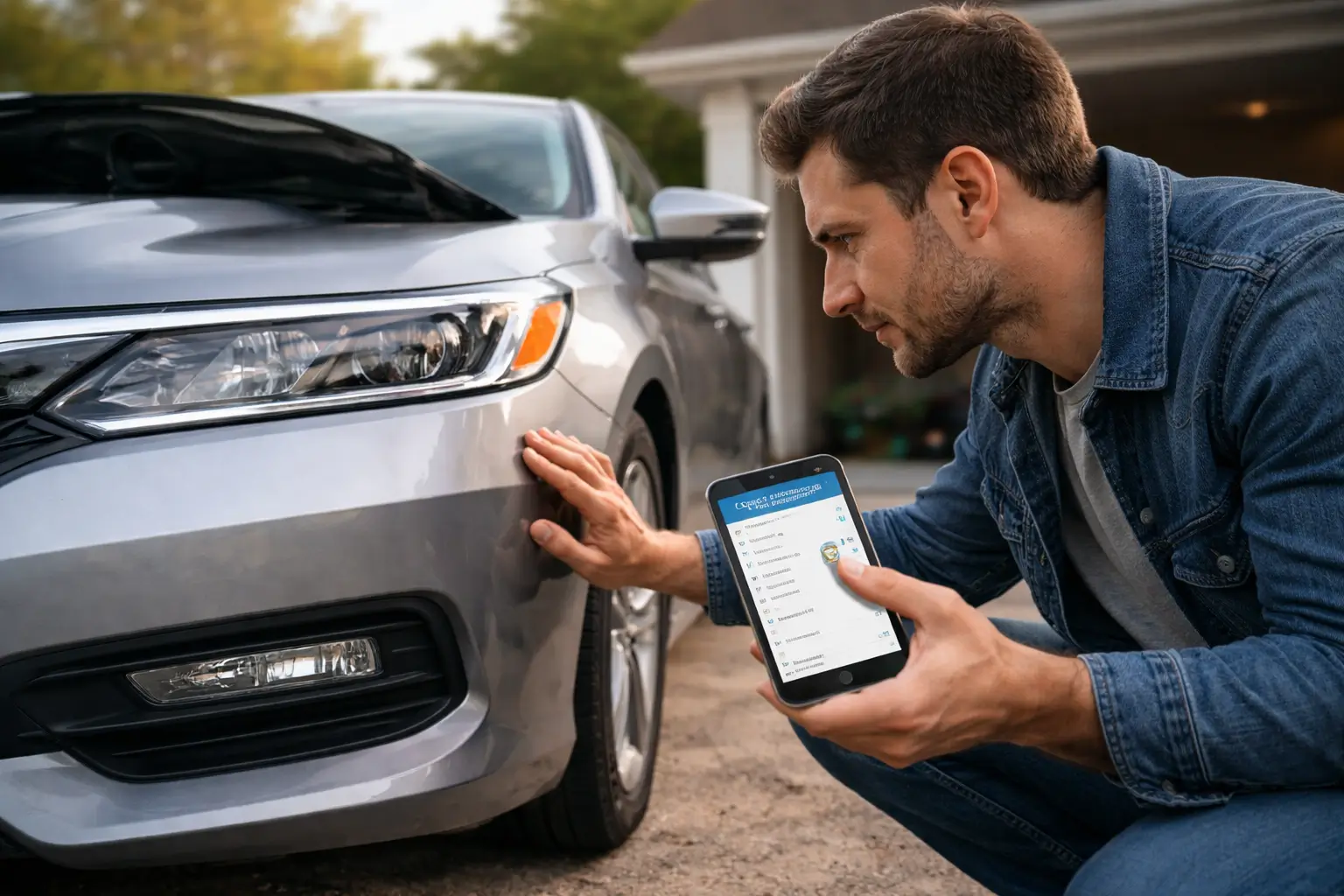
Used Car Inspection Checklist: Everything You Need to Check | Inspect
Buying a used car without a proper inspection is one of the most expensive mistakes you can make. One in five used vehicles has an undisclosed problem — a hidden accident, a rolled-back odometer, or damage from a flood that was cleaned up just well enough to fool an untrained eye.
This checklist walks you through every step: from pulling the VIN history before you even see the car, to what to listen for on the test drive. Follow it and you'll walk into any dealership or private seller meeting knowing exactly what to look for.
Step 1: Start With the VIN — Before You See the Car
The smartest buyers don't start with a test drive. They start with a VIN check.
A Vehicle Identification Number (VIN) is a 17-character code unique to every car. Running it through a vehicle history platform like VINspectorAI takes two minutes and tells you:
Whether the car was ever in a reported accident
If the title is clean, salvage, rebuilt, or flood-branded
Whether the odometer was rolled back
How many previous owners the car had
Any open recalls on the vehicle
If the seller won't give you the VIN before you meet — that's a red flag. Legitimate sellers have nothing to hide. Get the VIN, run the report, and only then schedule the in-person inspection.
If you're buying in a high-risk state for flood or salvage vehicles, use the state-specific check. Buyers in Florida should always verify title status before meeting any private seller — the state sees thousands of flood-damaged vehicles re-enter the market after hurricane season every year.
Step 2: Exterior Inspection
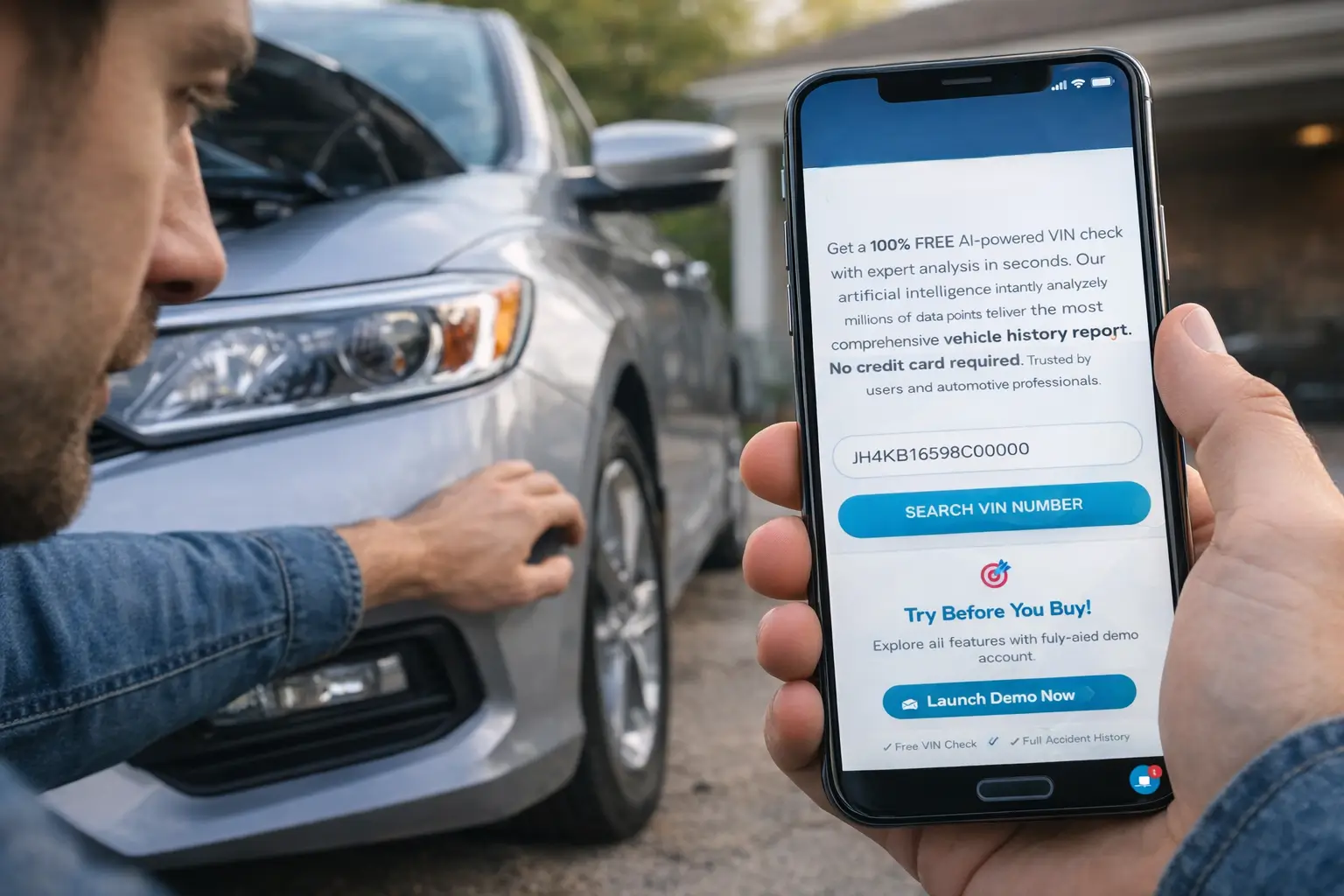
Do your exterior walk-around in daylight. Rain and artificial lighting hide paint defects and body damage.
Body Panels and Paint
Stand back and look at the car from each corner. The paint should be uniform — same shade, same texture, same sheen across every panel.
Mismatched paint is the most common sign of a previous accident repair
Overspray on rubber seals around doors, the hood, or trunk means a panel was repainted
Uneven panel gaps (the space between the hood and fender, or door and frame) suggest the frame was bent and repaired
Rippled or wavy body panels mean filler was used — run your hand along the surface
Bring a small magnet. If it doesn't stick to an area where metal should be, body filler is underneath.
Tires and Wheels
Check all four tires, not just a glance.
Tread depth: insert a penny upside down into the tread groove. If you can see Lincoln's full head, the tires need replacing — budget that into your offer
Uneven wear across the tire (more wear on one edge than the other) signals alignment or suspension problems
Check that all four tires are the same brand and model — mismatched tires often mean deferred maintenance
Look at the wheels for cracks, bends, or curb damage
Under the Car
Get low and look underneath, even if it means getting dirty. Bring a flashlight.
Look for rust on the frame — surface rust on brake lines or structural components is a serious safety concern
Wet spots or drips under the engine bay mean active fluid leaks
Flood-damaged cars often show rust in unusual places: inside door sills, under the carpet, or along the frame where water collected
Step 3: Under the Hood
Pop the hood while the engine is cold — ideally before the seller has had a chance to warm it up. A cold start reveals problems a warm engine can hide.
Oil: Pull the dipstick, wipe it, dip again. Clean oil is amber-colored. Dark, gritty oil means the car hasn't been serviced properly. If the oil looks milky or has a foamy texture, coolant is mixing with the oil — that's a head gasket problem, and it's expensive.
Coolant: Check the reservoir level and color. It should be green, orange, or pink depending on the type. Brown or rusty coolant means the cooling system hasn't been maintained.
Transmission fluid: Should be pink or light red, not brown. A burnt smell from the transmission is a warning sign.
Brake fluid: Check the reservoir against the min/max markings.
Belts and hoses: Look for cracking, fraying, or soft spots. A worn timing belt is a several-hundred-dollar replacement if it snaps — and it will snap.
Battery date: Most batteries have a manufacturing date sticker. Average lifespan is 3-5 years. If it's old, factor in a replacement.
Step 4: Interior Inspection
The interior tells its own story. A car that smells musty or has watermarks on the headliner or door panels likely sat in water at some point.
What to check:
Musty or mildew smell — the clearest sign of water damage that was never fully dried out
Waterline stains on the seat fabric, carpet, or door panels — look for a faint tide mark
Rust under the seats — lift the floor mats and check the metal underneath
Electronics: test every button — windows, mirrors, A/C, heat, infotainment, Bluetooth. Flood-damaged electronics often fail intermittently
Dashboard warning lights: turn the key to the "on" position before starting. All warning lights should illuminate briefly, then go off when you start the engine. If any stay on — or if none come on at all — there's a problem
Seatbelts: pull each one fully and check the retractor works. Check for cuts or fraying
VIN plate match: look at the VIN on the dashboard (visible through the windshield), then check the door jamb sticker and the engine block. All three should match exactly. A mismatch means the car may be a rebuilt wreck assembled from multiple vehicles
Buyers in Texas deal with a particularly active private seller market — always cross-check the interior VIN against the title and your vehicle history report before any transaction.
Step 5: The Test Drive
Don't skip this. And don't just drive around the block — get it on a highway, make a hard stop, and turn the wheel to full lock in a parking lot.
Engine:
Should start easily, even on a cold morning
Listen for knocking, ticking, or grinding — especially at idle and under acceleration
Watch for smoke from the exhaust: white smoke means coolant burning, blue smoke means oil burning
Transmission:
Automatic: shifts should be smooth with no jerking, hesitation, or thudding
Manual: the clutch should engage cleanly with no slipping or grinding
Brakes:
Apply firm pressure at highway speed. The car should stop straight, with no pulling to one side and no vibration through the pedal
A pulsating pedal usually means warped rotors
Listen for squealing or grinding — squealing means worn pads, grinding means metal on metal
Steering:
Should feel responsive and centered, with no vibration or pulling
Turn the wheel to full lock both ways in a slow circle — listen for clicking or grinding from the CV joints
Other:
Turn on the A/C and let it run for 5 minutes — it should get cold quickly
Test heat on full blast
Listen for any unusual sounds over bumps (worn shocks/struts)
Check all warning lights again once the car is fully warmed up
Step 6: Check the Paperwork
Before any money changes hands, verify:
Title is in the seller's name — if it's not, walk away
Title brand: confirm it says "Clean" — not Salvage, Rebuilt, Flood, or Lemon Law Buyback
Odometer disclosure statement matches the current reading
Service records: a car with documented maintenance is worth more and tells you it was cared for
Bill of sale: should include VIN, sale price, date, and both parties' details
For buyers in states like Illinois or California, also check that emissions testing is current — it's a requirement for registration and can cost money if it fails.
Should You Get a Pre-Purchase Inspection (PPI)?
If you've done everything above and the car looks good, a professional pre-purchase inspection is still worth considering for vehicles over $10,000.
A licensed mechanic can put the car on a lift, inspect the frame for hidden damage, check components you can't easily see, and scan the OBD-II port for stored fault codes. It typically costs $100–$150 and can save you thousands.
Most reputable sellers will allow a PPI. If a seller refuses — that's a major red flag.
What to Do After the Inspection
Once you've completed your inspection:
List every issue you found — use it as a negotiation tool. Worn tires, old brakes, and deferred maintenance all have a dollar value.
Compare findings against the vehicle history report — if the report shows no accidents but you found body repair evidence, something doesn't add up.
Decide on your walk-away number — know what the car is worth to you with the issues you found, and don't go above it.
If anything feels off — a seller who rushes you, paperwork that doesn't match, a price that seems too good — trust your instincts. There are always other cars.
Run a full VIN history report on any used car you're seriously considering at VINspectorAI before you commit to anything. It's the fastest way to verify whether the car's history matches what you're being told.
A VIN check reveals the car's full history — accidents, title brands, odometer discrepancies, and previous owners — before you waste time on an in-person inspection. It takes two minutes and can save you from driving across town to see a flood-damaged car with a clean-looking exterior.
Frequently Asked Questions
Get answers to common questions about Used Car Inspection Checklist: Everything You Need to Check | Inspect
Uncover Complete Vehicle History Reports
Discover critical vehicle information before you buy. Our VIN decoder reveals accident records, title status, recalls, and service history to help you make informed decisions.