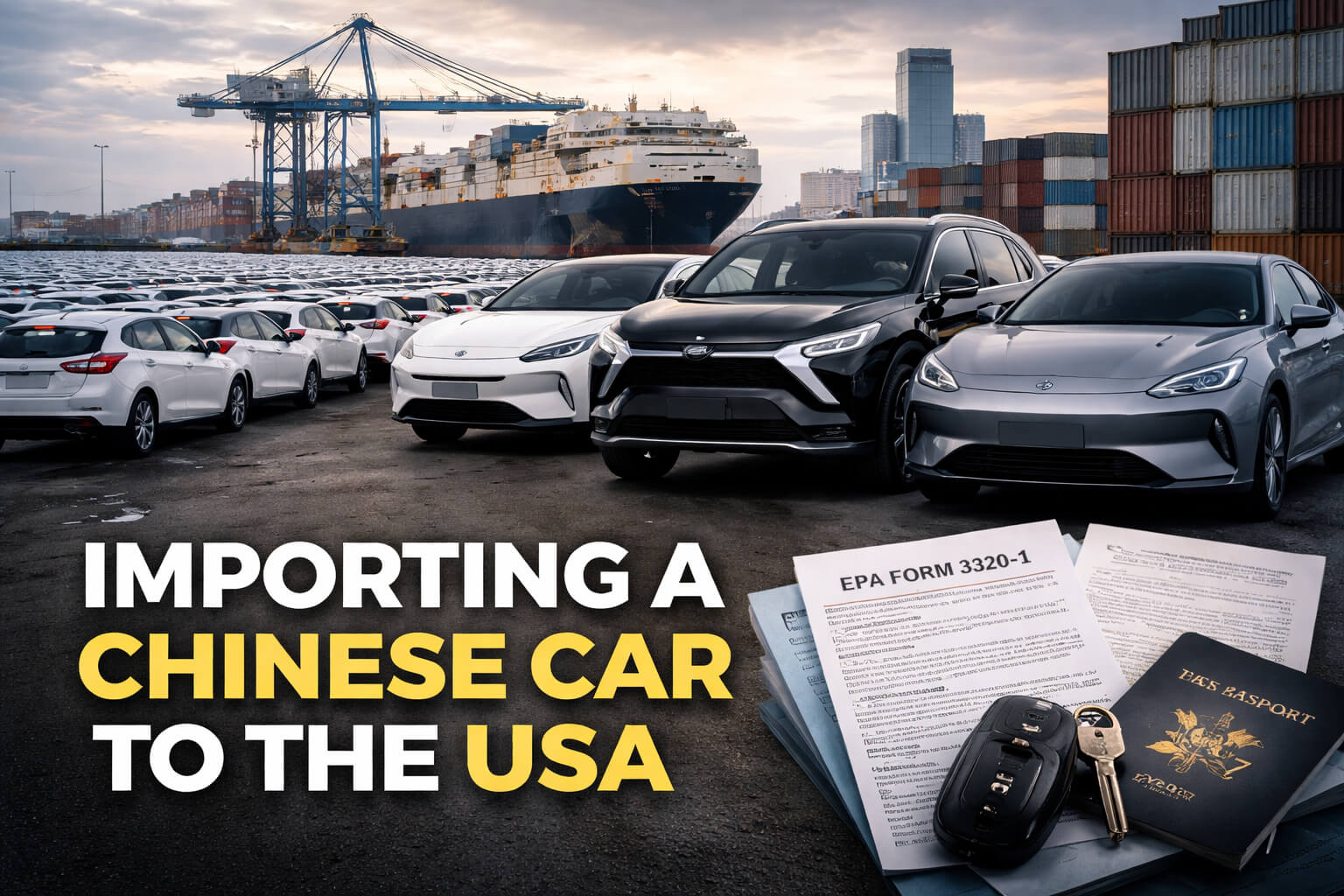
How to Import a Car from China: Complete 2026 Guide
Chinese automakers sold over 13 million vehicles globally in 2025, and brands like BYD, NIO, and Geely are producing some of the most compelling electric vehicles on the planet. The problem? Getting one legally registered in the United States is more complicated than ordering from AliExpress.
We've helped dozens of enthusiasts and collectors navigate the import process, and the truth is this: importing a car from China isn't impossible, but it requires serious planning, substantial cash reserves beyond the purchase price, and patience to deal with federal regulations that were written decades before Chinese automakers became relevant. Most people who start this process give up halfway through.
Let's break down exactly what it takes to import a Chinese vehicle in 2026, what it actually costs, and whether you should even attempt it.
Why Anyone Would Import a Car from China
The Chinese automotive market has exploded in the past five years. BYD outsold Tesla globally in Q4 2023 and hasn't looked back. NIO's ET7 sedan offers 620 miles of range. Zeekr's 001 shoots from 0-60 in 3.8 seconds for under $50,000 in China.
Here's the catch: most Chinese automakers haven't bothered with U.S. certification because our market represents less than 20% of their global sales. They're focused on Europe, Southeast Asia, and domestic Chinese buyers. That leaves American enthusiasts in a frustrating position—watching incredible vehicles launch overseas while we're stuck with limited options.
We've seen three types of people successfully import Chinese vehicles:
EV enthusiasts who want access to battery technology that's 2-3 years ahead of American offerings
Collectors betting that certain Chinese vehicles will appreciate as the brands gain global recognition
Business owners importing commercial vehicles like electric vans that offer better range and lower costs than American alternatives
If you don't fall into one of these categories, you're probably better off waiting for official U.S. launches or buying a used import that someone else has already federalized.
The Legal Framework: EPA, DOT, and NHTSA Requirements
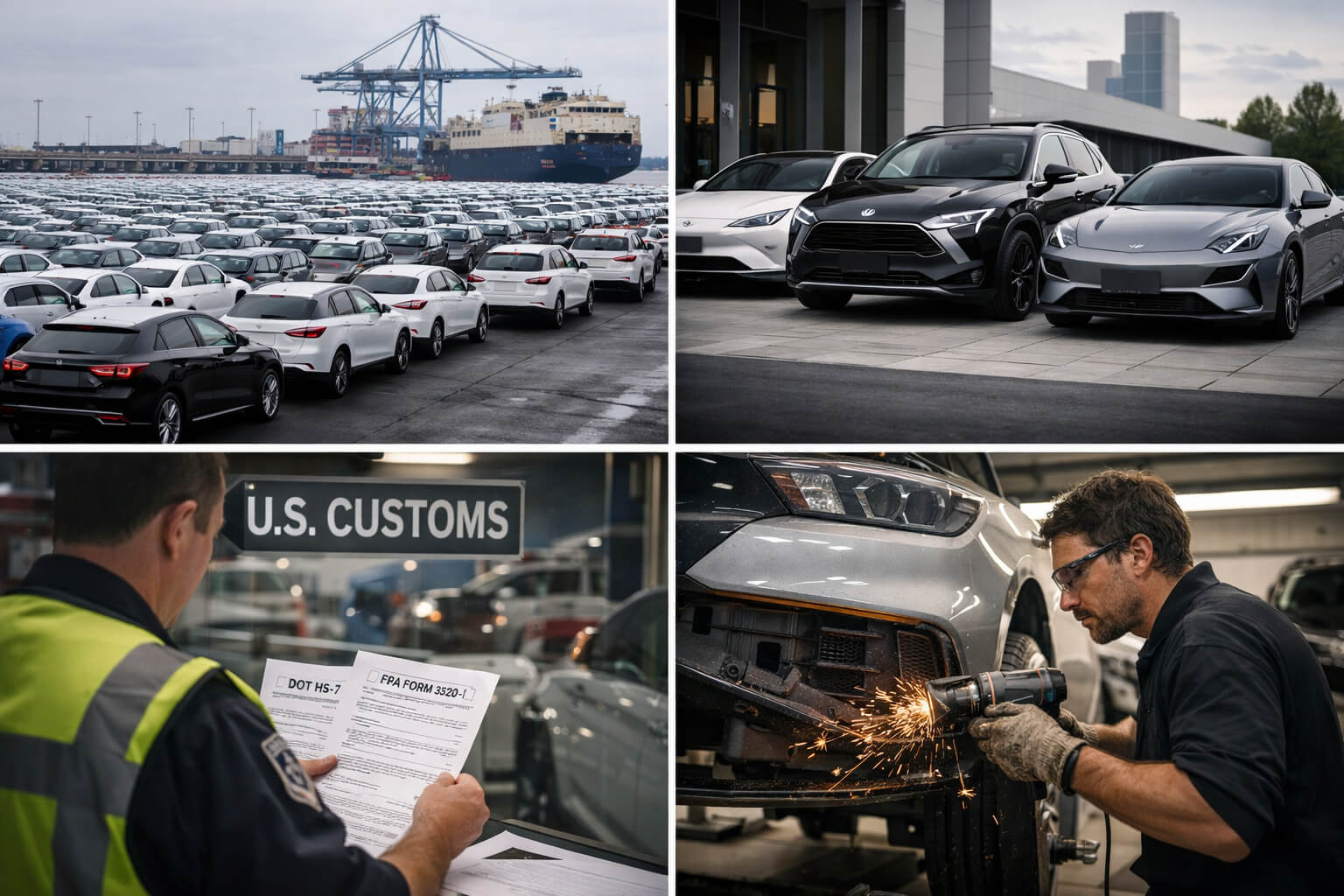
Three federal agencies control vehicle imports, and all three must approve your car before any state will register it.
The Environmental Protection Agency regulates emissions. Chinese vehicles must meet EPA emissions standards, which is relatively straightforward for electric vehicles (zero emissions) but nearly impossible for gas-powered Chinese cars that were engineered for different standards.
The Department of Transportation, through NHTSA, enforces Federal Motor Vehicle Safety Standards (FMVSS). This is where most imports die. Chinese vehicles are built to Chinese safety standards, which differ significantly from American requirements for crash testing, bumper heights, lighting, and more.
You have three legal pathways:
The 25-Year Rule: Vehicles 25 years or older are exempt from FMVSS compliance. This doesn't help with modern Chinese EVs, but it's why you can import a 2001 Chinese-market Buick Sail without modification.
Substantial Similarity: If a Chinese vehicle is "substantially similar" to a U.S.-certified model, you can import it with minimal modifications. This rarely applies because Chinese automakers typically don't sell identical models in both markets.
Registered Importer Modification: A Registered Importer (RI) can modify the vehicle to meet FMVSS standards. Only a handful of RIs exist, they charge $15,000-$40,000 for the service, and they won't touch vehicles without existing crash test data.
Step-by-Step Import Process
Step 1: Verify Eligibility and Find a Registered Importer
Before you wire money to a Chinese dealer, confirm that your target vehicle can actually be federalized. NHTSA maintains a list of vehicles eligible for import and approved Registered Importers on their website.
Call at least three RIs and get quotes. We've found that many will refuse certain Chinese vehicles outright because they lack the engineering data needed to certify compliance. If no RI will touch your vehicle, stop here.
Step 2: Purchase and Export from China
You'll need a Chinese export agent or freight forwarder who specializes in vehicles, such as platforms like YD China that handle sourcing, pricing, and international shipping. We recommend working with companies that have handled U.S. automotive imports before—general freight forwarders often don't understand the documentation requirements.
The Chinese seller must provide:
Original invoice and bill of sale
Certificate of Origin
Export certificate from Chinese customs
Complete vehicle specifications in English
Shipping from Shanghai to Los Angeles takes 3-4 weeks and costs $1,800-$3,500 for a single vehicle in a container. Roll-on/roll-off shipping is cheaper ($1,200-$2,000) but exposes the vehicle to salt air and potential damage.
Step 3: U.S. Customs Clearance
Your vehicle arrives at a U.S. port and immediately enters customs purgatory. You'll need a customs broker (expect $400-$800 in fees) to handle the paperwork.
Required documents for customs:
DOT Form HS-7 (Declaration of Compliance)
EPA Form 3520-1 (Emission Declaration)
Bill of Lading
Commercial invoice
Proof of ownership
Customs will assess a 2.5% duty on passenger vehicles (25% on trucks, thanks to the "chicken tax"). You'll also pay a harbor maintenance fee, merchandise processing fee, and any applicable state taxes.
The vehicle cannot leave the port until both EPA and DOT approve your declarations. This takes 2-7 days if your paperwork is perfect, or weeks if customs has questions.
Step 4: Federalization Modifications
Your Registered Importer now performs the modifications needed to meet FMVSS standards. Common requirements include:
Replacing lighting systems to meet U.S. specifications
Installing compliant bumpers and crash structures
Modifying the speedometer to display MPH
Adding required safety labels in English
Reprogramming electronic systems for U.S. frequencies
This process takes 4-12 weeks depending on the complexity. The RI will issue a certificate of conformity once complete.
Step 5: State Registration and Title
With your conformity certificate, EPA approval, and customs clearance, you can finally register the vehicle in your state. Some states are notoriously difficult with imports—California requires additional emissions testing, while Florida is relatively lenient.
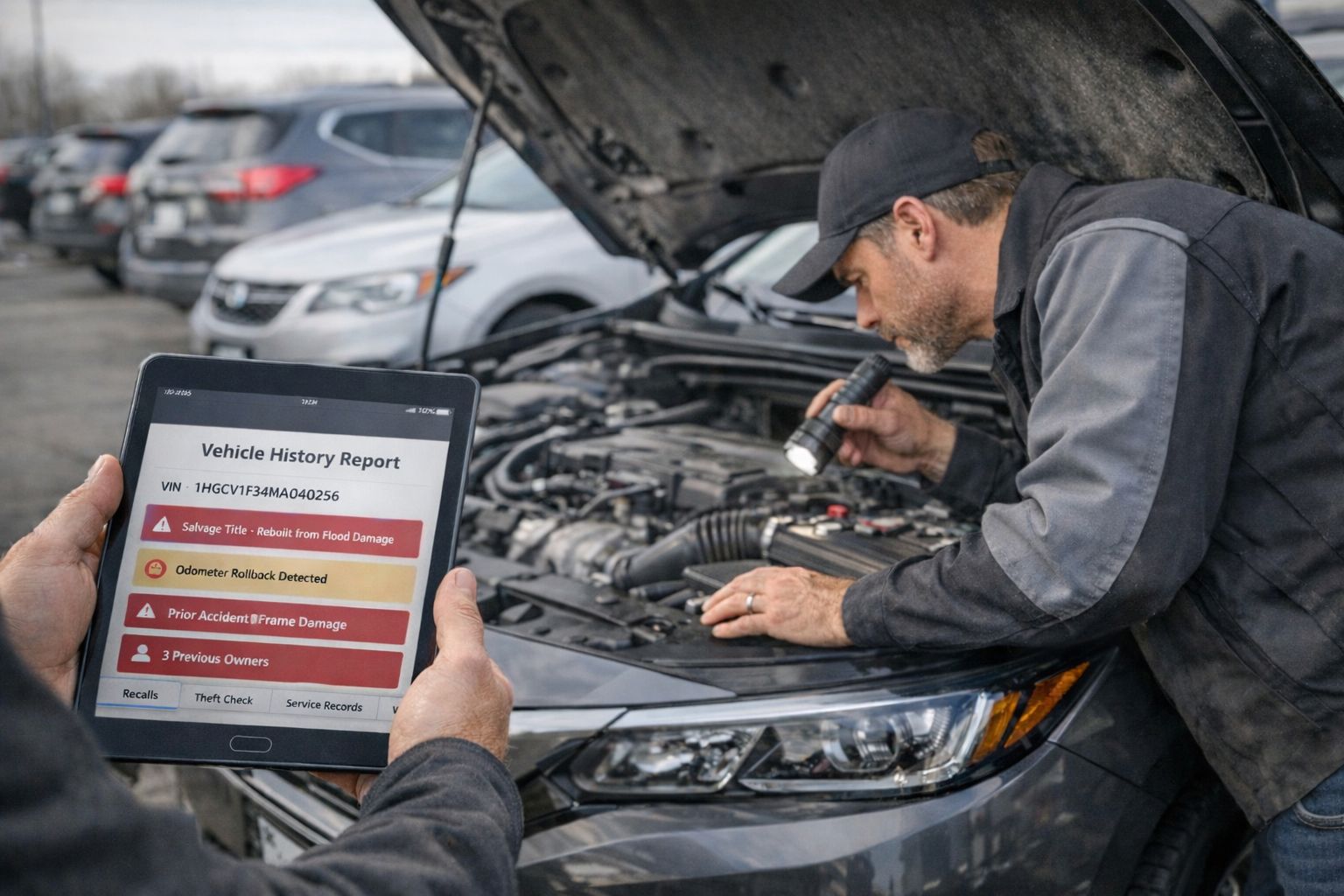
Before registering any imported vehicle, we strongly recommend running a VIN verification check to ensure the vehicle identification number matches all documentation. Discrepancies here will cause registration to fail.
What It Actually Costs to Import a Chinese Car
Everyone focuses on the vehicle purchase price and forgets that the real cost is everything that comes after. Here's what we've seen people actually spend in 2026:
Expense Category | Low End | High End | Notes |
|---|---|---|---|
Vehicle purchase price | $25,000 | $80,000 | Varies wildly by model and Chinese market pricing |
Chinese export agent | $800 | $2,000 | Handles paperwork and Chinese customs |
Ocean freight | $1,200 | $3,500 | Container shipping is more expensive but safer |
U.S. customs broker | $400 | $800 | Required unless you're a licensed broker yourself |
Import duties and fees | $650 | $2,500 | 2.5% duty plus various port fees |
Registered Importer fees | $15,000 | $40,000 | The killer expense—federalization is not cheap |
Modifications and parts | $3,000 | $12,000 | Depends on how far from U.S. standards the vehicle is |
Storage during process | $800 | $3,000 | Port storage, RI facility fees (3-4 months typical) |
Total additional cost | $21,850 | $63,800 | On top of purchase price |
That $30,000 BYD Seagull you saw online? It'll cost you $55,000-$95,000 landed and legal in the United States. Suddenly that domestic EV doesn't look so expensive.
The Electric Vehicle Exception (Sort Of)
Here's the one piece of good news: electric vehicles have a significant advantage in the import process because they automatically meet EPA emissions requirements. Zero emissions means zero emissions compliance issues.
However, they still must meet all FMVSS safety standards, which is where most Chinese EVs fail. The battery systems, crash structures, and electronic architectures are different enough from U.S. vehicles that Registered Importers struggle to certify them without extensive testing data from the manufacturer.
We've seen exactly three Chinese EV models successfully federalized in 2026: the NIO ES8 (because NIO provided engineering support), the BYD Tang (through a specialized RI in California), and the Hongqi E-HS9 (for a collector willing to spend $60,000 on modifications alone).
The contrarian truth nobody wants to hear: if you're importing a Chinese EV because you think you'll save money compared to buying a domestic EV, you're wrong. The only valid reason is access to a vehicle that literally isn't available here and won't be for years.
Alternatives to Full Import
Before you commit $50,000+ to importing a Chinese vehicle, consider these alternatives:
Wait for official U.S. launch: BYD, Polestar (Geely), and Lotus (also Geely) are all planning expanded U.S. presence by 2027-2028. The vehicles will be properly certified, warrantied, and serviceable.
Buy a used federalized import: Someone else has already absorbed the import costs. Search for Chinese vehicles that have been legally imported and registered. You'll pay a premium, but far less than importing yourself.
European-spec alternative: Some Chinese brands sell in Europe with EU certification. European vehicles are easier to federalize than Chinese-market vehicles because EU standards are closer to U.S. requirements. A European-spec Polestar or Lotus is much simpler to import than a China-only model.
If you're specifically interested in Chinese EVs because you want cutting-edge technology, remember that battery tech and motor designs filter into U.S.-market vehicles within 18-24 months. The BYD Blade battery architecture? It's already licensed to other manufacturers who sell here.
State-Specific Registration Challenges
Federal approval is only half the battle. State DMVs have their own requirements, and some are notoriously difficult with imports.
California requires imported vehicles to pass a Bureau of Automotive Repair inspection and meet CARB emissions standards (stricter than EPA). If you're importing to California, add another $2,000-$5,000 to your budget. Our California VIN check service can help verify whether a vehicle has any registration red flags before you attempt to title it.
Texas, Florida, and Nevada are generally import-friendly, though Texas requires a detailed vehicle inspection. New York demands extensive documentation but will ultimately register properly federalized imports.
Some states won't register right-hand-drive vehicles at all, which matters if you're importing a Chinese postal vehicle or certain commercial models. Check your state's specific requirements before you start the process.
Warranty, Service, and Parts Nightmare
Nobody talks about what happens after you successfully import and register your Chinese vehicle. You own a car with zero factory warranty, no authorized service centers, and parts that must be shipped from China.
We know an owner of an imported NIO ET7 who waited four months for a replacement headlight assembly after a minor accident. Total cost including shipping: $3,400. His insurance company initially refused to cover it because they couldn't verify parts pricing.
Chinese EVs use proprietary charging systems, battery management software, and electronic architectures that American mechanics don't understand. One owner spent $8,000 at a Tesla-certified shop trying to diagnose a battery issue that turned out to be a software problem requiring Chinese-language diagnostic tools.
Before importing, identify at least one mechanic within 100 miles who's willing to work on the vehicle and has access to parts suppliers. Otherwise, you're buying an expensive driveway ornament.
Frequently Asked Questions
Can I import a Chinese car for personal use without a Registered Importer?
Technically yes, but practically no. You can import a vehicle under the "show or display" exemption if it's historically or technologically significant, but NHTSA approves fewer than 50 vehicles per year for this exemption, and modern Chinese EVs don't qualify. You can also import vehicles 25+ years old without modification. For anything else, you need an RI to certify FMVSS compliance, or your vehicle will be seized and destroyed by customs.
Are Chinese electric vehicles safe to drive in the United States?
Chinese EVs sold in Europe perform well in Euro NCAP crash tests—the BYD Seal earned five stars in 2023. However, Chinese-market vehicles may have different safety equipment than export versions. The bigger concern is that without proper federalization, your insurance company may refuse to cover accidents, and you could face liability issues if safety equipment doesn't meet U.S. standards. A properly federalized Chinese EV is as safe as any other vehicle; a grey-market import is a legal and financial risk.
How long does the entire import process take from purchase to registration?
Plan on 4-6 months minimum. Shipping from China takes 3-4 weeks, customs clearance takes 1-2 weeks, federalization modifications take 6-12 weeks, and state registration takes 1-2 weeks. We've seen the process stretch to 10 months when Registered Importers encounter unexpected compliance issues or when parts must be custom-fabricated. Don't import a vehicle you need to drive immediately.
Will my imported Chinese car pass state vehicle inspections?
If it's been properly federalized by a Registered Importer and meets all FMVSS standards, yes. The RI's certificate of conformity should satisfy state inspection requirements. However, some inspection stations are unfamiliar with imported vehicles and may initially refuse to inspect them. Bring all your federal compliance documentation to the inspection. States with emissions testing (like California) may require additional verification that the vehicle meets state-specific standards beyond federal EPA requirements.
Can I finance an imported Chinese vehicle?
Most banks won't finance a vehicle that isn't yet in the United States or isn't federalized. You'll need to pay cash for the purchase, shipping, and federalization, then potentially refinance once the vehicle is titled in your name. Some credit unions offer personal loans that can be used for vehicle imports, but expect higher interest rates than standard auto loans. The lack of established resale values for Chinese imports makes lenders nervous—if you default, they're stuck with a vehicle they can't easily sell.
Frequently Asked Questions
Get answers to common questions about How to Import a Car from China: Complete 2026 Guide
Uncover Complete Vehicle History Reports
Discover critical vehicle information before you buy. Our VIN decoder reveals accident records, title status, recalls, and service history to help you make informed decisions.