AI Vehicle History Reports 2026: Why VinSpector AI Redefines Car Buying
Buying a used car in 2026? You might think a standard vehicle history report is all you need. But frankly, if you're still relying solely on those traditional services, you're missing a huge piece of the puzzle. The automotive world, and the data that drives it, has changed dramatically. What was 'cutting-edge' a few years ago is now just 'adequate,' and 'adequate' won't protect your wallet from the ever-evolving tactics of fraudsters and sellers trying to hide a car's true past.
We're talking about a seismic shift in how we understand a vehicle's history, powered by artificial intelligence. At VinspectorAI.com, we've seen firsthand how AI is transforming the game, offering a level of scrutiny and insight that traditional reports simply can't match. Let's dig into why AI-driven reports are the future, and how VinSpector AI is leading the charge.
The Evolution of Vehicle History Reports: Why 2026 is Different
Vehicle history reports in 2026 have moved far beyond simple data aggregation, now incorporating advanced analytics and AI to interpret complex vehicle lifecycles. This shift is crucial as vehicles become more sophisticated and their histories more intricate, demanding intelligent systems to uncover hidden truths for buyers.
Think back a decade or so. A vehicle history report was a revelation, pulling together accident records, odometer readings, and title information from various state DMVs and insurance companies. It was a massive leap forward from buying a car blind. Fast forward to 2026, and vehicles are essentially computers on wheels, generating terabytes of data throughout their lifespan. From telematics and maintenance logs to sensor data and repair invoices, the sheer volume of information available is staggering. Traditional reports, while still useful for basic checks, often struggle to synthesize this complex web of data into truly actionable insights.
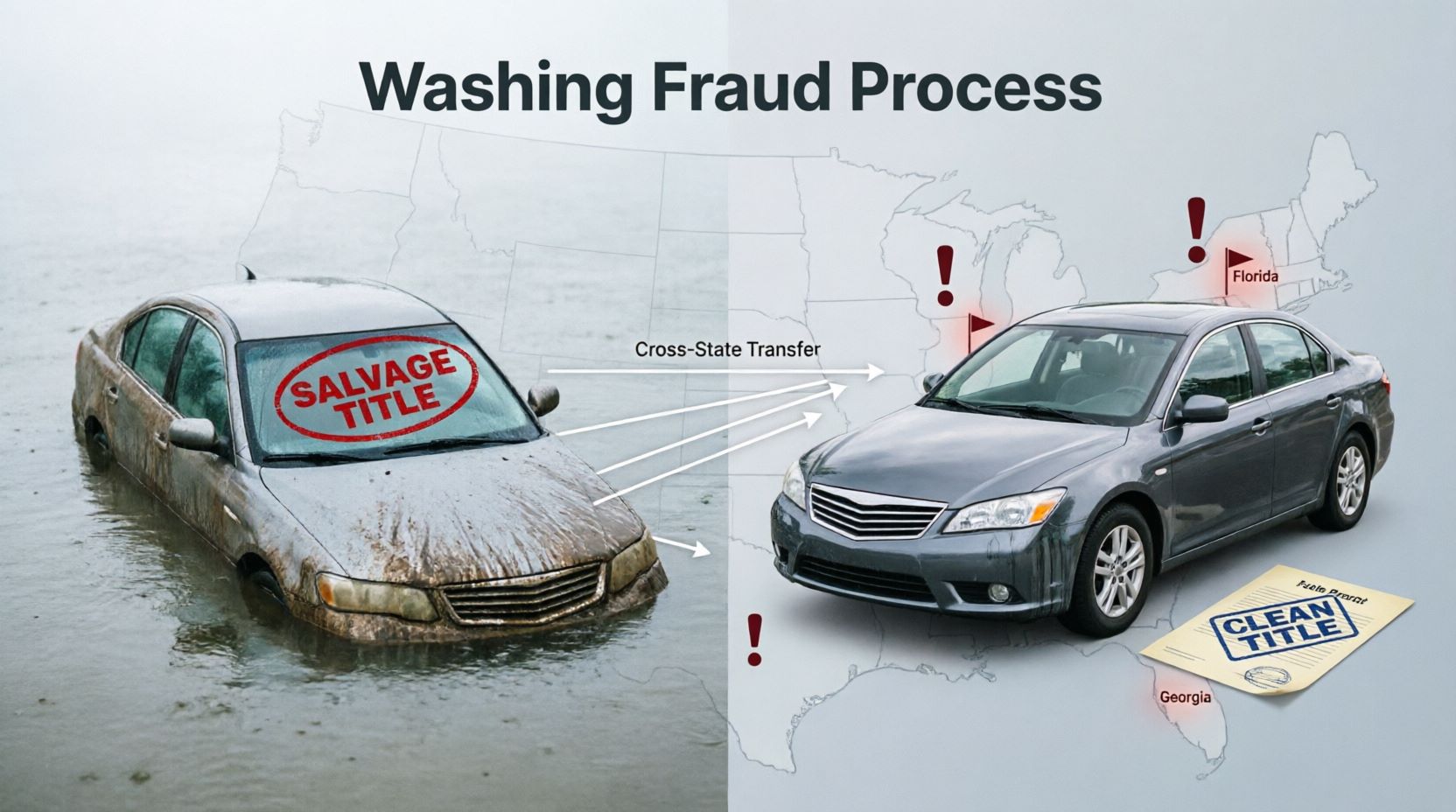
The challenge isn't just collecting data; it's understanding what that data *means* when combined. A single repair record might seem innocuous, but when an AI analyzes it alongside a specific mileage reading, a particular geographic location, and other seemingly unrelated events, it can reveal a pattern indicating something far more serious, like undisclosed flood damage or even odometer fraud. We've seen an estimated 200,000-250,000 U.S. vehicles annually affected by title washing alone as of 2026, a problem that often requires advanced pattern recognition to detect.
What is AI Vehicle History Reporting?
AI vehicle history reporting uses artificial intelligence to analyze vast, disparate datasets related to a vehicle's past, identifying patterns, anomalies, and potential risks that traditional methods often miss. It goes beyond merely listing events, offering predictive insights into a car's true condition and potential future issues.
At its core, AI vehicle history reporting is about smart data analysis. Instead of just pulling records from a database and presenting them in a list, an AI engine actively learns from millions of vehicle histories. It's trained to spot correlations, inconsistencies, and subtle red flags that a human reviewer or a rules-based software program might overlook. Imagine an AI sifting through not just accident reports, but also service records, auction listings, recall notices, and even social media mentions (where legally permissible), looking for any hint that a vehicle isn't what it seems.
For example, a traditional report might show a vehicle was registered in a state known for hurricanes, but AI might cross-reference that with the vehicle's specific model year, common flood damage patterns for that model, and even local weather data from the time, flagging it with a higher probability of undisclosed flood damage. It's not just about what happened, but the context and implications of those events.
How Traditional VIN Checks Fall Short in 2026
Traditional VIN checks in 2026, while foundational, often fall short by relying on siloed data sources and lacking the ability to interpret complex interdependencies or subtle fraud indicators. They struggle with the sheer volume and velocity of modern vehicle data, leading to gaps in reporting and missed red flags for buyers.
Here's the honest truth: traditional vehicle history reports are excellent at aggregating public records. They'll tell you about reported accidents, previous owners, and open recalls from official sources. That's good, but it's often not enough in 2026. These reports typically rely on a 'what's reported is what's known' model. If a repair shop didn't report a major structural repair to a database, or if a minor accident was settled privately without an insurance claim, a traditional report simply won't know about it.
One of the biggest limitations is the lack of interpretation. A traditional report might list a vehicle being sold at auction multiple times. An AI, however, might recognize that pattern as a strong indicator of a 'curbstoner' operation or a vehicle with persistent, unresolved issues. Another common pitfall: data lag. It can take weeks or even months for certain data points, especially from smaller repair shops or local police reports, to make their way into national databases. This delay can leave significant blind spots for buyers making quick decisions.
A counter-intuitive insight here is that a 'clean' traditional report doesn't always mean a 'safe' car. We've seen countless cases where a vehicle with a seemingly spotless traditional history report was later found to have significant undisclosed damage or a fraudulent past, simply because the fraud was too sophisticated for a rules-based system to catch. The National Insurance Crime Bureau (NICB) continues to track various forms of vehicle fraud, highlighting the constant need for more advanced detection methods. NICB data from 2026 indicates that vehicle fraud remains a multi-billion dollar problem annually.
VinSpector AI: A Deeper Dive into Your Car's Past
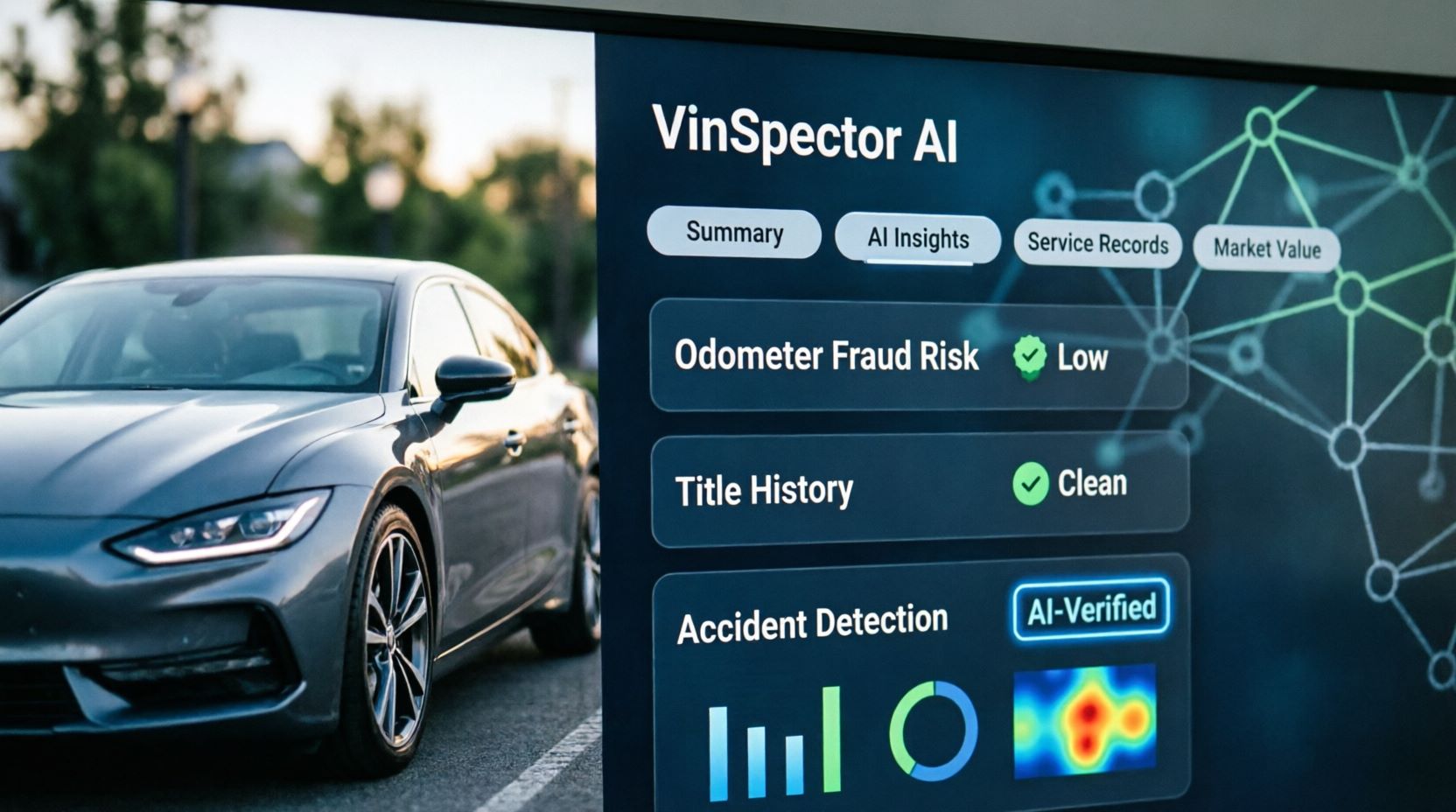
VinSpector AI leverages sophisticated machine learning algorithms to cross-reference millions of data points, uncovering hidden damage, undisclosed repairs, and even potential title washing schemes. It provides a comprehensive, predictive analysis of a vehicle's history, offering unparalleled clarity and peace of mind to buyers in 2026.
So, how does VinSpector AI actually work its magic? Our AI engine isn't just a glorified search tool. It's constantly learning and adapting. When you submit a VIN for a free VIN check, our system begins an intricate dance of data analysis. It pulls from all the standard sources – state DMVs, police reports, insurance claims, salvage yards – but then it goes much, much further.
Anomaly Detection: Our AI looks for anything out of the ordinary. A sudden drop in mileage followed by a spike? That's a red flag for odometer tampering. A vehicle registered in a dry state suddenly appearing with a salvage title from a flood-prone region? That's a classic sign of title washing. The AI identifies these subtle inconsistencies that a human might miss.
Predictive Analysis: Based on historical data, our AI can predict potential future issues. For example, if a specific model year of a vehicle has a known pattern of transmission failures after a certain type of repair, the AI will highlight that risk if it sees a similar repair in your target vehicle's history.
Cross-Referencing Disparate Data: This is where AI truly shines. It can connect dots between seemingly unrelated pieces of information. A listing on an online marketplace showing a car with certain features, compared to an official vehicle record that doesn't list those features, could indicate a cloned VIN or a swapped engine. The AI pieces these fragmented clues together.
Faster Updates: While traditional databases can have delays, our AI constantly scrapes and processes new data, often identifying emerging issues or newly reported incidents faster, giving you the most up-to-date picture possible. This is particularly crucial for safety recalls; you can easily check for recalls by VIN through VinspectorAI.
We're not just giving you a list of facts; we're giving you an interpretation, a risk assessment, and a deeper understanding of the vehicle's true story. This advanced insight is especially vital when dealing with complex issues like salvage titles or vehicles that have been rebuilt after significant damage.
AI vs. Traditional: A Head-to-Head Comparison for 2026 Buyers
For 2026 car buyers, the choice between AI-powered and traditional vehicle history reports boils down to depth of insight, accuracy, and fraud detection capabilities. AI systems like VinSpector AI offer superior pattern recognition and predictive analysis, while traditional reports provide a basic, though often incomplete, data aggregation service.
Let's lay it out clearly. In 2026, the differences aren't just marginal; they're fundamental. You're not just buying a report; you're investing in peace of mind and protection against costly surprises. Here's how VinSpector AI's approach stacks up against traditional services:
Feature | Traditional Vehicle History Report | VinSpector AI Vehicle History Report |
|---|---|---|
Data Aggregation | Collects reported data from official sources (DMV, insurance, police). | Collects reported data PLUS analyzes vast, unstructured datasets (repair invoices, auction records, sensor data, market listings). |
Fraud Detection | Detects obvious fraud based on explicit flags (e.g., reported stolen). Limited ability to spot subtle or complex schemes. | Identifies subtle patterns indicative of title washing, odometer fraud, VIN cloning, undisclosed damage, and 'curbstoning' operations. |
Insight & Interpretation | Presents a chronological list of events. Requires buyer to interpret implications. | Provides interpreted insights, risk assessments, and predictive warnings. Highlights potential issues with clear explanations. |
Speed & Freshness of Data | Can experience data lag (weeks/months) for certain records to appear in national databases. | Continuously processes new information, often providing more up-to-date analysis and faster detection of emerging issues. |
Cost (relative) | Typically a one-time fee per report, varying by provider. | Potentially higher initial cost for advanced analysis, but offers greater value in fraud prevention and long-term savings. |
User Experience | Often a long list of entries; can be overwhelming for non-experts. | Designed for clarity, highlighting critical issues with easy-to-understand summaries and actionable advice. |
It's clear that for serious buyers in 2026, an AI-powered report isn't just an upgrade; it's a necessity. The cost of missing a major issue – like a hidden frame repair or a washed title – far outweighs the investment in a superior vehicle history report.
Practical Steps: How to Use AI for Your Next Used Car Purchase
To effectively use AI for your next used car purchase in 2026, start with a comprehensive AI-powered VIN check early in the process, scrutinizing its detailed analysis for any anomalies or red flags. Always combine the report's insights with a thorough pre-purchase inspection by an independent mechanic to ensure complete due diligence.
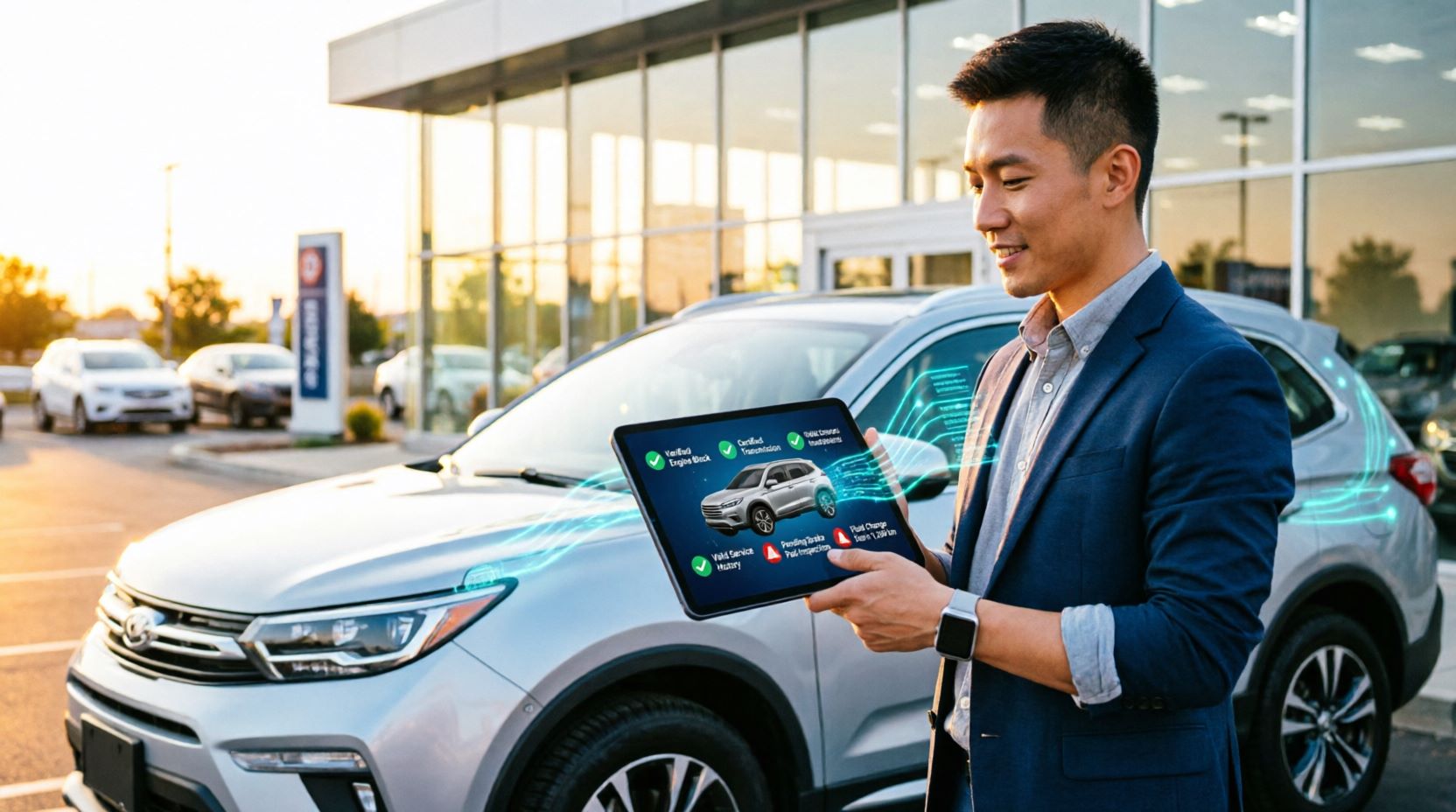
Alright, let's get practical. You're ready to buy, and you want to use the best tools available. Here's our recommended game plan for leveraging AI in your used car search:
Start Early with a Free VIN Check: Before you even fall in love with a car, get its VIN and run it through VinspectorAI. Our free check can often give you initial critical information and flag major issues right away, saving you time and emotional investment. Don't wait until you're at the dealership with keys in hand.
Invest in the Full AI Report: If the initial check looks promising, spring for the full AI-powered report. This is where the deep analysis comes in. Don't skim it! Read through every section, paying close attention to the AI's risk assessments and highlighted anomalies. Look for inconsistencies in mileage, ownership changes, or service records.
Verify Key Details: Does the report match what the seller is telling you? Does the car's physical condition align with its reported history? If the AI flags a potential issue, like a past flood event, ask the seller direct questions and request documentation.
Combine with a Pre-Purchase Inspection (PPI): No report, AI or otherwise, can replace a good, old-fashioned inspection by a trusted mechanic. The AI report tells you the car's documented history; the mechanic tells you its current mechanical health. A great mechanic can often confirm or deny suspicions raised by the AI report. For instance, if our AI flags potential structural damage, a mechanic can look for physical evidence.
Understand Lemon Laws and Recalls: While AI helps identify past issues, know your rights regarding vehicle defects. The National Highway Traffic Safety Administration (NHTSA) is your go-to for official recall information, and you can cross-reference the AI report's findings with NHTSA's database. An AI report can highlight unaddressed recalls, which is a major safety concern.
Don't Be Afraid to Walk Away: If the AI report raises serious red flags, and the seller can't provide satisfactory explanations or documentation, be prepared to walk away. There are always other cars, but your safety and financial well-being are paramount. Trust your gut, but let the data guide it.
The landscape of used car buying has fundamentally changed. In 2026, relying on outdated methods is like trying to navigate with a paper map when everyone else has GPS. VinSpector AI isn't just another VIN check service; it's your advanced co-pilot in the complex journey of buying a used car. We're here to arm you with the knowledge and insights you need to make smart, confident decisions and drive away in a car you can truly trust. Don't settle for less than the full picture. Visit VinspectorAI.com today and experience the future of vehicle history reporting.
Frequently Asked Questions
Get answers to common questions about AI Vehicle History Reports 2026: Why VinSpector AI Redefines Car Buying
Uncover Complete Vehicle History Reports
Discover critical vehicle information before you buy. Our VIN decoder reveals accident records, title status, recalls, and service history to help you make informed decisions.