Title Washing in 2026: Does Carfax Catch It? VinspectorAI's Superior VIN Check
Buying a used car is exciting, but it's also a minefield for the unwary. Among the most insidious traps lurking in the market is 'title washing,' a deceptive practice that can turn your dream car into a financial nightmare. As seasoned automotive journalists and consumer protection experts at VinspectorAI.com, we've seen firsthand the heartache and financial ruin this fraud causes. The big question for 2026 remains: can standard vehicle history reports truly protect you from this sophisticated scam? Let's dig in.
What is Title Washing and Why is it a Problem in 2026?
Title washing is when a salvage, flood-damaged, or otherwise branded vehicle is re-titled in a different state to erase its adverse history from public records. This fraud affects an estimated 200,000-250,000 U.S. vehicles annually, making it one of the most costly forms of used car deception buyers encounter, leading to significant safety and financial risks.
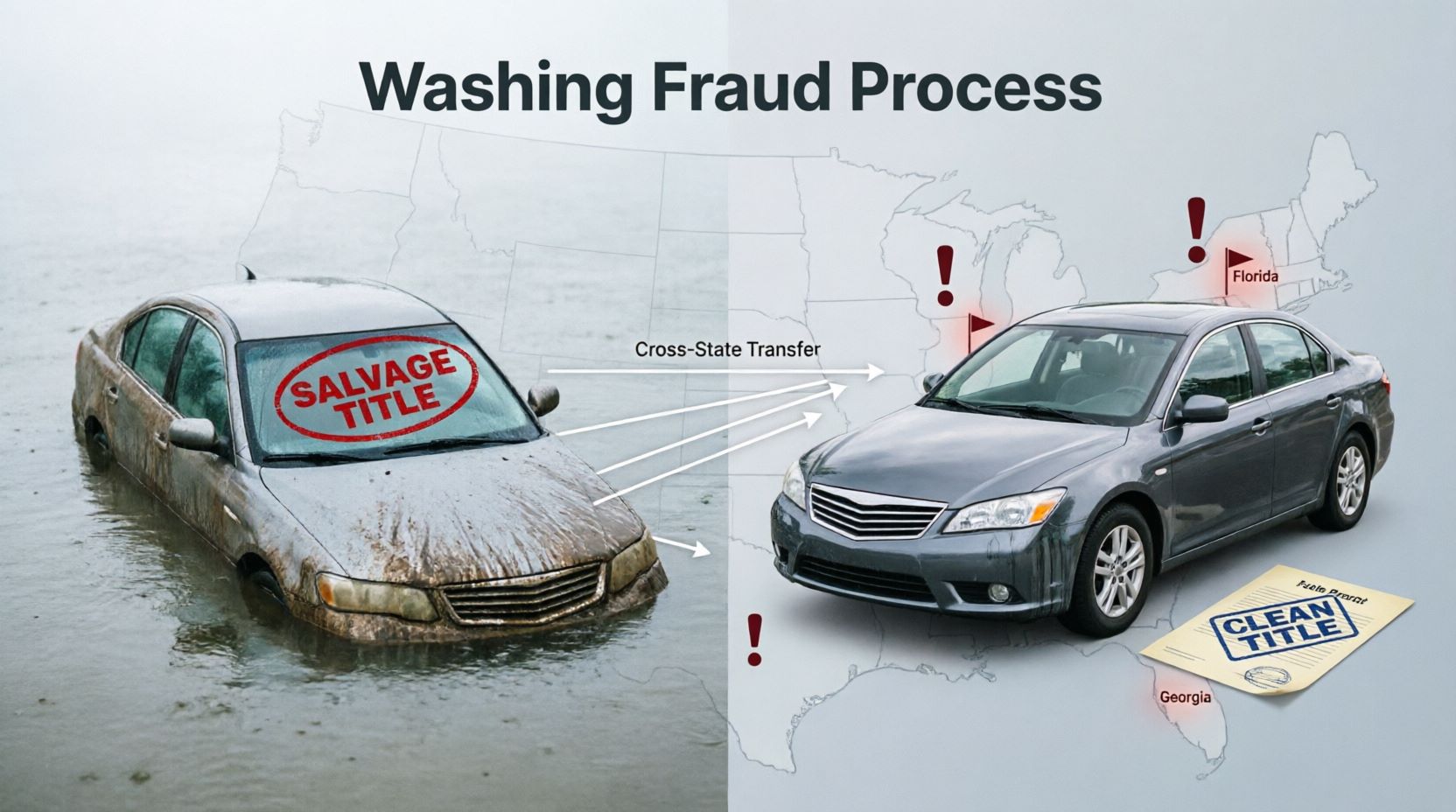
Essentially, title washing is a legal sleight of hand designed to hide a car's damaging past. Imagine a vehicle declared a 'total loss' by an insurance company after a catastrophic flood or a major accident. Its title should be branded as 'salvage' or 'flood-damaged,' signaling to future buyers that it has significant issues. However, criminals exploit loopholes in state titling laws. They'll buy these damaged cars cheap, do a shoddy repair job, and then register them in a state with less stringent reporting requirements or where the initial brand isn't recognized or easily transferred. The goal? To get a 'clean' title, then sell the car at full market value to an unsuspecting buyer.
The consequences for you, the buyer, are severe. You could end up with a vehicle that's structurally unsound, prone to electrical failures (especially after flood damage), or a ticking time bomb of mechanical issues. Beyond the safety aspect, you'll also pay far too much for a car that—if its true history were known—would be worth a fraction of the price. As of 2026, auto lending fraud exposure in the U.S. is projected to remain a significant concern, building on the $10.4 billion exposure recorded in 2023, a trend that highlights the ongoing financial risks in the used car market.
How Does Title Washing Work? The Mechanics of Deception
Title washing exploits the fragmented nature of state-level vehicle titling systems across the United States. Criminals leverage these inconsistencies to remove adverse markers from a car's history.
The process typically involves a few key steps:
Acquiring Branded Vehicles: Fraudsters purchase vehicles with branded titles (salvage, flood, rebuilt, odometer rollback) at low prices from auctions or private sellers. These brands signify significant damage or issues.
Cosmetic Repairs: Often, only superficial repairs are made to make the car look presentable, masking deeper structural or mechanical problems.
Cross-State Re-titling: This is the core of the wash. The vehicle is transported to a state known for less rigorous title scrutiny or where specific branding laws differ. Some states might not recognize certain out-of-state brands, or their data sharing with national databases might be delayed or incomplete. The vehicle is then registered and issued a new title in this second state. If successful, the new title may appear 'clean' — without the original brand.
VIN Cloning (a related tactic): In more extreme cases, criminals might engage in VIN cloning, where they steal the VIN from a legally registered, clean vehicle and affix it to a stolen or salvaged car. This makes the fraudulent vehicle appear legitimate when checked against the cloned VIN. While distinct from title washing, both aim to deceive buyers about a vehicle's true identity and history.
Selling to Unsuspecting Buyers: Once the 'clean' title is obtained, the vehicle is sold, often through private sales or smaller dealerships, at a price well above its actual value, preying on buyers who don't perform thorough due diligence.
It's a sophisticated shell game, and it's why you can't afford to be complacent when buying a used car in 2026.
Does a Standard Vehicle History Report Catch Title Washing in 2026?
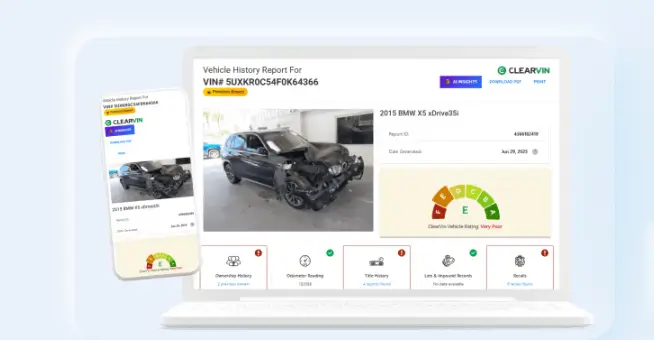
A standard vehicle history report is an essential tool for any used car buyer in 2026, providing a crucial snapshot of a car's past. However, these reports, while valuable, aren't infallible against every title washing attempt due to their reliance on reported data and the inherent delays in information sharing between states.
These services aggregate data from various sources: state DMVs, insurance companies, repair shops, and law enforcement. When a vehicle is legitimately branded, that information is typically reported and becomes part of its history. The challenge arises when criminals actively try to circumvent these reporting mechanisms. If a state's DMV doesn't effectively transfer a branded title to a national database, or if there's a significant lag in reporting, a fraudulent 'clean' title might slip through the cracks. It’s a counter-intuitive insight: even with advanced databases, human-driven fraud can exploit the inherent delays and jurisdictional gaps in data collection, meaning no single report is a silver bullet.
For instance, if a car is flood-damaged in Florida, then quickly moved to a state like Texas, and re-titled before the flood damage report is widely disseminated or recognized by the new state's DMV, a standard report might only show the most recent 'clean' title. We've seen cases where a car's title was washed across two or even three states before being offered for sale, making it incredibly difficult for a single report to trace its full, true history.
So, while a vehicle history report is a non-negotiable step in your buying process, understand its limitations. It's a powerful tool, but it's one piece of a larger puzzle you need to solve to fully protect yourself.
The VinspectorAI Advantage: Superior Protection Against Title Washing in 2026
At VinspectorAI, we understand that traditional vehicle history reports, while foundational, simply aren't enough to combat the evolving tactics of title washing in 2026. That's why we've engineered a more robust, AI-driven defense system that goes beyond conventional VIN checks.
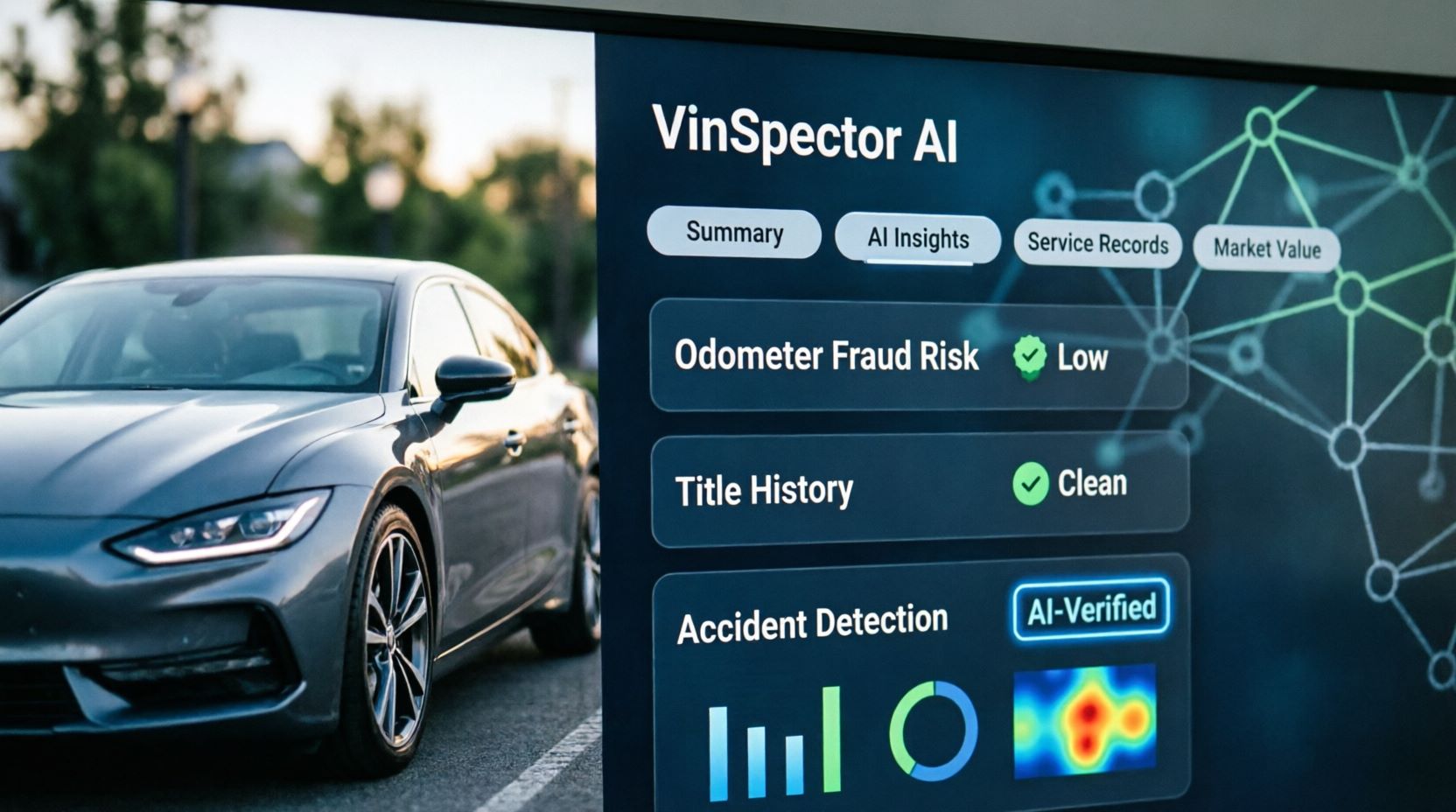
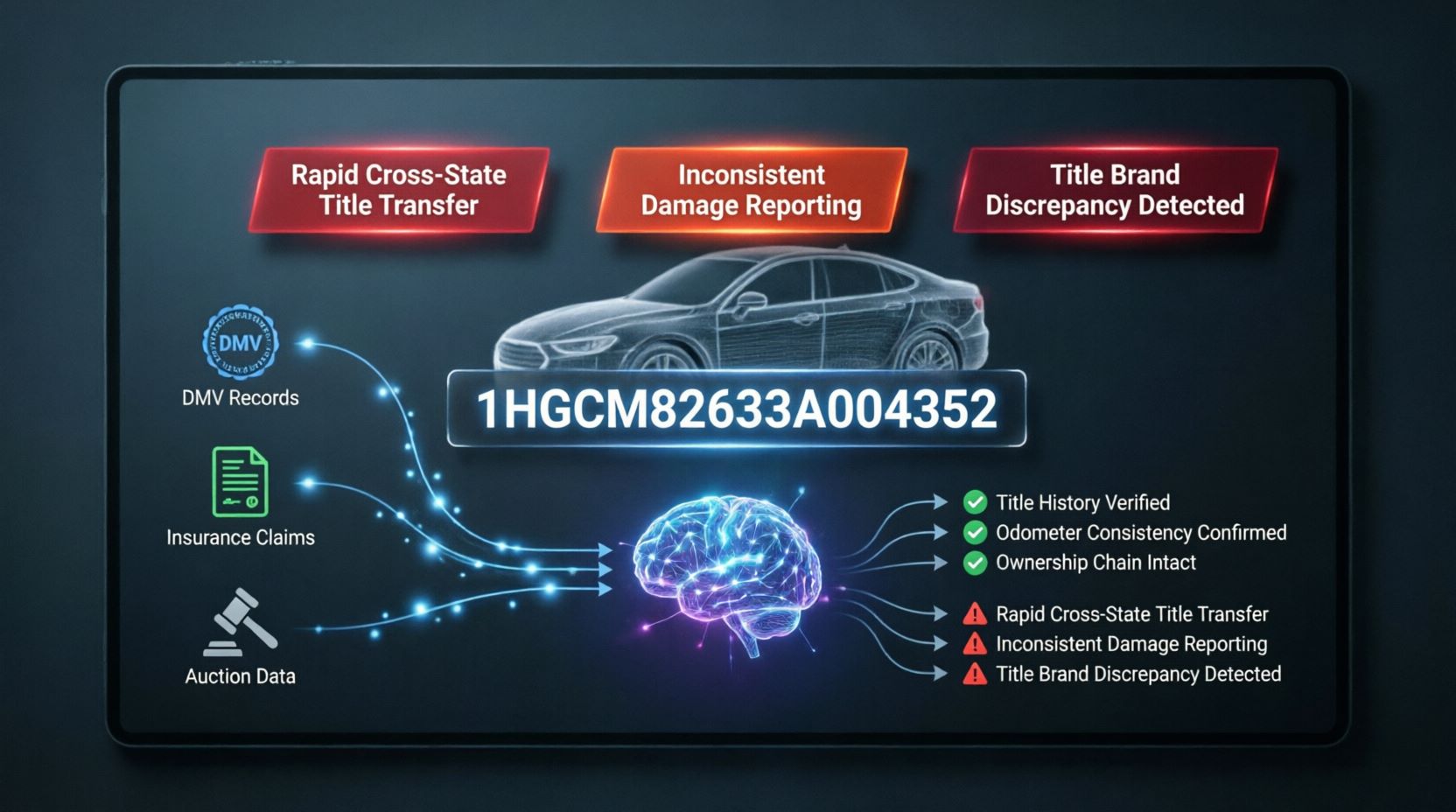
VinspectorAI provides superior protection against title washing by employing advanced AI and machine learning algorithms that cross-reference an unparalleled volume of data points. Our system doesn't just pull records; it analyzes patterns, flags anomalies, and even predicts potential fraud vectors that human eyes or simpler database queries might miss, offering a truly comprehensive vehicle history report.
Our proprietary AI scours not just DMV records and insurance claims, but also auction data, social media, specialized automotive forums, and even dark web sources for mentions of specific VINs or suspicious vehicle activities. This multi-faceted approach allows us to detect subtle inconsistencies — like a sudden, unexplained title transfer across states, or a drastic price drop followed by a quick resale — that are hallmarks of a title washing scheme. We're looking for the story between the data points, not just the data points themselves. This proactive, analytical approach gives VinspectorAI an edge in uncovering hidden histories that traditional, less dynamic systems might overlook. You can start your enhanced due diligence with a VinspectorAI free VIN check.
Beyond the VIN: What VinspectorAI Looks For
Our AI isn't just checking numbers; it's looking for the digital breadcrumbs fraudsters leave behind. Here's a glimpse into the specific red flags VinspectorAI's advanced algorithms are trained to identify:
Inconsistent Mileage: A car's mileage should generally increase over time. Our AI flags sudden drops, unexplained plateaus, or mileage discrepancies between different reported records (e.g., state inspection vs. sale record).
Rapid Ownership Changes in Different States: A vehicle that changes hands multiple times within a short period, especially if those transfers occur across different states, is a significant red flag for title washing.
Unusual Title Transfers: We look for patterns like a vehicle titled in a state known for lax regulations immediately after being declared a total loss in a stricter state.
Discrepancies in Damage Reporting: Our system cross-references insurance claim data with auction records and repair estimates. If a car was reported as severely damaged but then appears with a clean title and minimal repair history, it raises an alarm.
Duplicate or Cloned VINs: VinspectorAI actively monitors for VINs appearing in multiple locations or on different vehicle types, a clear sign of VIN cloning.
Auction History Anomalies: We analyze auction sale prices against reported damage. A car sold for suspiciously low salvage value but later listed at a high retail price with a clean title is a prime indicator of fraud.
To illustrate the difference, consider this comparison:
Feature | Standard Vehicle History Report | VinspectorAI's Advanced AI Analysis |
|---|---|---|
Data Sources | DMVs, insurance, police, repair shops | DMVs, insurance, police, repair shops, auctions, social media, dark web, proprietary databases |
Detection Method | Database matching, direct record retrieval | AI & ML pattern recognition, anomaly detection, predictive analytics, cross-referencing disparate data |
Title Washing Vulnerability | Susceptible to state reporting gaps, delays, and deliberate fraud attempts to 'clean' titles | Designed to identify and flag inconsistencies and patterns indicative of title washing, even with 'clean' official records |
VIN Cloning Detection | Limited to reported VIN discrepancies | Proactive monitoring for duplicate VINs, inconsistent vehicle characteristics associated with a VIN |
Depth of Insights | Factual history as reported | Factual history plus analytical insights into potential hidden issues and fraud risks |
This isn't just about getting more data; it's about making sense of that data in a way that actively uncovers deception. That's the VinspectorAI promise for 2026.
Essential Steps to Protect Yourself from Title Washing in 2026
Even with advanced AI tools like VinspectorAI at your disposal, your vigilance remains your first and best line of defense. Here are the critical steps every buyer should take in 2026 to avoid falling victim to title washing:
Get a Comprehensive VinspectorAI Report: Start here. Our in-depth salvage title VIN check and full vehicle history report is designed to uncover hidden issues that others miss. It's your digital detective.
Insist on an Independent Pre-Purchase Inspection (PPI): This is non-negotiable. Have a trusted, certified mechanic — one you choose, not the seller — inspect the vehicle thoroughly. They can spot structural damage, flood residue, and other physical signs of a troubled past, regardless of what the title says.
Physically Verify the VIN: Don't just trust the paperwork. Locate the VIN on the dashboard (driver's side, near the windshield), on the driver's side door jamb sticker, and on the engine block. Ensure all these VINs match each other and the VIN on the title and registration documents. Any discrepancy is an immediate red flag.
Scrutinize the Title Documents: Look for signs of alteration, smudges, or unusual fonts. Understand the different car title types and what they mean. If the seller has a 'duplicate' title, ask why. A legitimate seller should have no problem providing the original.
Check the Seller and Vehicle History: Is the seller pressuring you? Are they evasive about the car's history? A quick online search of their name or dealership might reveal past complaints. Also, if the price seems too good to be true, it almost certainly is. Compare it against Kelley Blue Book values for similar models.
Be Wary of Cash-Only Deals: While not always fraudulent, cash-only transactions can be a tactic used by criminals to avoid leaving a paper trail.
By combining VinspectorAI's advanced analytical power with these practical, hands-on steps, you create a formidable shield against title washing and other used car scams in 2026. Your peace of mind, and your safety, are worth the extra effort.
In the complex world of used car transactions, knowledge truly is power. Title washing remains a significant threat in 2026, and while traditional vehicle history reports offer a baseline of information, they can't always catch the most sophisticated forms of this fraud. VinspectorAI's commitment to leveraging cutting-edge AI and machine learning provides a deeper, more proactive level of protection, helping you uncover hidden histories and make informed decisions. Don't leave your next car purchase to chance; empower yourself with the most comprehensive vehicle intelligence available. Visit VinspectorAI.com today.
Frequently Asked Questions
Get answers to common questions about Title Washing in 2026: Does Carfax Catch It? VinspectorAI's Superior VIN Check
Uncover Complete Vehicle History Reports
Discover critical vehicle information before you buy. Our VIN decoder reveals accident records, title status, recalls, and service history to help you make informed decisions.