What Is a Lemon Car? What It Means and What You Can Do
You bought a car. It's been back to the dealer three times for the same problem. Nothing works. The manufacturer shrugs. Now you're wondering if you're stuck with a vehicle that was broken from the start.
That's what a lemon car is — and there are laws specifically designed to protect you. Here's everything you need to know about what makes a car a lemon, how lemon law works, and how to make sure you never unknowingly buy one.
What Is a Lemon Car?
A lemon car is a vehicle with a substantial defect that impairs its safety, value, or use — and that the manufacturer cannot fix after a reasonable number of repair attempts. The defect must be covered by the manufacturer's warranty and occur within a specified time or mileage window after purchase.
Minor issues don't qualify. A poorly fitting door panel or a squeaky seat isn't a lemon. A transmission that fails repeatedly, an engine that won't start, or brakes that malfunction — those are the kinds of defects that lemon law was written to address.
What Qualifies as a Lemon Car Under the Law?
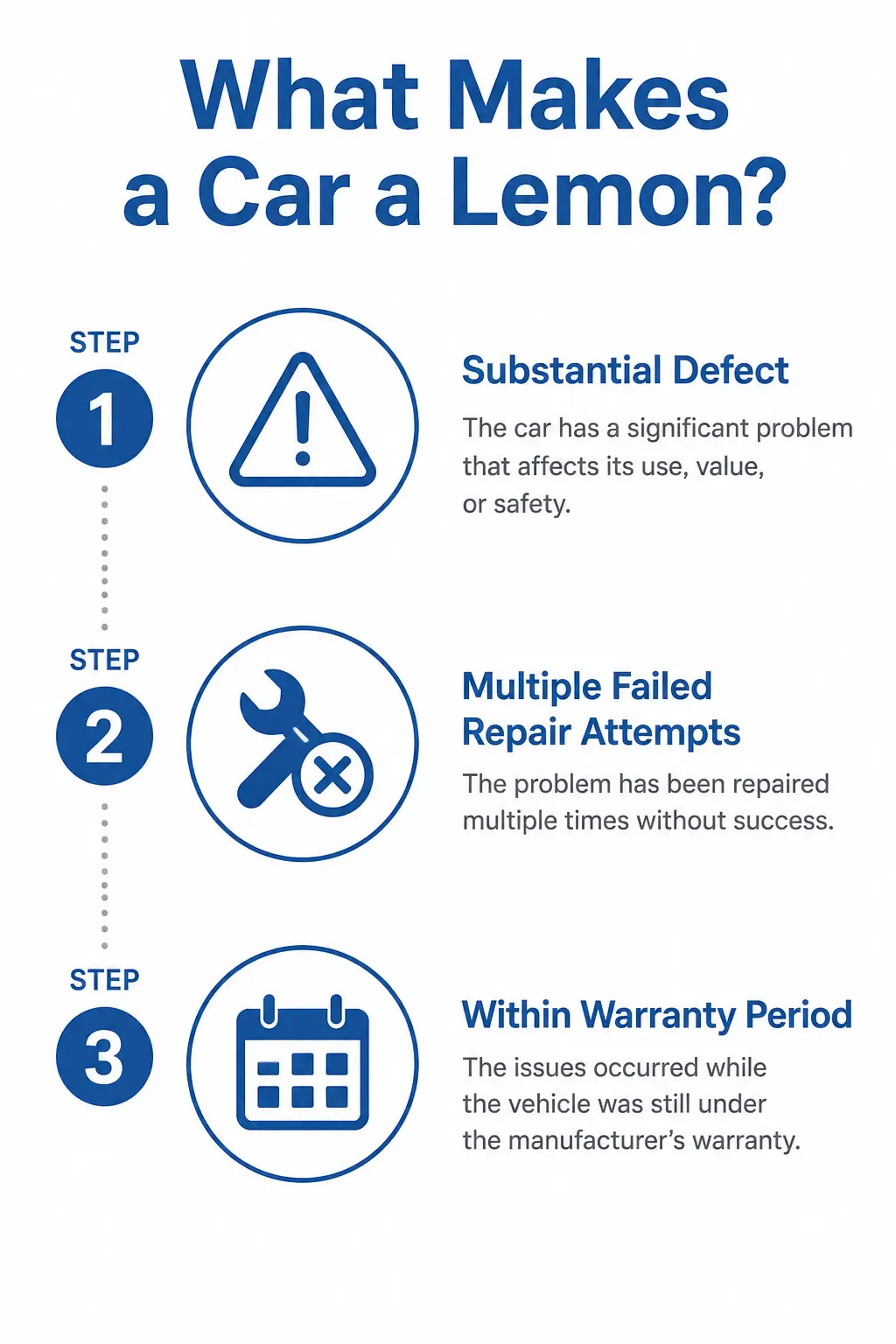
Lemon laws are state-level consumer protection statutes, which means the exact criteria vary. But most states follow the same three-part framework.
Engine defects are among the most common lemon law triggers — repeated failures that can't be fixed after multiple attempts. See our breakdown of [common car engine problems] to understand which issues typically qualify.
The Defect Must Be Substantial
The problem must meaningfully impair the vehicle's safety, value, or use. Cosmetic flaws, minor inconveniences, or issues that don't affect how the car drives typically don't meet the threshold.
Examples that typically qualify: engine failure, transmission defects, brake malfunctions, electrical system failures, or safety system issues like non-deploying airbags.
The Manufacturer Must Have Had Multiple Repair Attempts
The manufacturer or dealer must have had a reasonable number of chances to fix the problem — and failed. Most states define this as:
2 or more attempts for defects that affect safety (brakes, steering, airbags)
4 or more attempts for non-safety defects
30 or more days out of service for repairs within the warranty period (regardless of how many attempts)
The Problem Must Occur Within the Warranty Period
The defect must surface within the manufacturer's warranty window. Most state lemon laws specify a timeframe — commonly 18 months or 18,000 miles from the original purchase date, whichever comes first.
Does Lemon Law Apply to Used Cars?
This is where most buyers get surprised: lemon law primarily protects new car buyers.
Used cars are generally not covered — unless the vehicle is still under the original manufacturer's warranty when the defect appears, or the dealer provides a separate written warranty. Coverage for used cars varies significantly by state:
New York has one of the strongest used car lemon laws in the country, covering vehicles under 18,000 miles at purchase
California recently narrowed its used car protections — a 2024 court ruling largely excluded used cars from the Song-Beverly Consumer Warranty Act, though certified pre-owned vehicles with a manufacturer warranty may still qualify
Most other states offer little to no lemon law protection for used car buyers
If you're buying used, lemon law likely won't protect you. Your protection comes from checking the car's history before you sign — not after.
What Happens When a Car Is Declared a Lemon?
When a vehicle qualifies under lemon law, the manufacturer has two options:
Refund or Replacement
The manufacturer must either replace the vehicle with a comparable one or issue a full refund — including the purchase price, taxes, fees, and financing costs. Some states allow a deduction for the miles driven before the first reported defect.
Manufacturer Buyback Title
Once a car is bought back as a lemon, the state DMV brands the title. Depending on the state, this brand may read "lemon law buyback," "manufacturer buyback," or simply appear as part of the vehicle's branded title history.
This brand is permanent. It follows the VIN for the life of the vehicle, regardless of how many times it's sold or re-titled.
The Car Gets Resold — Often Without Full Disclosure
Here's the part most buyers don't know: lemon buyback vehicles are frequently resold at auction and end up back on the used car market. Dealers are required to disclose the buyback status in most states, but private sellers are often under no such obligation.
A car that was a lemon in one state can be re-registered in another state with weaker disclosure laws, obscuring its history. This practice — called title washing — is exactly why verifying the VIN is the only reliable way to know what you're buying.
How to Tell If a Used Car Was a Lemon Before You Buy
If you're shopping for a used car, you can't rely on what the seller tells you. Lemon buyback vehicles are often marketed without any mention of their history — and they can look and drive perfectly fine at the time of purchase, only to resurface the same problems weeks later.
The only reliable method is a VIN check that pulls from NMVTIS and state DMV records across all 50 states. A full vehicle history report will show:
Whether the car has a lemon law buyback or manufacturer buyback title brand
Any title washing — re-titling in a different state to obscure the history
The full ownership and title chain across states
Any other branded title events (salvage, flood, rebuilt)
If you're buying in California, where the used car market is enormous and lemon buyback vehicles regularly re-enter through dealer auctions, a California VIN check surfaces the full title history before you commit. In New York, where used car lemon law protections are stronger but so is fraud risk, a New York VIN check gives you the complete picture. And if the car has any branded title events — including a lemon buyback brand — our guide on what a branded title means breaks down exactly what each type means for the car's value, insurability, and resale.
How to File a Lemon Law Claim
If you believe your new car qualifies as a lemon, here's how to move forward:
Document everything. Keep every repair order, invoice, and communication with the dealer or manufacturer. Dates, mileage, and descriptions of the defect matter.
Give the manufacturer a final chance. Most states require you to notify the manufacturer directly — not just the dealer — and give them one last opportunity to fix the problem before you can file a claim.
Contact your state's consumer protection office. Every state with a lemon law has a process for filing a claim. Some states offer arbitration programs; others require you to go through the courts.
Consider a lemon law attorney. Many lemon law attorneys work on contingency — meaning you pay nothing unless you win. Under most state laws, the manufacturer is required to pay your attorney fees if you prevail.
Know your timeframe. Lemon law claims have deadlines. If your car is still under warranty and experiencing repeated defects, don't wait.
What Should You Do Before Buying Any Used Car?
Lemon law won't protect most used car buyers after the fact. Your protection happens before the purchase — by knowing what you're buying before you sign anything.
Run a VIN check on VINspectorAI before any used car purchase. You'll see the complete title history, any lemon buyback brands, accident records, and odometer data in under a minute — so you know exactly what you're buying before any money changes hands.
Frequently Asked Questions
Get answers to common questions about What Is a Lemon Car? What It Means and What You Can Do
Uncover Complete Vehicle History Reports
Discover critical vehicle information before you buy. Our VIN decoder reveals accident records, title status, recalls, and service history to help you make informed decisions.