How to Find Your Car Colour Code from a VIN Number | VinSpectorAI
Your car needs a touch-up. Maybe it's a door ding, a scratch from a parking lot, or a full respray after a repair. You need the exact paint code — not just "silver" or "red," but the precise manufacturer code that matches your car's specific shade and finish.
You have the VIN. Can you get the colour code from it?
Here's the honest answer — and how to actually find what you need.
Does a VIN Number Contain the Colour Code?
No — a VIN does not directly contain your car's paint colour code. The 17-character Vehicle Identification Number identifies the manufacturer, country of origin, vehicle type, model year, plant, and production sequence. Colour is not encoded in the standard VIN structure.
This surprises most people. It seems like the VIN should have everything. But colour was deliberately left out of the VIN standard because manufacturers often offer dozens of paint options for a single model, and colours change year to year without affecting the vehicle's core identification.
That said, your VIN can still help you find the colour code — just not directly.
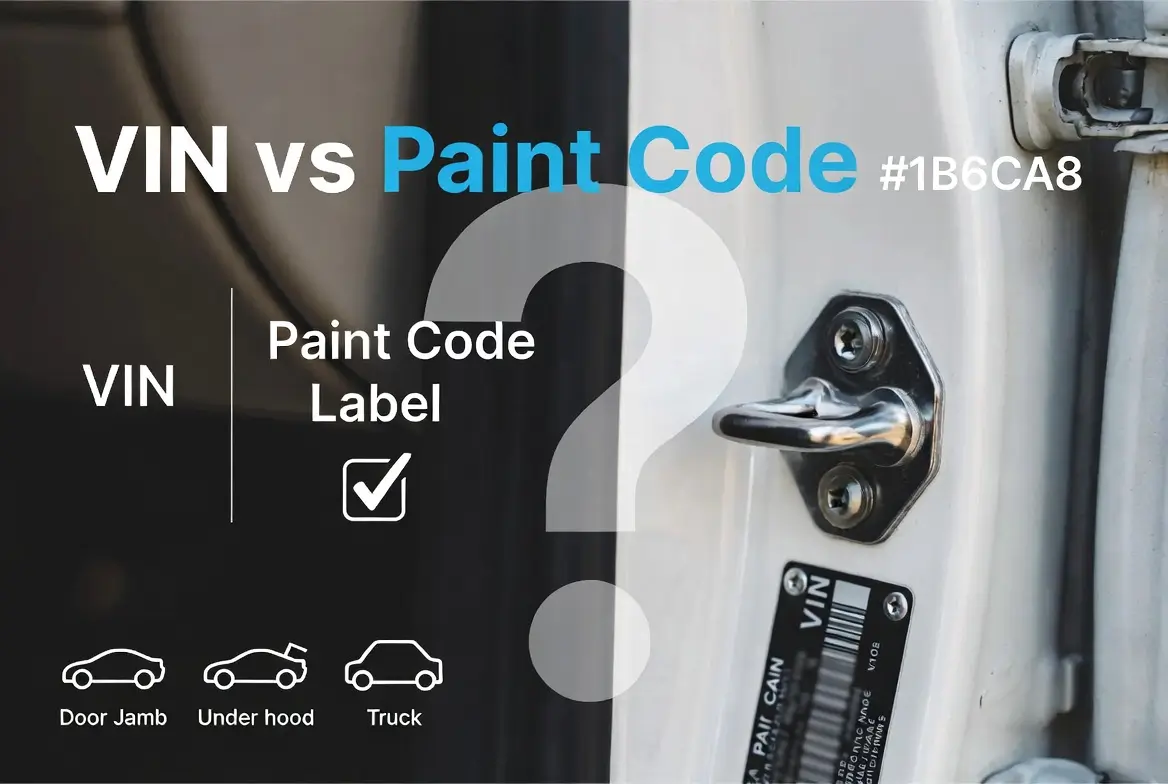
How to Find Your Colour Code Using the VIN
Method 1 — VIN Decoder with Manufacturer Database
Many online VIN decoders cross-reference your VIN against the manufacturer's production database, which often includes the original colour your vehicle was built with. Enter your VIN into a manufacturer-linked decoder and look for fields labeled "Exterior Colour," "Paint Code," or "Colour/Trim."
This works best for newer vehicles (roughly 2010 onward) where manufacturers maintain detailed digital production records. Older vehicles may not have colour data tied to their VIN in accessible databases.
Method 2 — Contact the Manufacturer or Dealer
Give your VIN to any authorised dealer for your vehicle's brand. Their parts department can look up the original build sheet and confirm the exact paint code in seconds. This is the most reliable method — especially for vehicles where online databases have incomplete records.
Method 3 — Find the Physical Paint Code Label
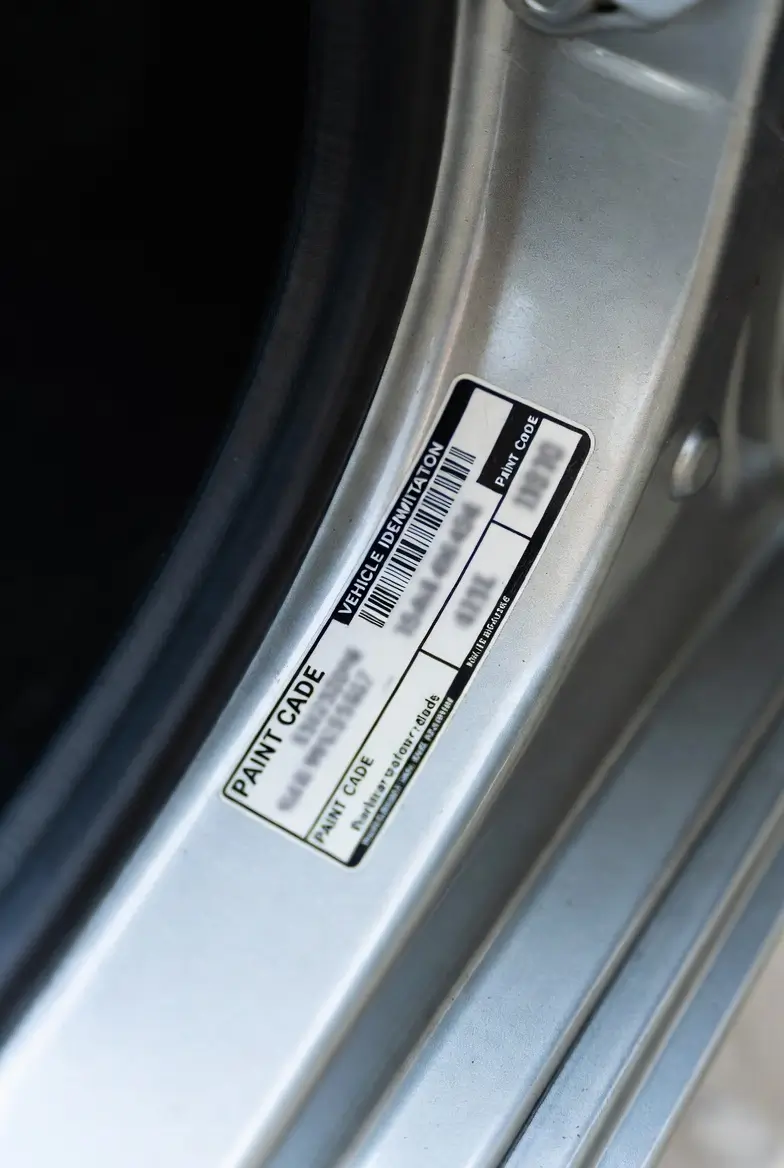
This is often the fastest method, and it works regardless of the vehicle's age. Every car has a manufacturer label somewhere on the body that lists the paint code directly. Common locations by brand:
Driver's door jamb (most common across all brands) — open the driver's door and look for a sticker listing the VIN, tire pressures, and a field labeled "Paint," "Color," "EXT," or "PNT."
Under the hood — check the radiator support bar or firewall. Common on older Japanese models including Honda, Toyota, and Mazda.
Inside the trunk — near the spare tire compartment or under the trunk lid. Some GM vehicles and older European models place the label here.
Glove compartment — less common, but used by some GM and Nissan models.
The code itself is typically a short alphanumeric string — examples include WA8555 (GM), NH731P (Honda), 1F7 (Toyota), or A89 (Ford). It may be labeled differently depending on the manufacturer, but it's always a specific code, never just a colour name.
Paint Code vs. Colour Name — Why the Difference Matters
This is where a lot of people make an expensive mistake: ordering touch-up paint by colour name instead of code.
Two cars from the same manufacturer, same model year, both listed as "Metallic Silver" can have completely different paint codes — and completely different formulations. The difference may be invisible in a photograph but obvious on the car in direct sunlight.
Manufacturers often use multiple silver formulations in the same model year depending on production date, plant location, or trim level. Names are marketing. Codes are chemistry.
Always use the code, not the name.
What the VIN Can Tell You About Your Car's Colour History
Even though the VIN doesn't encode the paint code directly, a full VIN check can reveal colour-related information that matters when buying a used car:
Whether the car has been resprayed — accident history and insurance records often indicate body panel repairs, which may mean the car's current colour doesn't match the original
If a respray followed an accident serious enough to brand the title, that history will appear in the VIN check. See our guide on [branded titles] to understand what each brand means.
Structural damage history — frame or body damage that required repair can affect the quality of any repaint, even if the colour code matches
Title and ownership history — helps verify the car hasn't been rebuilt from multiple vehicles with different paint
If you're buying a used car and the seller claims the original paint is intact, running a VIN check is the only way to verify there's no accident or repair history that contradicts that claim.
Where to Find Colour Codes for Popular Brands
Different manufacturers label and store paint codes differently. Here's where to look for the most common brands:
Ford and Lincoln
Check the driver's door jamb sticker. The paint code appears after "EXT PNT" — typically two letters like J7 or UG.
GM (Chevrolet, GMC, Buick, Cadillac)
Door jamb sticker, labeled "BC/CC" or "Paint." Codes typically start with WA followed by four characters.
Toyota and Lexus
Door jamb on the driver's side, labeled "C/TR" (Colour/Trim). Codes are three characters like 1F7 or 8X8.
Honda and Acura
Driver's door jamb or firewall under the hood. Format: two letters followed by numbers, like NH731P.
BMW
Inside the door jamb or engine bay. Labeled "Lackcode" — typically three characters like A89 or 475.
Mercedes-Benz
Driver's door jamb. Labeled "Colour" — typically three characters like 040 or 197.
Volkswagen and Audi
Inside the spare tire compartment or door jamb. Labeled "Farbe" (German for colour) — typically four characters like LB9A.
What to Do After Finding the Code
Once you have the exact paint code, you can:
Order OEM touch-up paint from the manufacturer or an authorised parts supplier
Provide the code to a body shop for a precise colour match
Verify the code against the car's current paint before authorising any repair work
Keep the code recorded somewhere permanent — your phone, vehicle documents, or a photo of the label. You'll likely need it again.
Buying a Used Car? Verify More Than Just the Colour
Paint code is one piece of a used car purchase. But the colour on a car today doesn't always match the colour it left the factory with — especially if the car has been in an accident and repaired.
Before buying any used vehicle, run a full VIN check to see the complete accident history, title events, and any recorded damage that could indicate the car has been resprayed.
If you're buying in Pennsylvania, where road salt and winter conditions make body repairs common, a Pennsylvania VIN check will surface any accident or structural repair history before you commit. In Georgia, where the used car market is large and active, a Georgia VIN check confirms the full title and accident history. And in Arizona, where hail damage is frequent and resprays are common, an Arizona VIN check gives you the complete picture before any money changes hands.
Colour code gets you the right paint. VIN check tells you whether the car needed it in the first place.
What Should You Do Before Any Paint Work or Used Car Purchase?
Find the physical label first — it's faster and more reliable than any online tool. Then cross-reference with a VIN decoder if you want to confirm the original factory colour.
And if you're buying used, run a VIN check on VINspectorAI first. A full history report takes under a minute and shows you every accident, repair, and title event — so you know whether that paint job is original or covering something up.
Frequently Asked Questions
Get answers to common questions about How to Find Your Car Colour Code from a VIN Number | VinSpectorAI
Uncover Complete Vehicle History Reports
Discover critical vehicle information before you buy. Our VIN decoder reveals accident records, title status, recalls, and service history to help you make informed decisions.